
Development Report: CHASE BREAK
UNITY | ONE MONTH development | PC | ITCH.IO | JUN 2024
About: Chase Break is a 2D metroidvania cyberpunk-themed pc game made within a month as a porfolio piece as a team. Hope, an employee of Seiza, gets betrayed and nearly killed by the company she is working for and now needs to find a place where she is safe and can stay for a long time. Throughout the journey, she meets few allies who will help her out but she is also ‘wanted’ and this can be seen on the neon billboards where the entire city is searching for her. She needs to make a break for it and needs to escape the grasp of the company who wants her killed.
- Genre: 2D Metroidvania
- Engine: Unity
- Development Period: Apr 2024 – Jun 2024
- Role: Technical Producer / Associate Game Designer / 2D Cinematic Animator
- Team Size: 7
- Platform: PC / Itch.io
- Status: Released
- Planning: Miro
- Tools: Unity, Visual Studio, Github Desktop
Table of Contents
1.0 – A Headless Hydra
Summary: Before my team and I started this project, we decided to participate in a cyberpunk-themed game jam. In previous projects, alongside contributing to development, one of my main responsibilities had been managing and guiding the team, communicating with different departments, and tracking their progress on a daily basis. I also helped keep the scope under control by preventing unnecessary branching and making sure we stayed focused on meeting the deadlines.
However, I had to be absent for a month to fulfill my military duty, and the team did not have another project manager. Before leaving, I onboarded one of the team members who had expressed an interest in taking on the producer role. I guided and taught him as much as I could about the responsibilities of the role and how to proceed with the project before I left for military duty.
When I returned a month later, I discovered that little to no progress had been made. The game jam deadline had already passed, and I found the team demoralised and disorganised.
As soon as I was ready to resume working with the team, I first assessed the situation and held one-on-one conversations with each team member to understand what had happened during my absence. Based on what I learned, I created a plan to at least complete a minimum viable product (MVP) that could serve as a portfolio piece for the team.
This was how Chase Break started.
1.1 – Rebuilding The Motivation
After returning from military service and starting to work with the team again, I realised that the project had become stuck in an unsolvable loop with no visible progress. The Miro board was almost empty, containing only a few ideation notes, while the basic GDD was unfinished and only covered the initial inspiration and game genre. Beyond that, there was very little to show for the development period.
I discovered that the team had made little to no meaningful progress during the first two weeks of my absence. During the remaining two weeks, the project had descended into miscommunication and confusion among the team members. As a result, the team had become demoralised and demotivated, and some members had also left the team for unclear reasons.
What remained was a Unity generalist/programmer, two 2D artists, a level and game designer, a writer, a sound designer, and myself in the roles of producer and Unity generalist. Despite the loss of several members, I believed we still had a capable enough team to deliver something valuable as a portfolio piece.
This was when I decided to start one-on-one discussions with each remaining team member to understand the bottlenecks and problems they were experiencing individually and as a team. After speaking with everyone, one thing became clear: the team had become headless.
There was no clear leader taking responsibility for driving the project forward. Although the team member I had previously assigned to the producer role had made an effort, there was still a lack of direction and control within both the team and its meetings. Several members I had worked with previously also told me that they wanted me to return, take back control of the team, and lead the project towards completion.
After completing the one-on-one discussions, I took some time to assess the situation and created a new game plan and approach. My goal was to bring the team back on track and complete a minimum viable product (MVP) within one month that we could use as a portfolio piece. This ignited the team spirit and motivation to finish the project as now there is a clear plan and guidelines to follow.
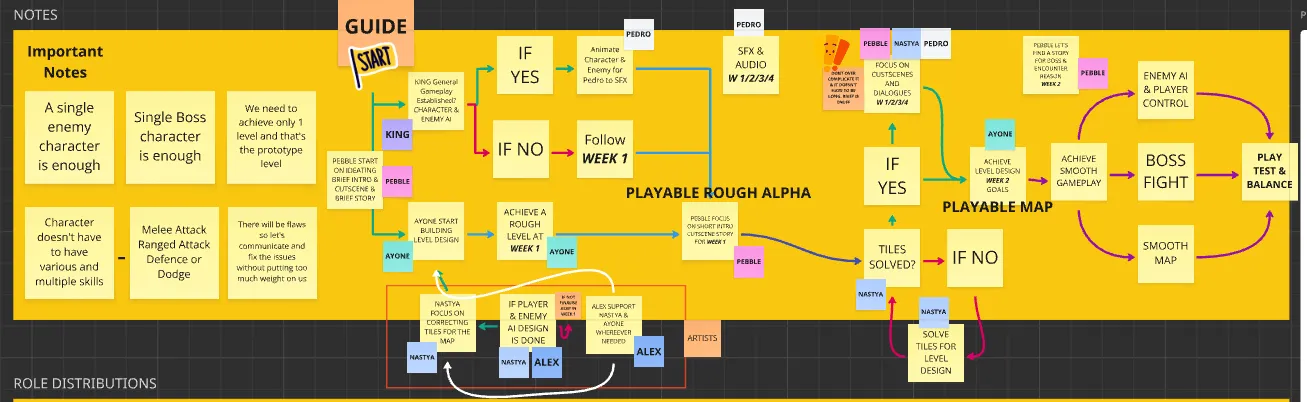
Image: The planning and guideline I created for the team. The team is briefed so they knew how to read this.
1.2 – Strict Planning, Scoping & Execution
Considering the time we had lost as a team during my absence and the fact that the game jam deadline had already passed, the project took on a new meaning. It was no longer a game jam submission. Instead, it became a portfolio piece where our goal was to deliver something that showcased our skills and capabilities, rather than something designed primarily for players. We wanted the project to become a story we could present during the recruitment process and demonstrate what we were capable of producing as a team.
To accomplish this, we needed very strict planning, scoping, and execution. Although some team members wanted to continue working on the project for longer and potentially turn it into a complete game, this was not the case for everyone. I therefore decided not to pursue a long-term development cycle and instead focus only on the essential elements required to create a strong minimum viable product (MVP). Anything beyond that was unnecessary for our immediate objective.
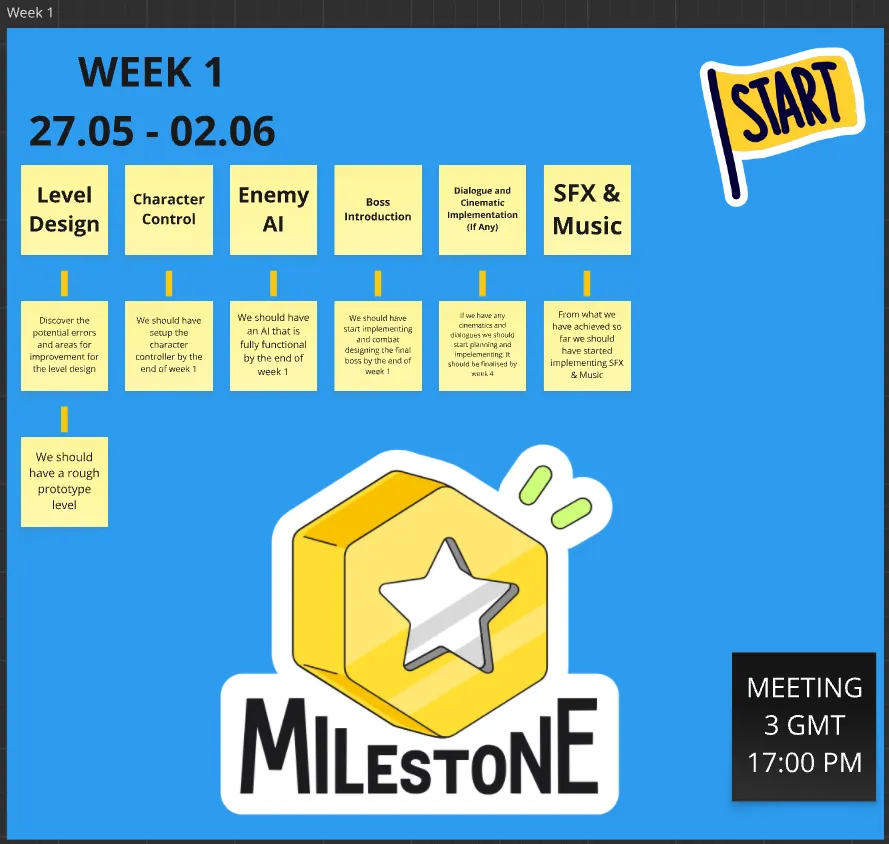
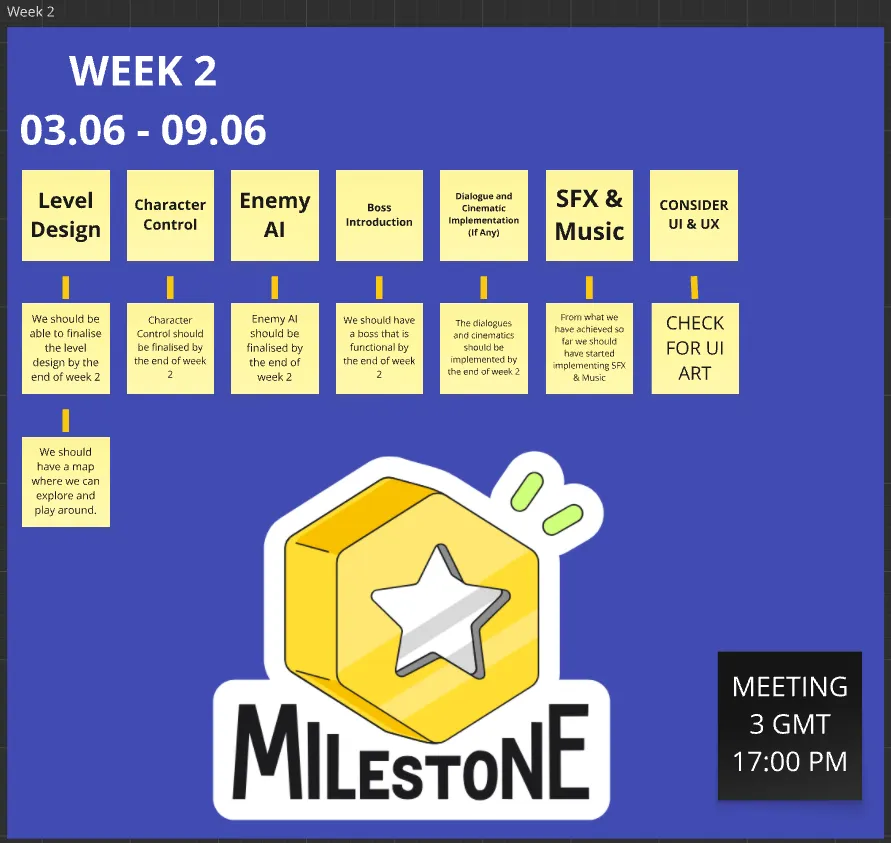
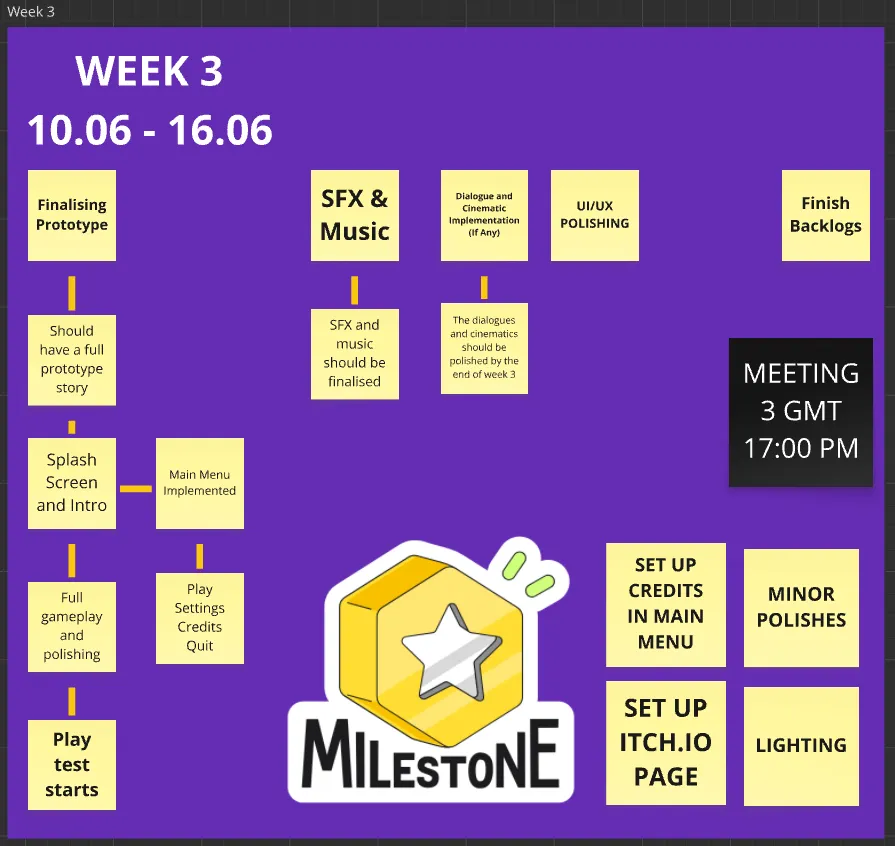
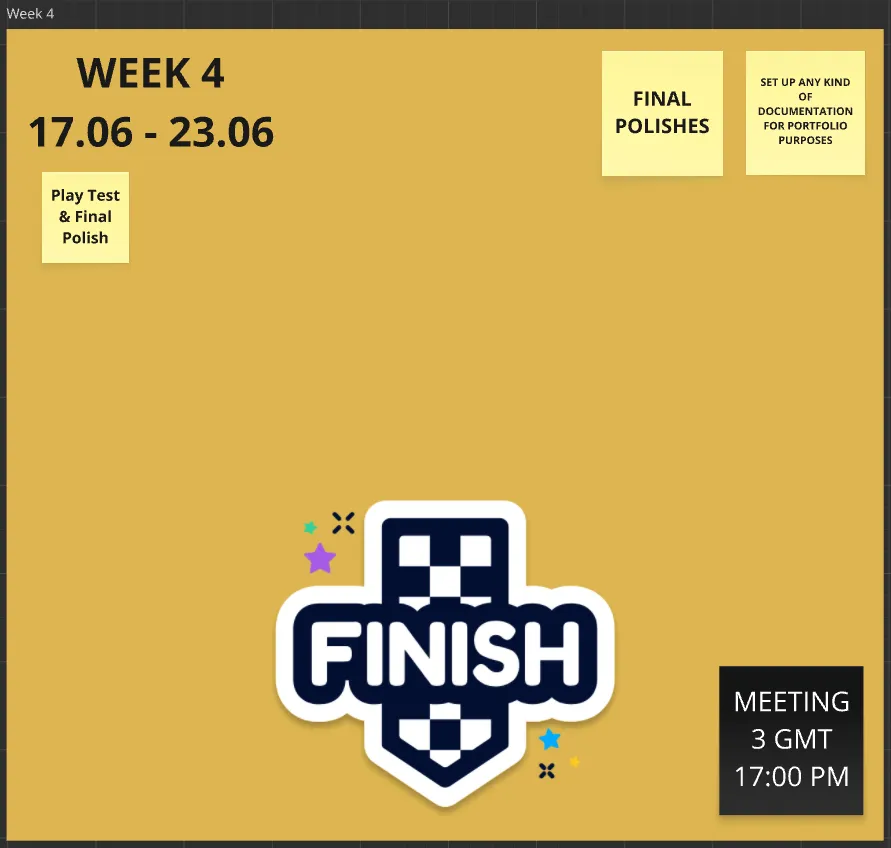
I prepared a one-month development plan divided into weekly milestones.
1.3 – First Week – Establishing Essentials
The first week focused on introducing the essential systems as quickly as possible. The goal was not to create polished or final versions, but to establish the basic foundations that would allow the other departments to begin working in parallel.
The initial targets included:
- Level design, even if only as a blockout
- Character controls and basic animations
- A basic enemy AI and animations
- The dialogue and cinematic systems
- The foundation of the boss encounter
By “introducing” these systems, I meant delivering their most basic functional versions so that other departments could begin working on them without waiting for complete implementation. For example, basic character controls and animations would allow the level designer and sound designer to begin working and identify potential issues, while the writers and artists could simultaneously work on the story, dialogue, and visual assets required for the project.
If there was enough time remaining during the first week, I would also introduce the basic enemy AI.
1.4 – Second Week – Progress & Finalisation
The second week followed the same parallel-production approach, but with an important change: basic implementations were no longer enough. The systems introduced during the first week needed to show actual progress and move as close to finalisation as possible within the available time.
During this stage, we also identified the need for a UI system, so UI development was added to the week’s tasks.
1.5 – Third & Fourth Week – Polish & Playtesting
By the third and fourth weeks, the focus shifted towards polishing the remaining work-in-progress elements and filling in the gaps across the project. At the same time, we began actively playtesting the game to identify game-breaking bugs and other problems that could still be addressed before the deadline.
The goal was not to achieve a fully polished commercial game, but to deliver a functional MVP with as few major bugs and errors as possible.
We followed this plan throughout the month and successfully delivered Chase Break within the planned one-month timeframe.
2.0 – Reflection & Outcome
Delivering Chase Break within one month showed me how much can be achieved when a project has a clearly defined scope, realistic expectations, and a structured production plan. The project started from a disorganised situation with a missed deadline and a demoralised team, but by redefining the objective and focusing only on what was essential, we were able to turn it into a completed portfolio piece.
This experience also taught me that production is not only about tracking tasks and deadlines. It is also about recognising when a project is losing direction, understanding the capabilities and limitations of the team, and making decisions that keep the project moving forward. The experience reinforced the importance of clear ownership, communication, prioritisation, and realistic scoping.
Most importantly, Chase Break gave me an opportunity to experience what happens when a team loses its direction and how structured leadership can help bring it back on track. It became a valuable experience that I carried forward into my later projects, particularly when dealing with scope, planning, and keeping development focused on what is actually necessary to reach the final goal.
GALLERY
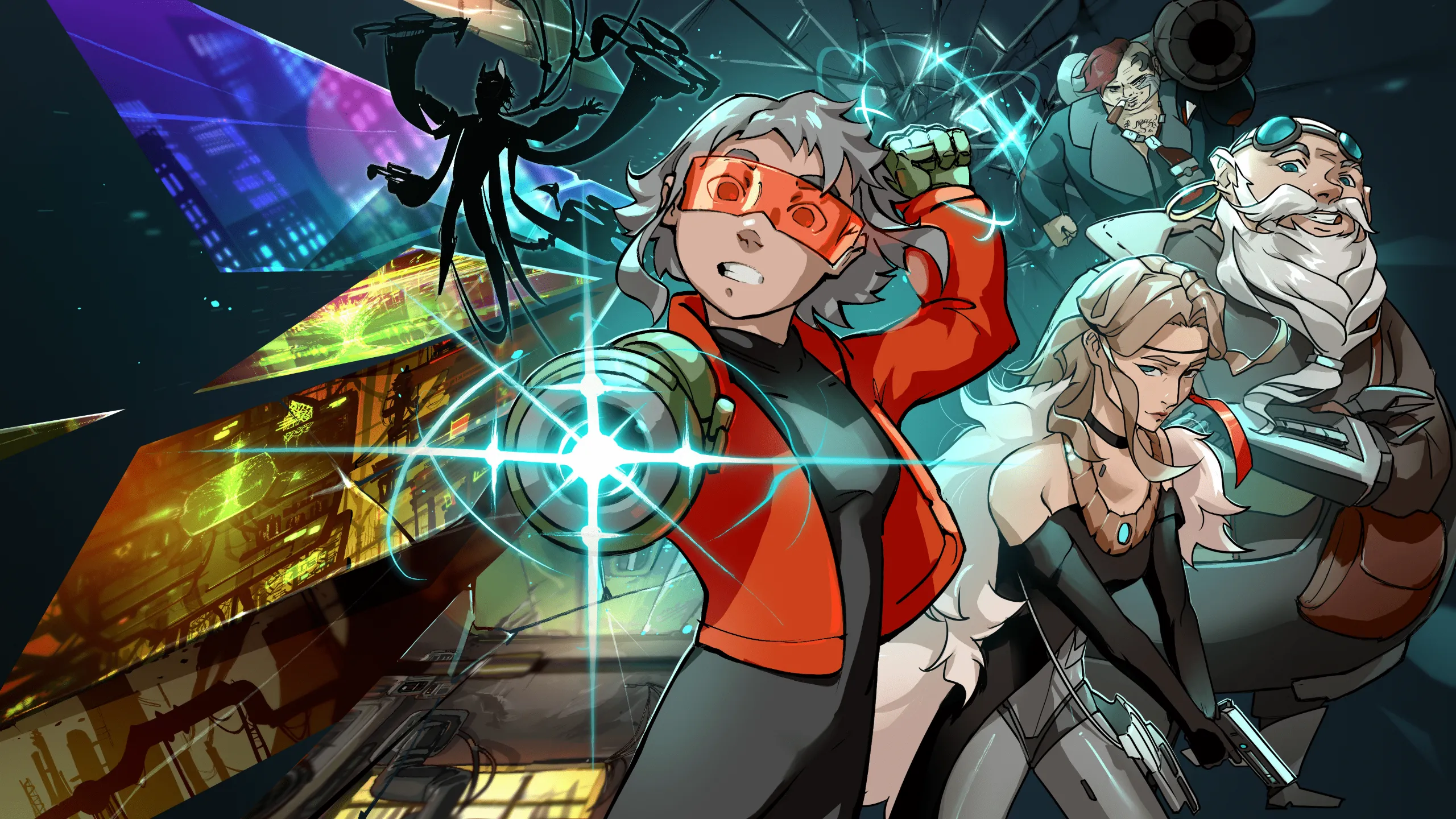
CAPSULE ART: Created by Anastasiia Maron
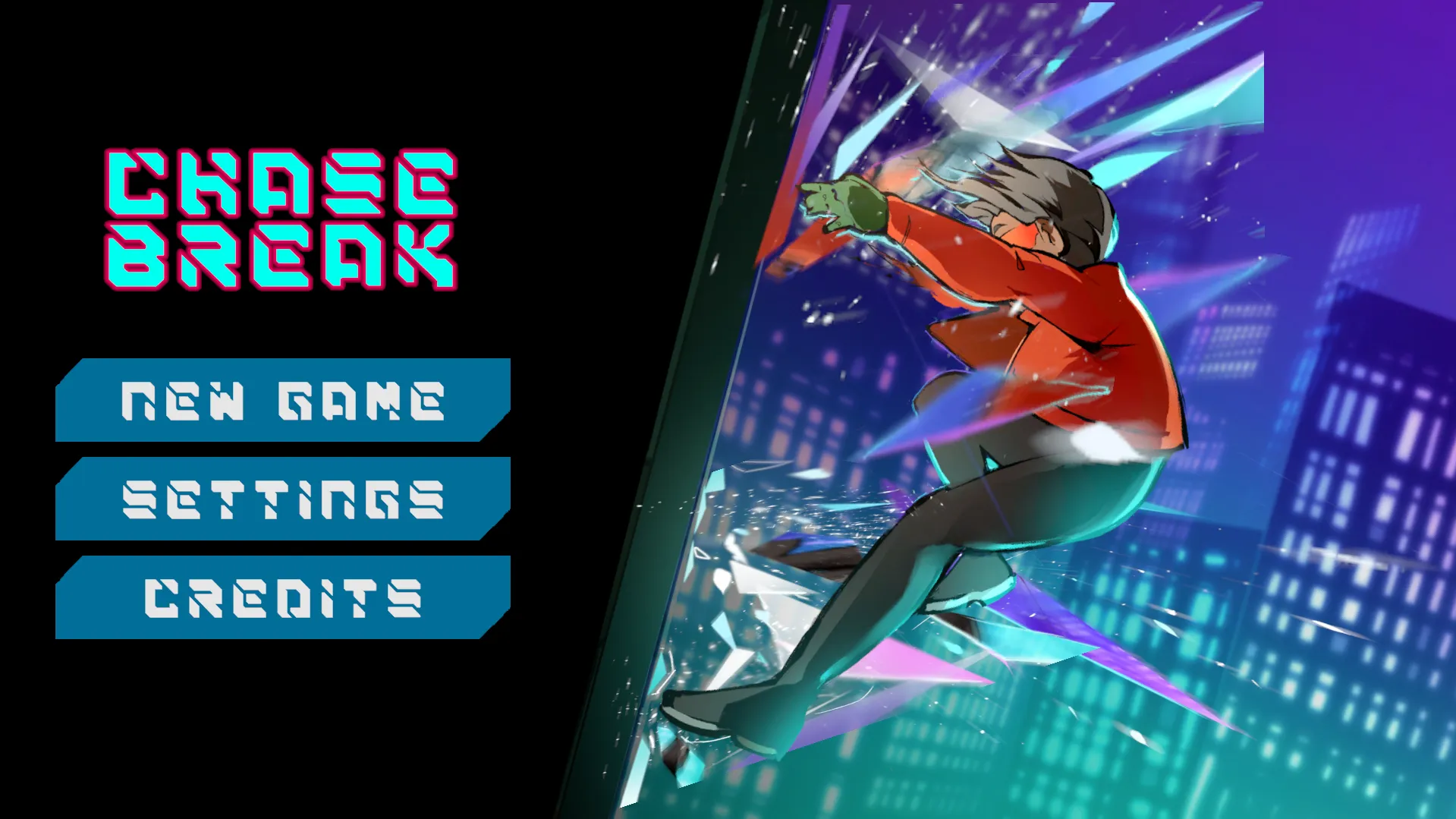
SCREENSHOT: In-game visuals
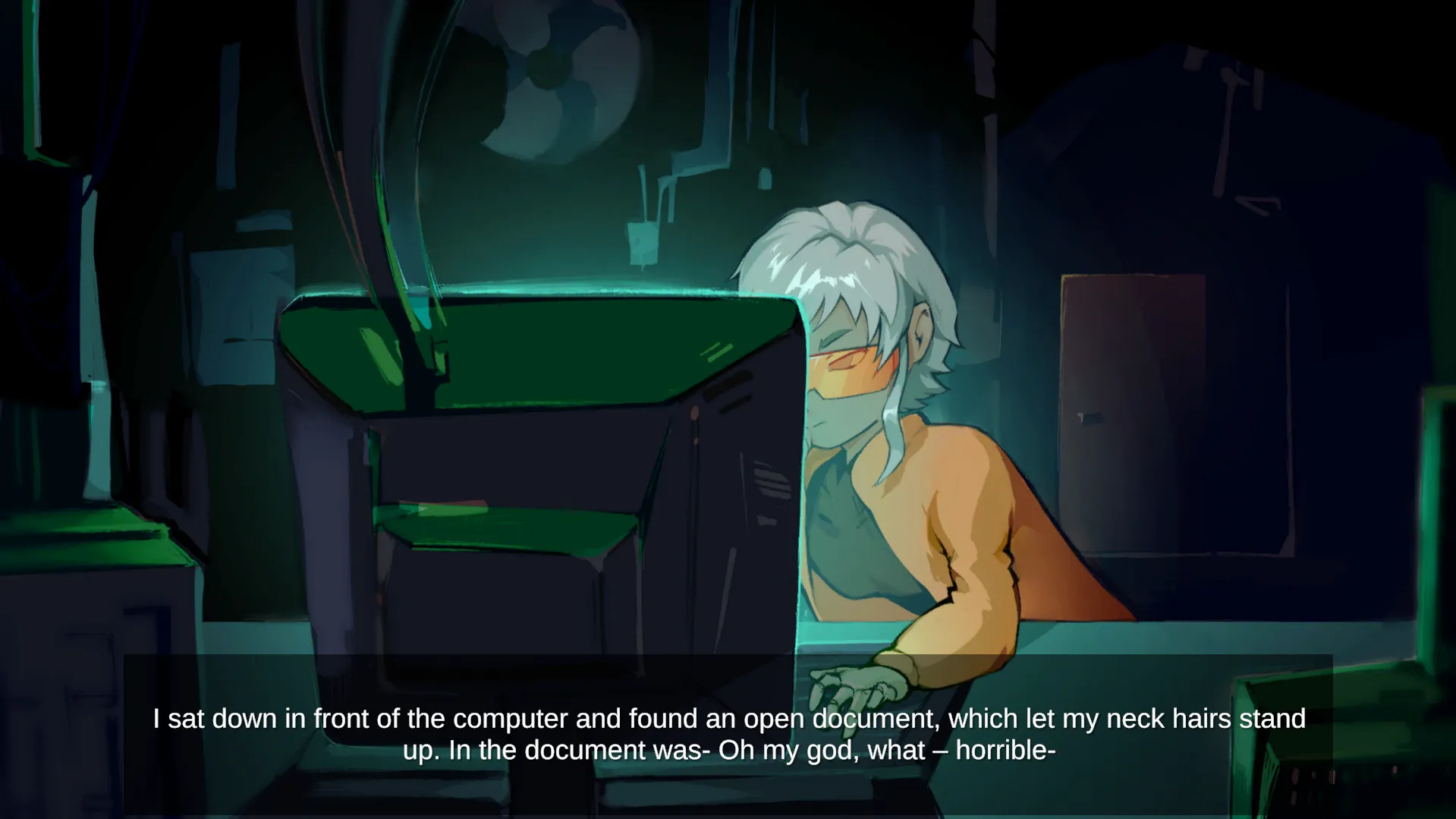
SCREENSHOT: In-game visuals
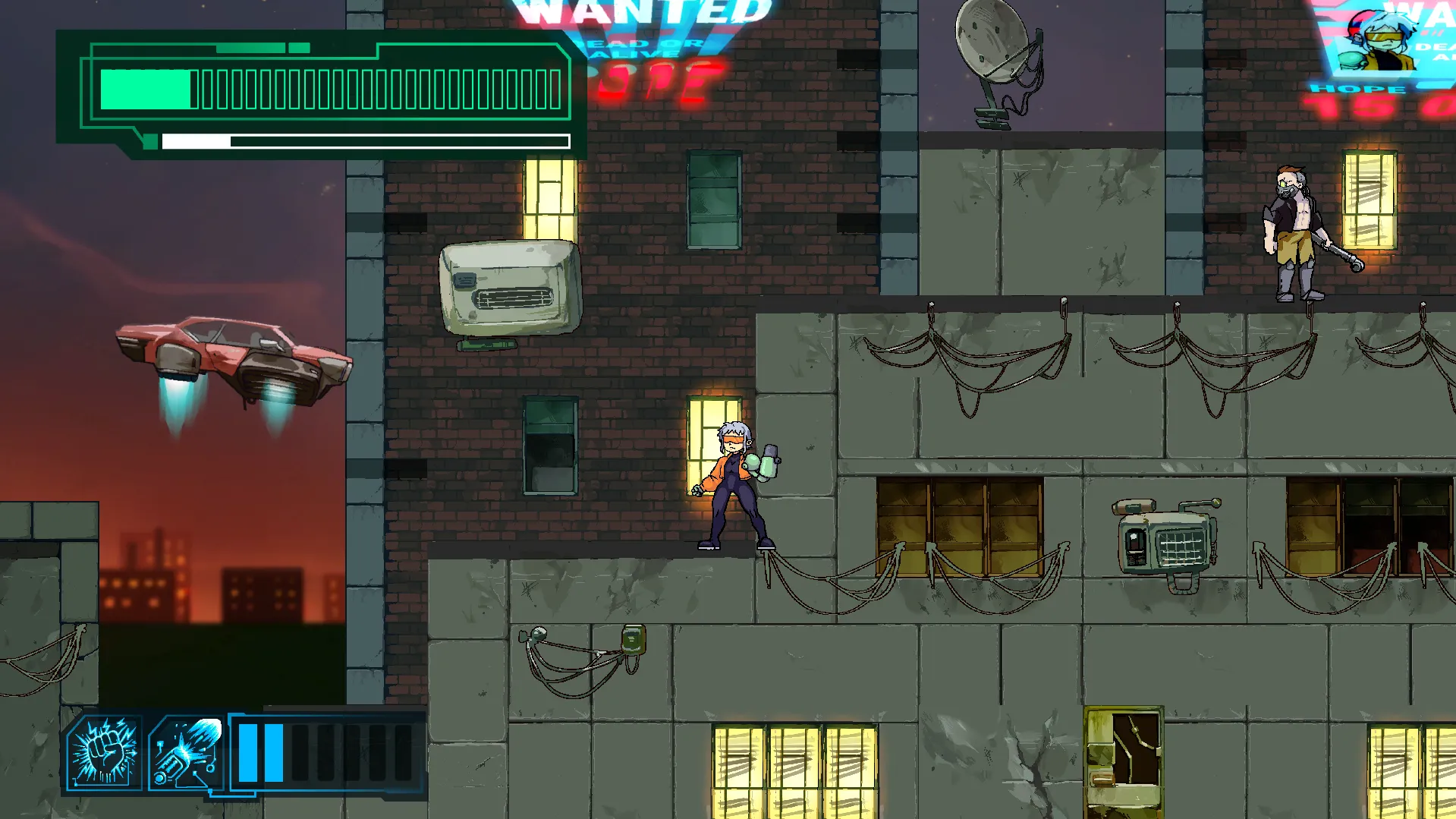
SCREENSHOT: In-game visuals
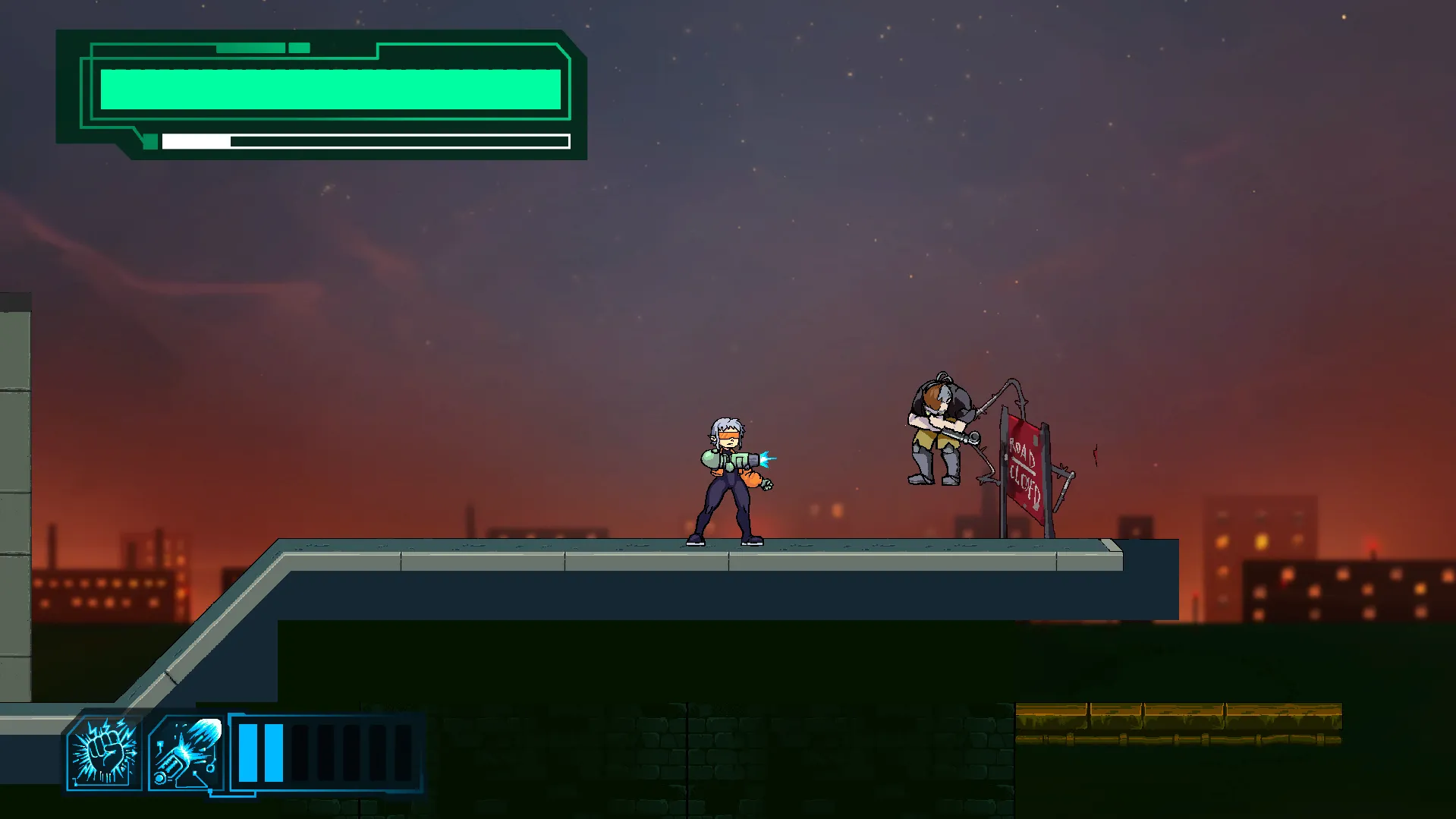
SCREENSHOT: In-game visuals
WORKPLAN GUIDE: A simple workflow prepared to guide the team members until the end of MVP
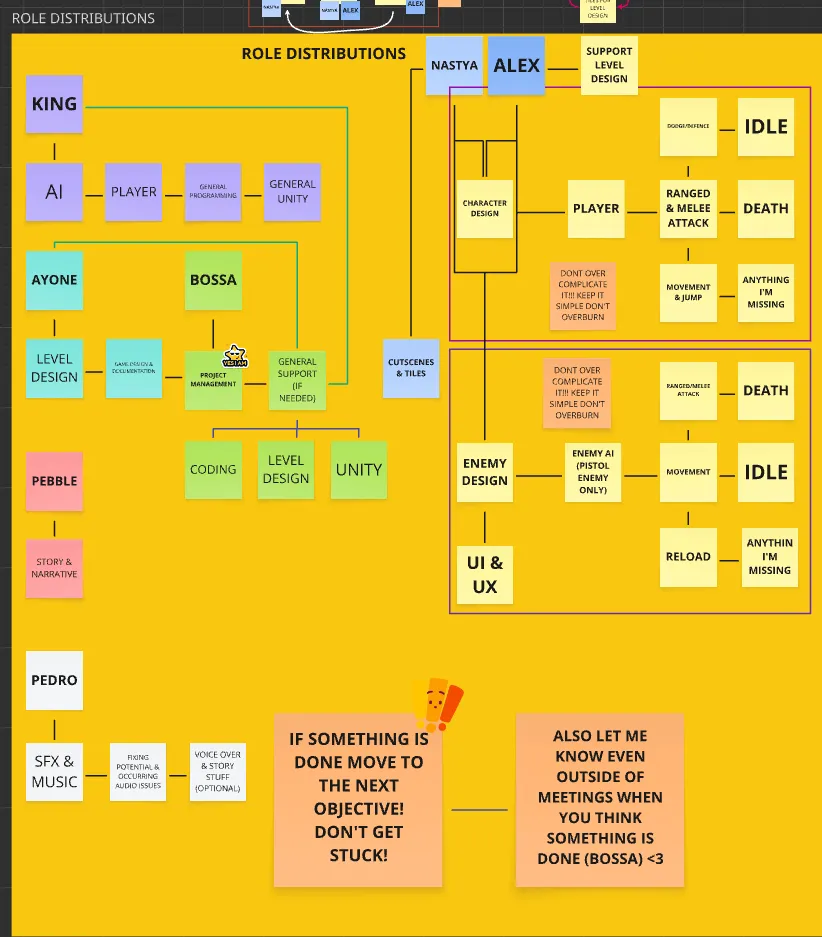
ROLE DISTRIBUTION: I created a mindmap for the members of each department to follow in case if they are lost or confuse
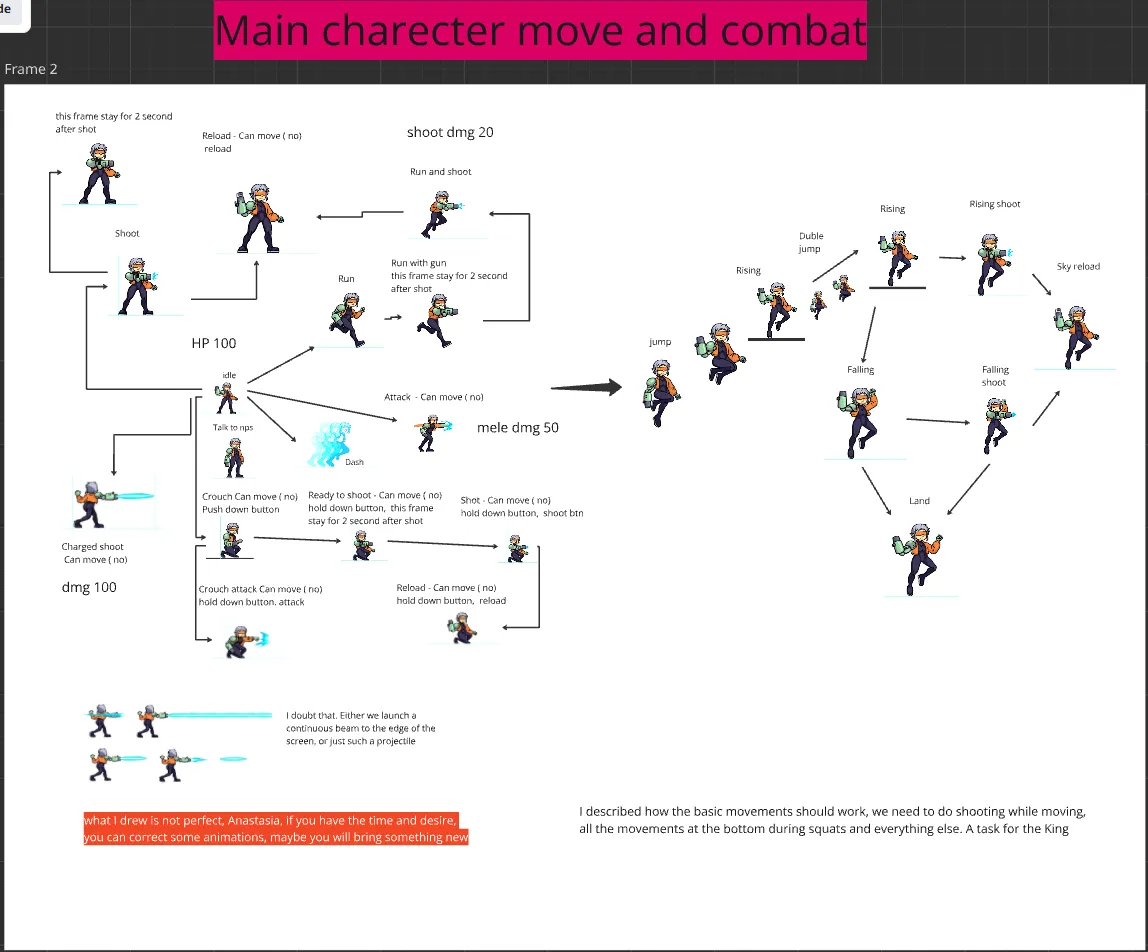
MAIN CHARACTER: Planning the movement and animations for the main player character
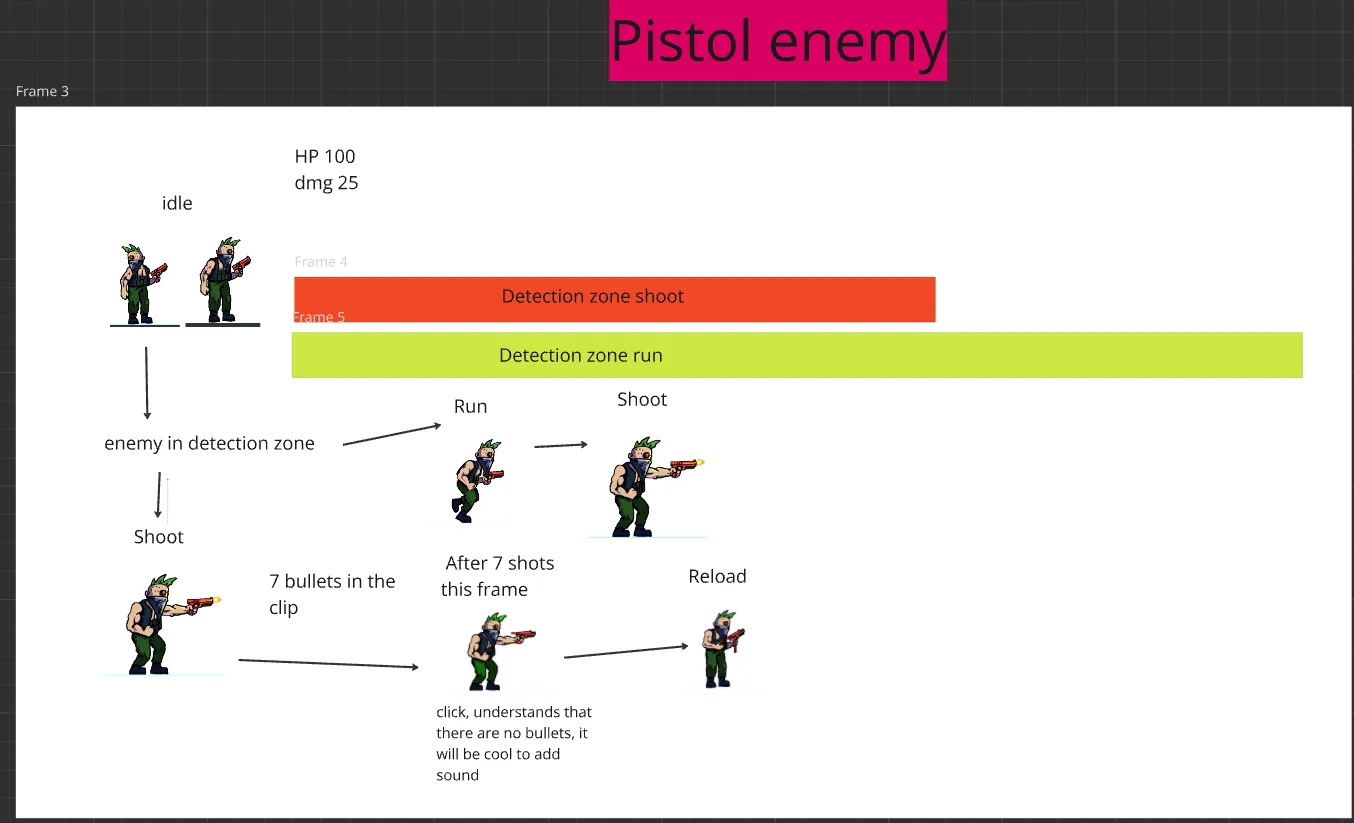
ENEMY AI: Planning of ranged enemy AI
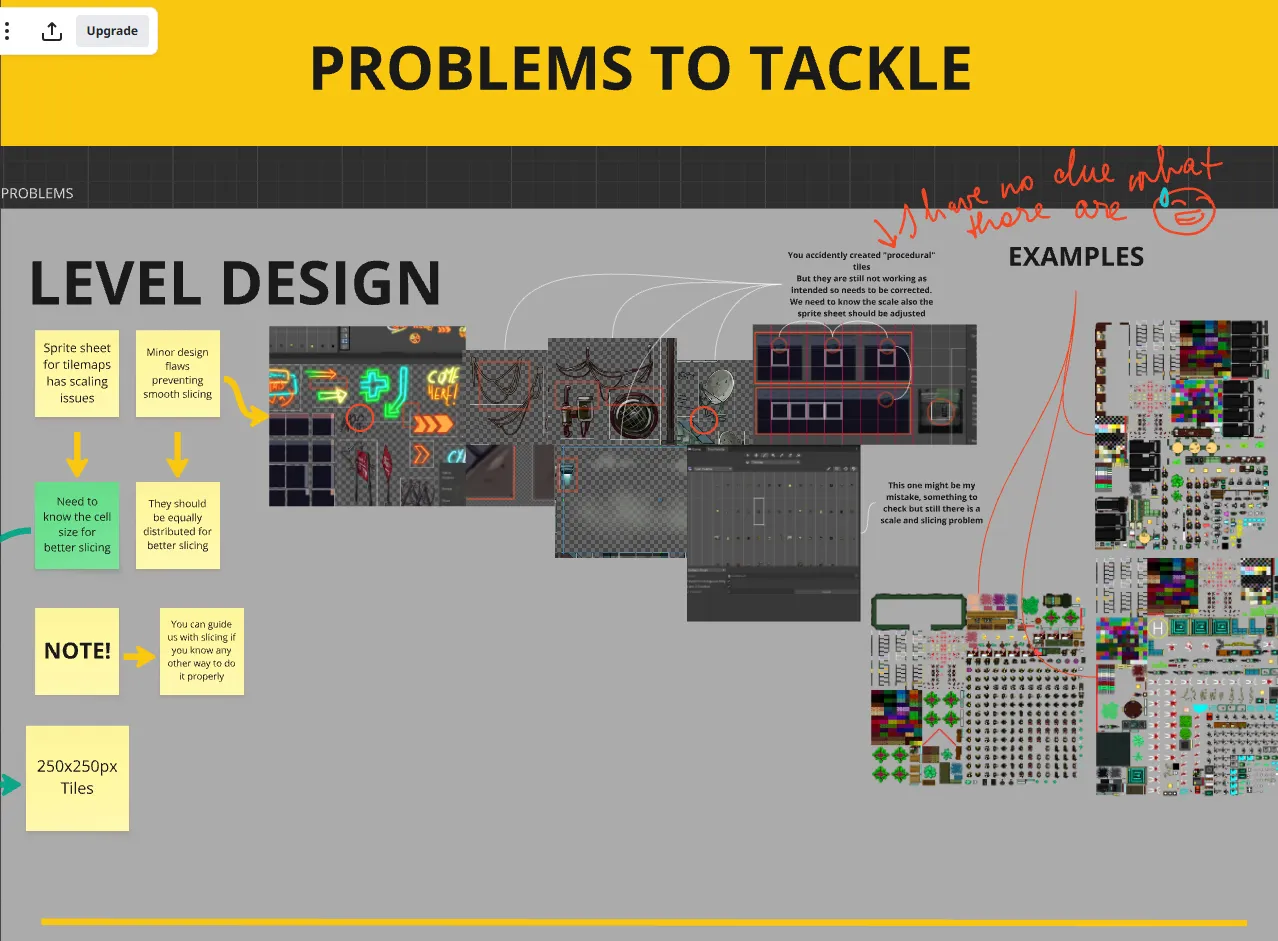
ISSUE TRACKING: Tracking and noting the issues we encounter along the development
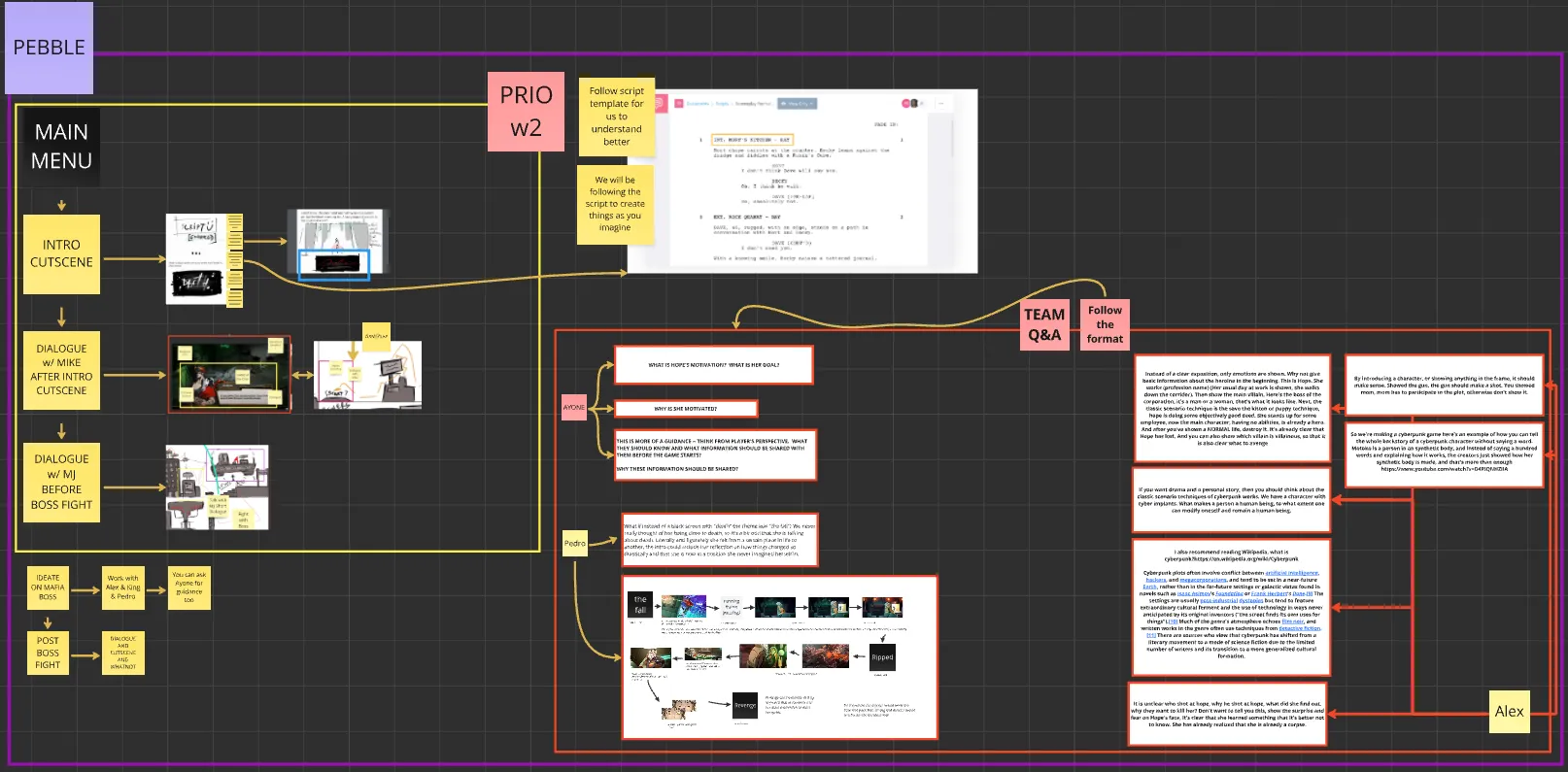
GAMEPLAY PLANNING: Plans that showing the ideation behind game flow and map design
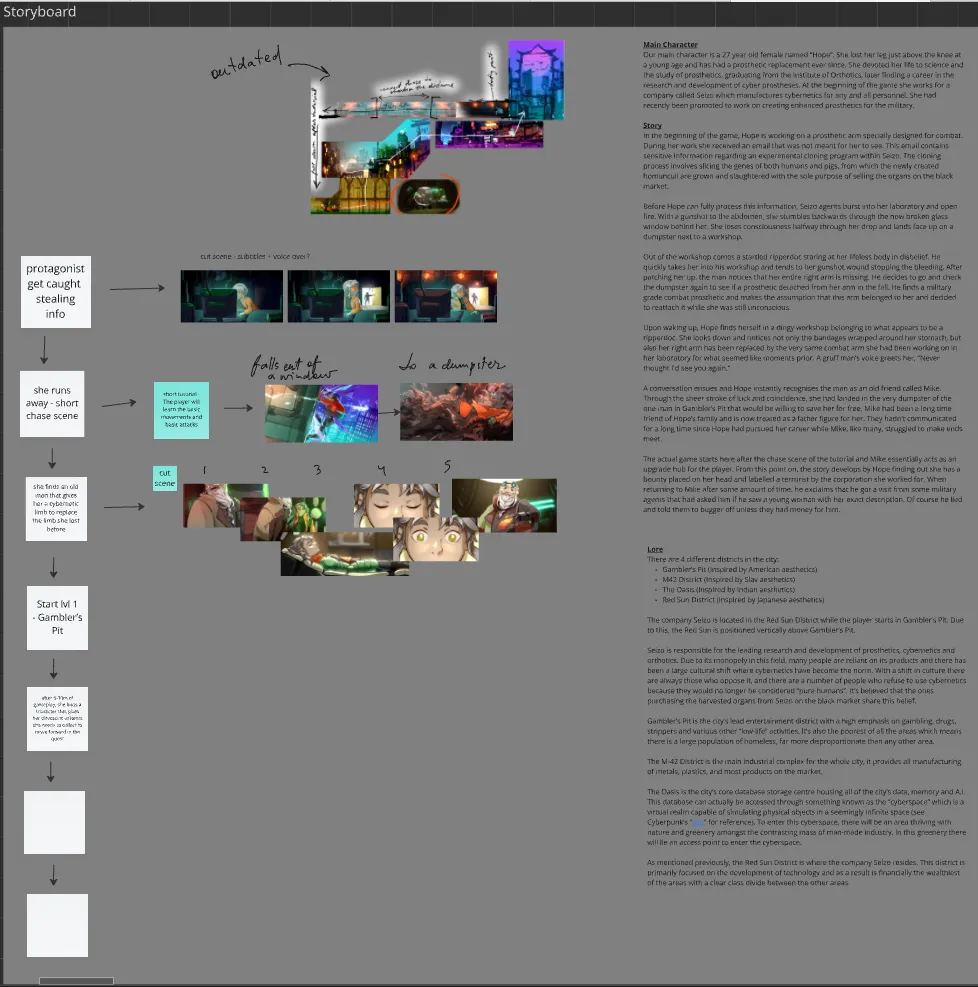
STORY BOARD: Writers and artists worked on the story during the development
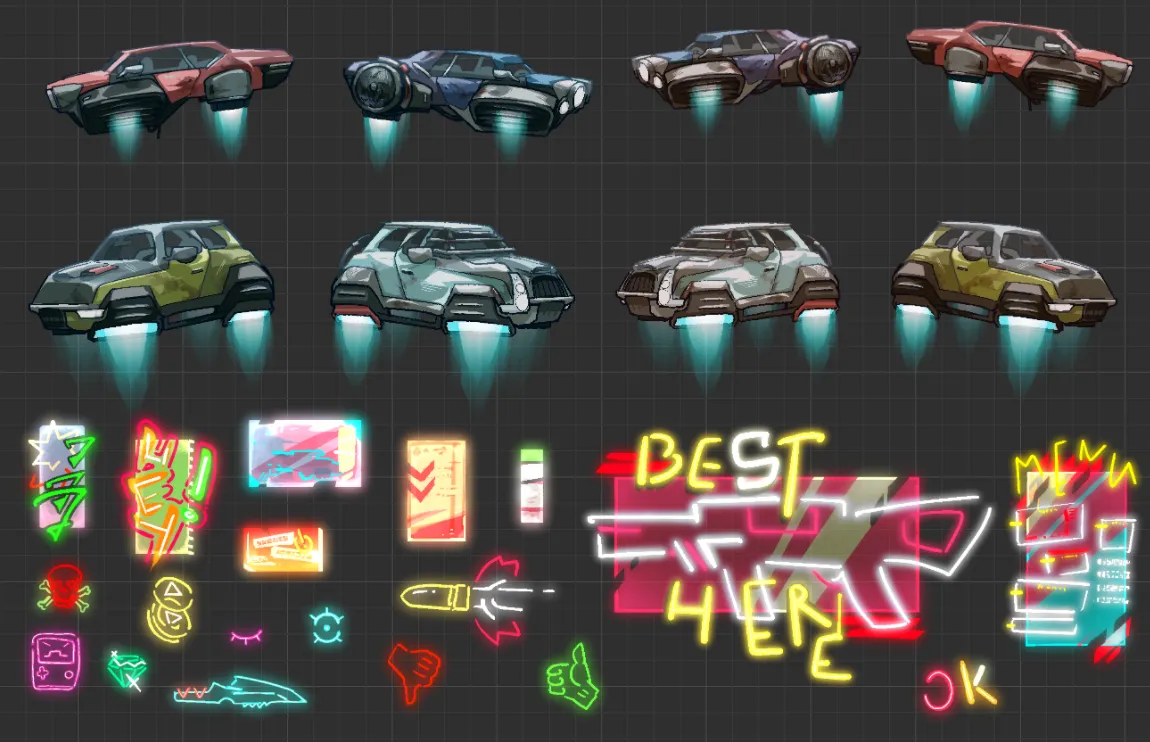
MAP DECORATIONS: Decorations and props created for the level designer
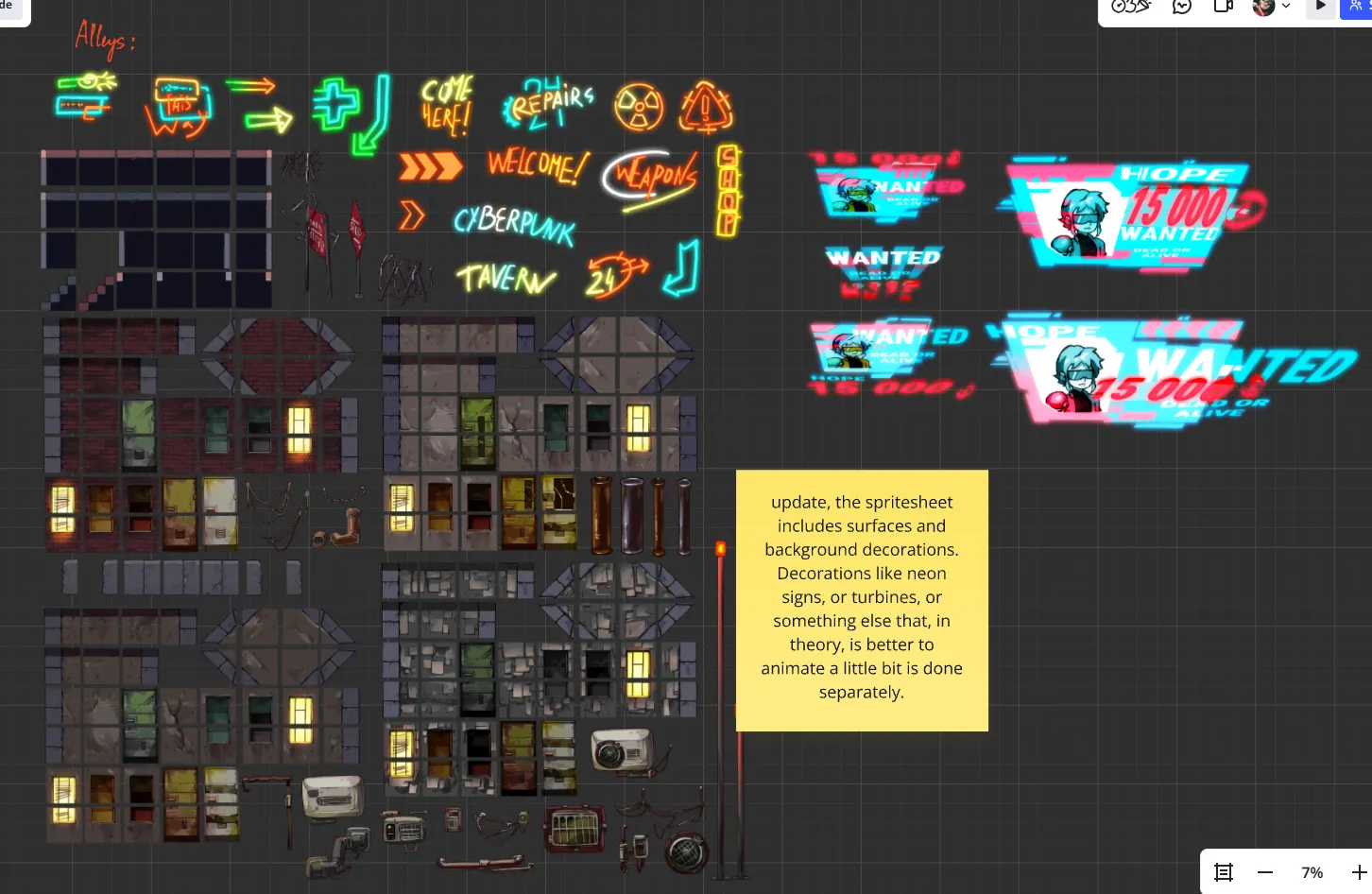
TILE MAPS: Tiles created for the level designer to work on the levels
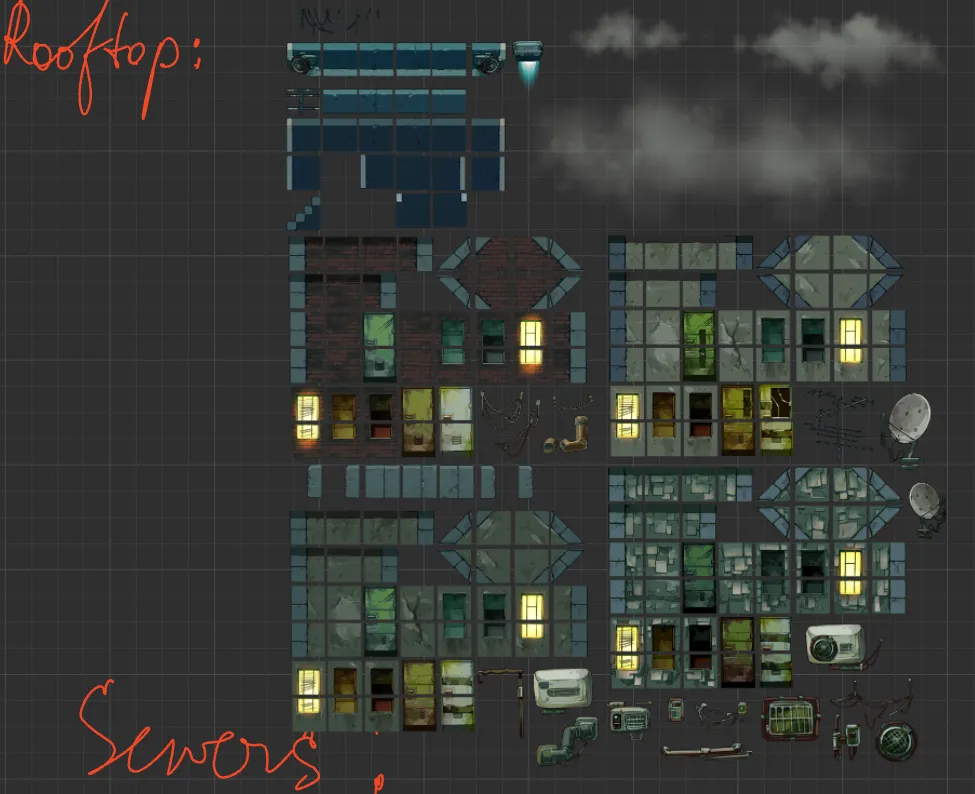
TILE MAPS: Tiles created for the level designer to work on the levels
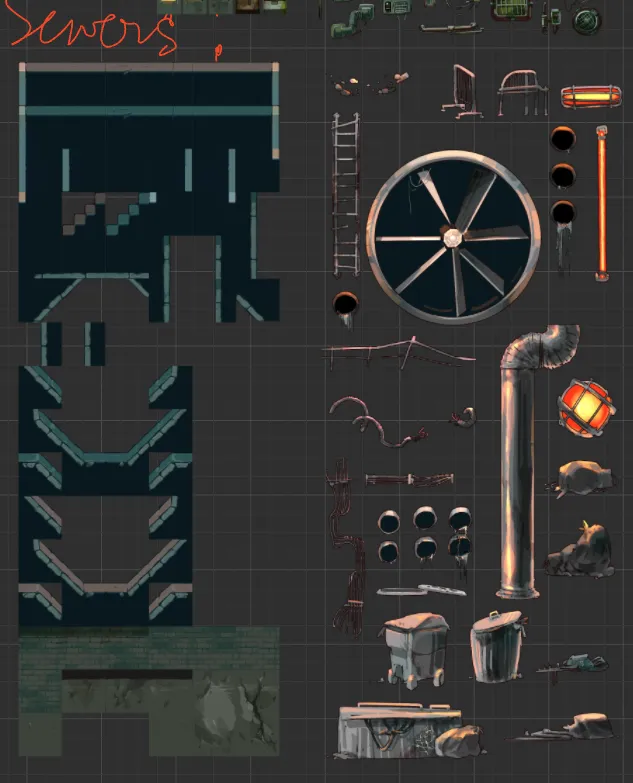
TILE MAPS: Tiles created for the level designer to work on the levels
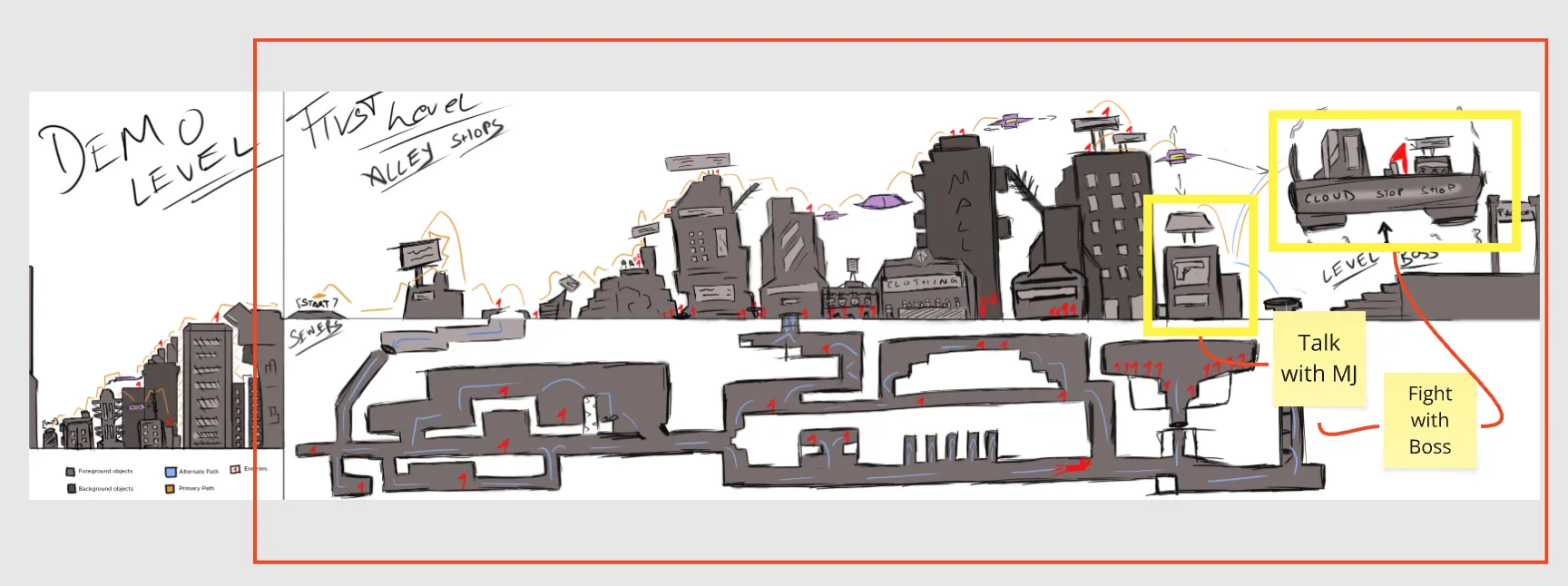
LEVEL DESIGN PLANNING: A rough plan created by the level designer
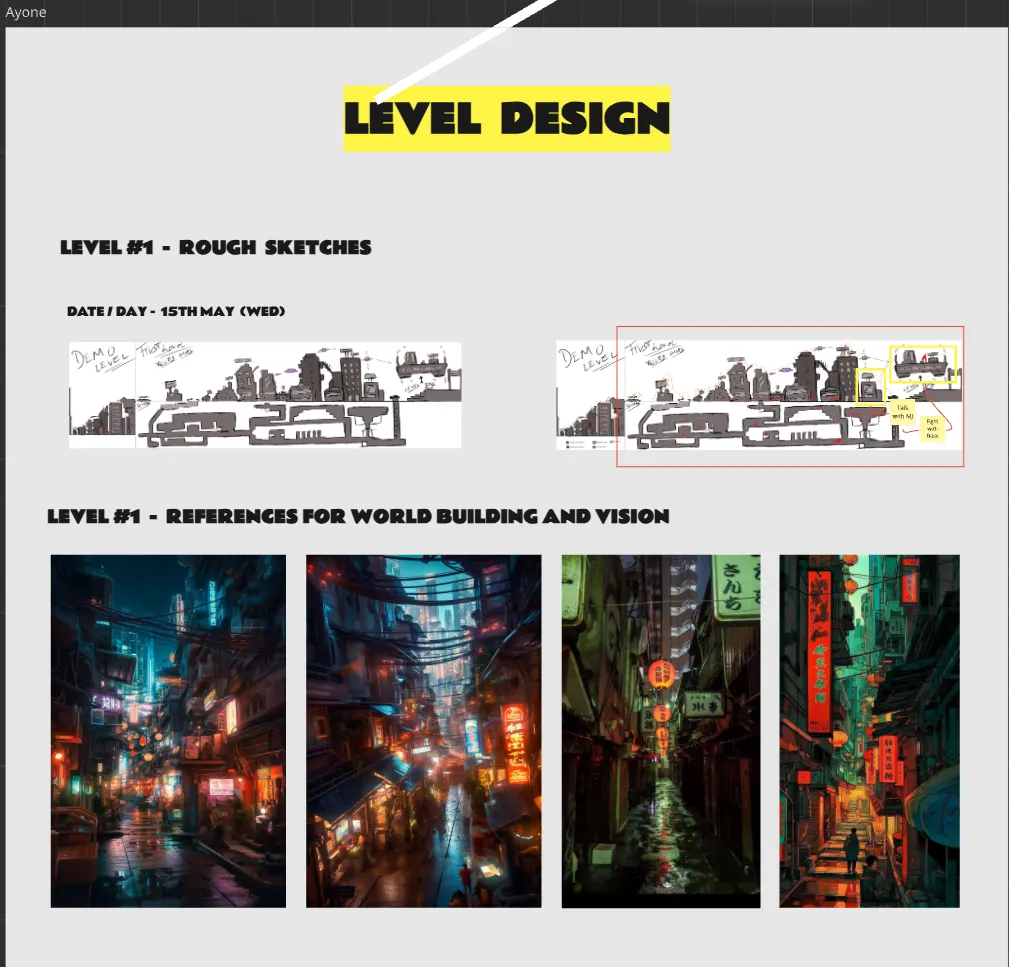
LEVEL DESIGN PLANNING: A rough plan created by the level designer
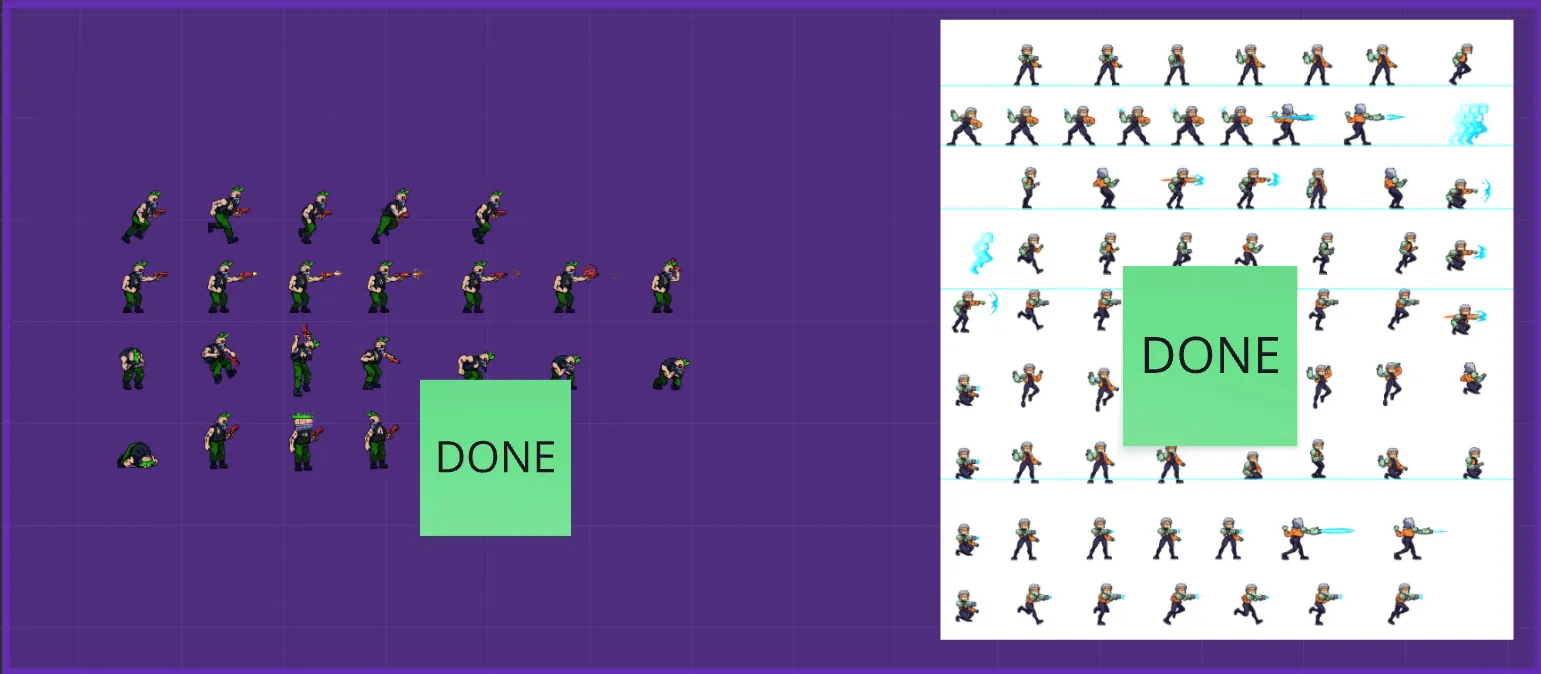
CHARACTER SHEETS: Complete character sprite sheets with animations to be used to animate characters
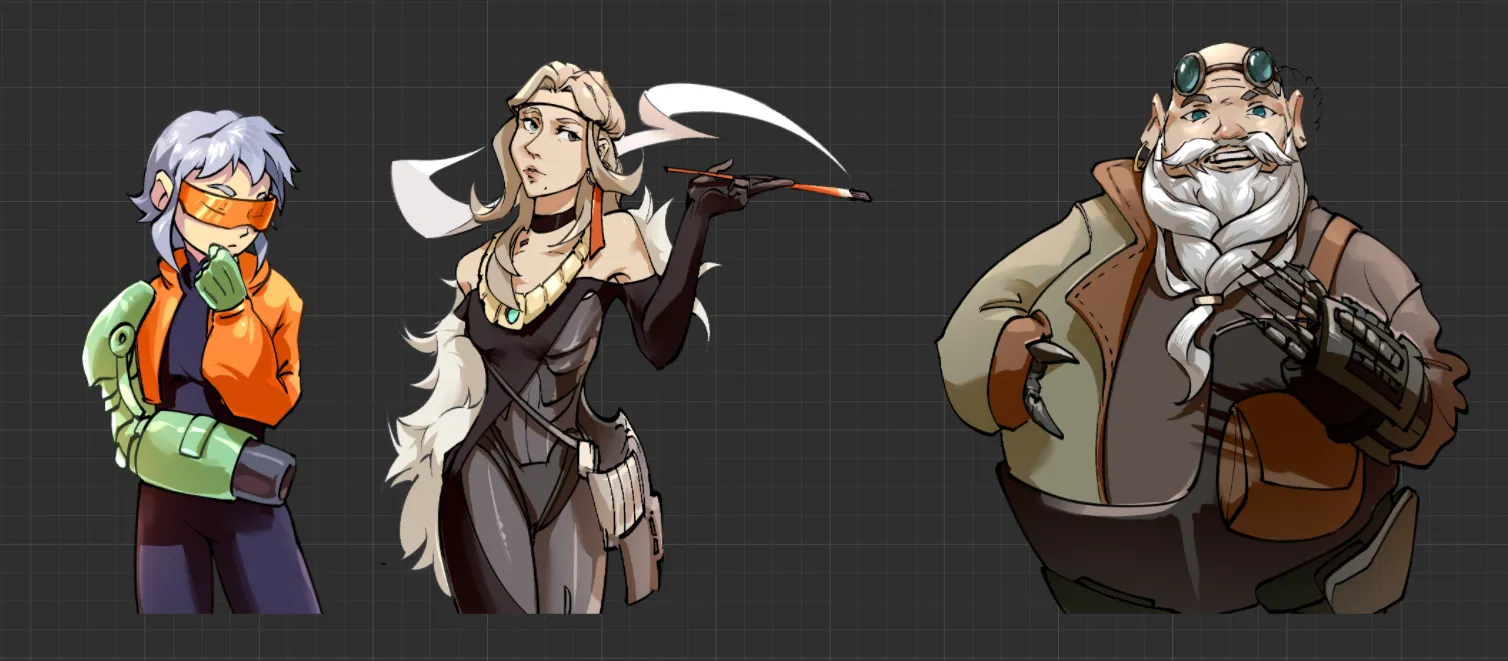
CHARACTER PORTRAITS: Portraits of characters created to
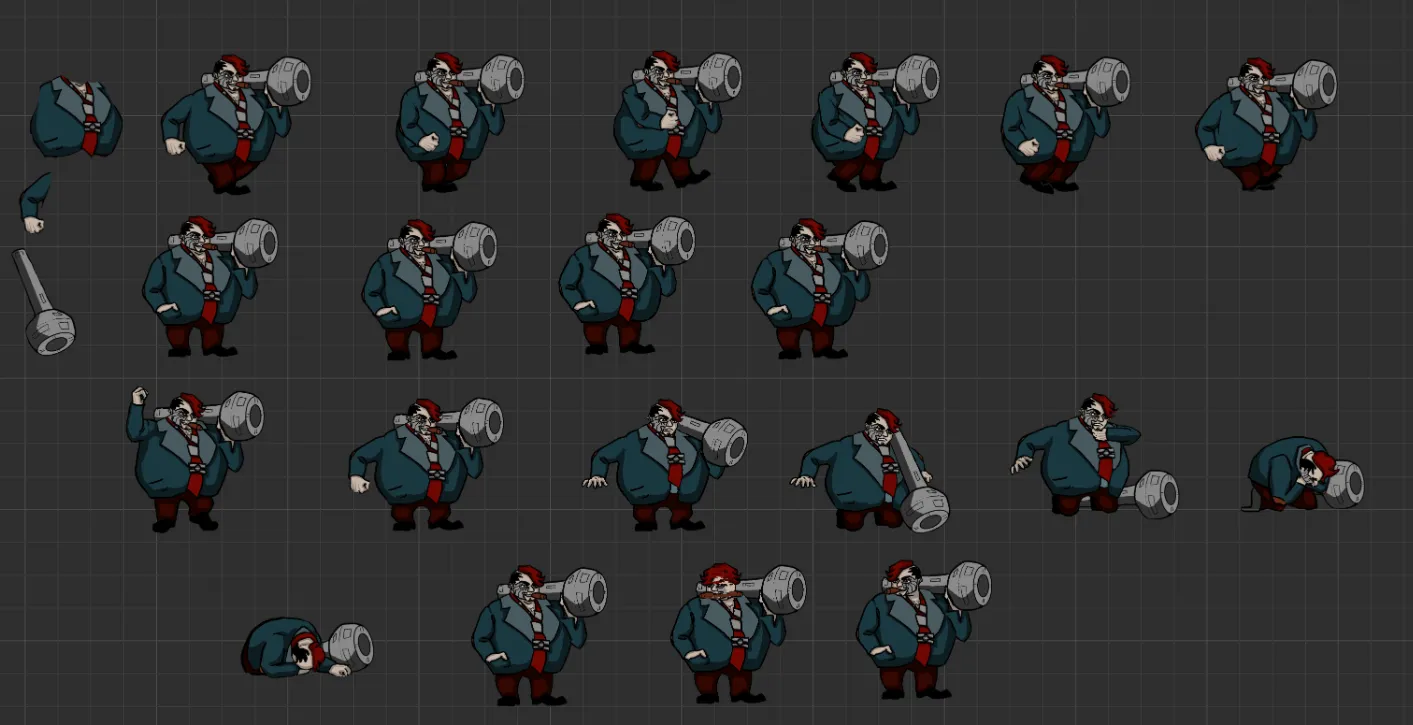
BOSS CHARACTER DESIGN: A sprite sheet of the boss character