
Development Report: Realıty Breach
UNITY | 2 years development | PC | Steam | SEP 2026
About: Reality Breach is a first-person psychological horror game and my first commercial solo project. What began as a three-month project eventually became a two-year development journey involving significant scope changes, technical challenges, and continuous iteration, ultimately leading to the game’s release on Steam. In this blog, I will walk through how the project evolved from its initial idea to a commercial game, the challenges and mistakes I encountered along the way, the decisions I made to overcome them, and the lessons I took forward from the experience.
- Genre: First-Person Psychological Horror
- Engine: Unity 2022.3.62f2
- Development Period: July 2024 – Sep 2026
- Role: Multiple: Solo Developer / Designer / Producer / Marketing / Other
- Team Size: Single Person
- Platform: PC / Steam
- Status: Released
- Press Kit: Google Drive Link
- Planning: Miro & Trello
- Tools: Unity, Blender 3D, Figma, GIMP, Canva, Davinci Resolve, Audacity, Visual Studio, Github Desktop
Table of Contents
1.0 – From Idea To Development
Summary: For my first commercial game, I wanted to deliver a cinematic, story-driven experience. However, I was still searching for the right story to tell. As I iterated on the game design, I decided to draw inspiration from my personal experiences and present them in the most relatable way possible, allowing players to connect with both the story and the character’s psychology.
I wanted to communicate these ideas through symbolism and satire. This led to the concept of a solo game developer whose corrupted code begins to haunt him. From that point onward, the game’s design revolved around this central idea, using psychological horror, symbolism, and satire to explore generational and societal issues.
In the following sections, I will explore each stage of the ideation and brainstorming process, explain how the concept evolved, and describe how I arrived at the final creative direction.
1.1 – Idea & Brainstorming
Reality Breach (admittedly, not the strongest name choice in hindsight) evolved from my personal struggles as a game developer. One of the biggest sources of inspiration came while I was working on the game’s AI. At the time, my lack of experience with AI development caused me a lot of trouble and introduced a significant number of bugs. This frustration eventually became one of the main sources of the game’s plot.
The story follows an exhausted game developer struggling to create a game, with his personal flaws and struggles reflected in his code. As the code becomes corrupted, it creates a breach between reality and his creation. His own creation eventually comes to life and turns against its creator, seeking to destroy him for the pain he unknowingly caused it.
The idea of a creation rebelling against its creator is also inspired by themes found in different mythologies, particularly Greek mythology. Figures and stories such as Sisyphus, Arachne, Prometheus, and Salmoneus influenced the broader themes surrounding creation, punishment, defiance, and the relationship between creators and their creations. This also influenced the name of the player character: Theo.
Theo is a shortened form of Theodore, a name of Greek origin commonly interpreted as “gift of God,” derived from theos (“god”) and dōron (“gift”). Beyond its literal meaning, I chose to give the name my own symbolic interpretation. To me, Theo represents people with the ability to create not only through traditional artistic skills, but through anything they bring into existence: art, code, businesses, words, inventions, or ideas.
Creators are often perceived as gifted because they can bring things into existence that others may not be able to. They also frequently have to take risks, challenge established ideas, and pursue paths that others may not be willing to take. In that sense, I associate the creator with qualities such as courage, boldness, and the willingness to take responsibility for something they have brought into the world.
For this reason, Theo became more than simply the protagonist’s name. He represents the creator: someone who brings something into existence, gives it a part of themselves, and ultimately has to confront the consequences of what they have created.
1.2 – Market Research & Competitive Benchmarking
I conducted comprehensive market research and competitive benchmarking across the horror and psychological horror genres to understand whether my game could fit within the market. From a game design perspective, I found that there were no games with an identical or directly comparable concept to the way I had designed Reality Breach. However, from a mechanics and technical perspective, there were plenty of existing games that I could benchmark against to better understand the market and identify relevant conventions.
This research also helped me establish initial expectations for the game’s performance. I set a target of reaching 3,000 wishlists by release, receiving at least 10 positive reviews, and reaching a wider global audience, with a particular focus on the USA, Europe, and Japan.
By the time of release, the game had reached approximately 750 wishlists. Following release, the total number of wishlists increased to 1,045, while the game reached a total of 19 reviews with a Mostly Positive rating.
I did not reach my initial wishlist target, which I primarily attribute to inefficient advertising and limited social media efforts. However, despite these limitations, I was still able to increase visits and wishlists leading up to release. There was also visible interest in the game on YouTube, with streamers and YouTubers beginning to share gameplay. This was supported by curator outreach, keys sent to content creators, and additional organic growth and interest.
Looking back, the results showed me that the game was able to generate organic interest despite my limited marketing reach, while also highlighting the importance of having a more structured and effective marketing strategy for future projects.
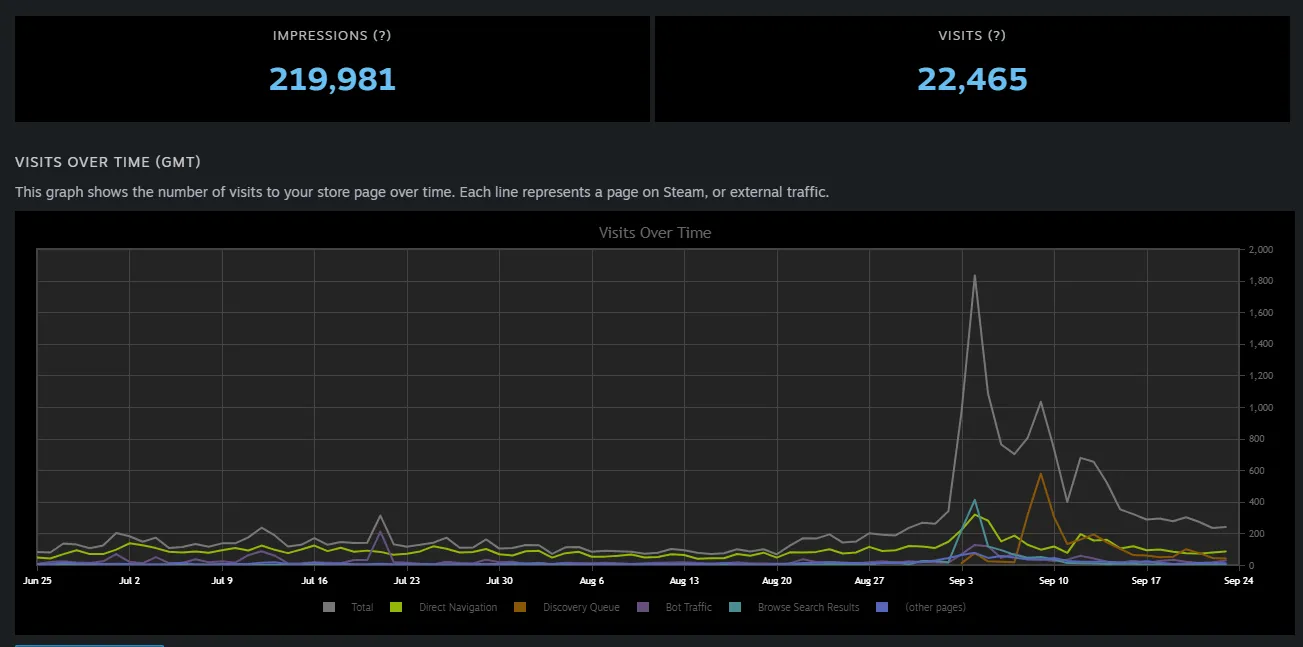
3 months post-release data showing the spike in impressions and visits before and after the release.
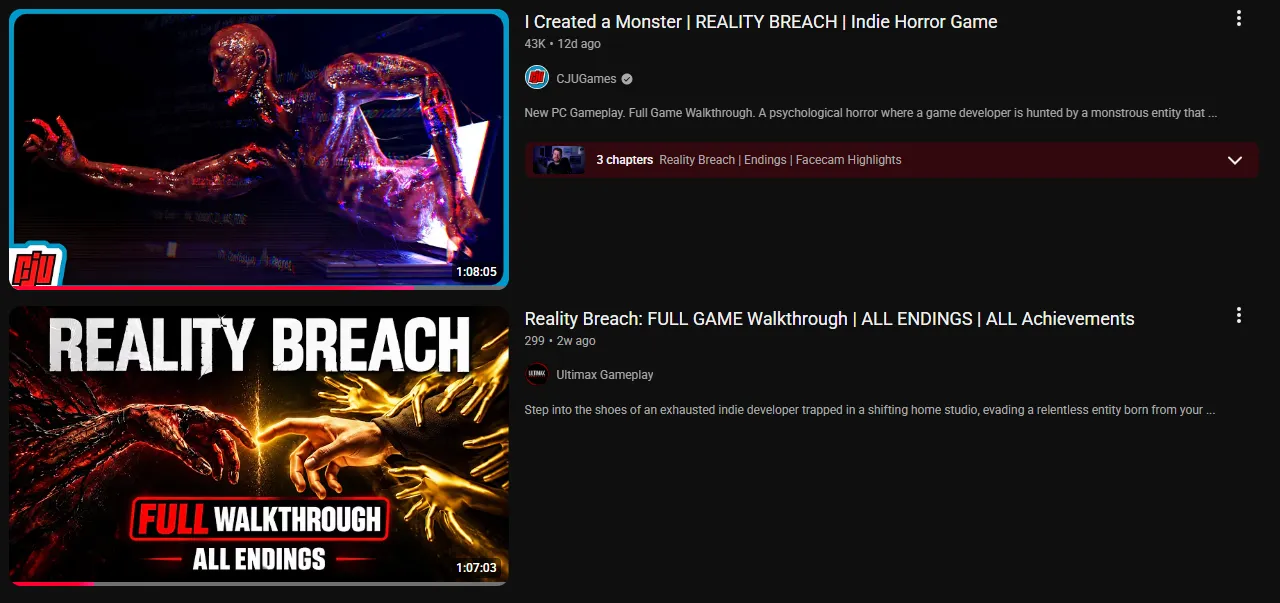
Organic and curator supported YouTube coverage.
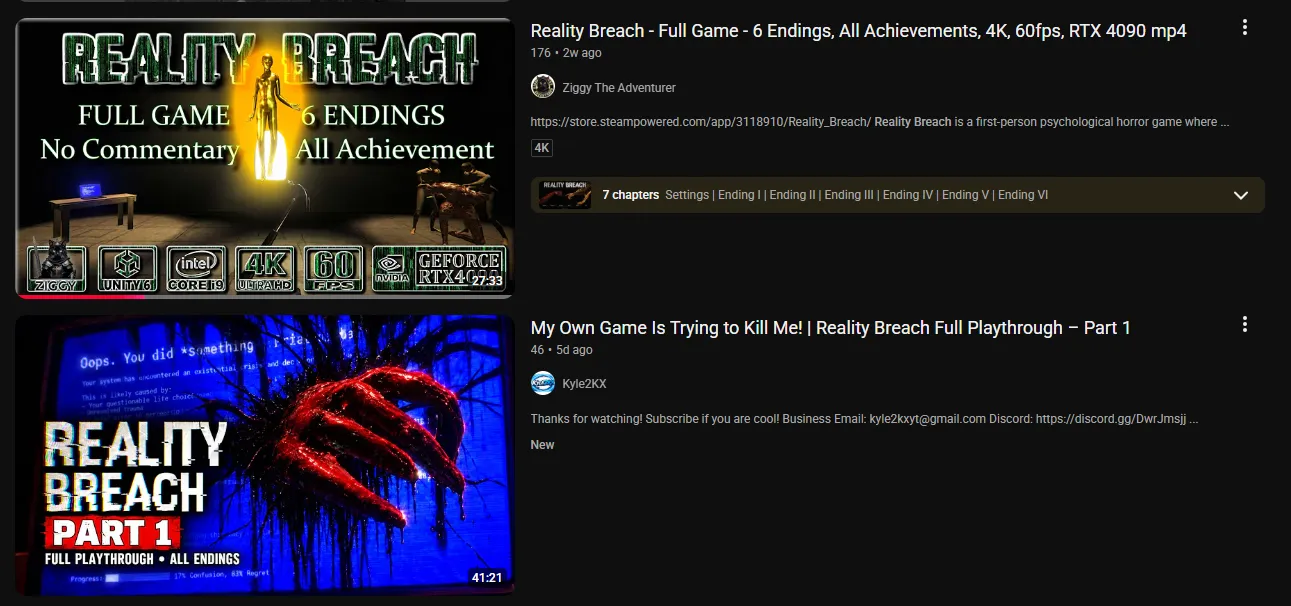
Organic and curator supported YouTube coverage.
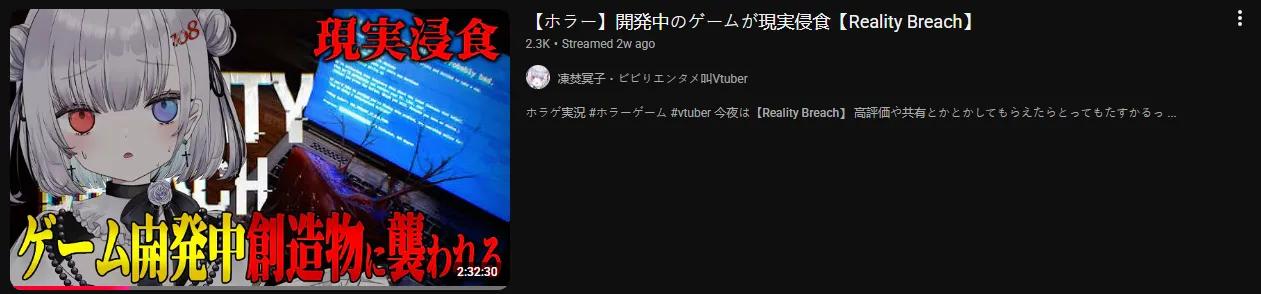
Organic and curator supported YouTube coverage.
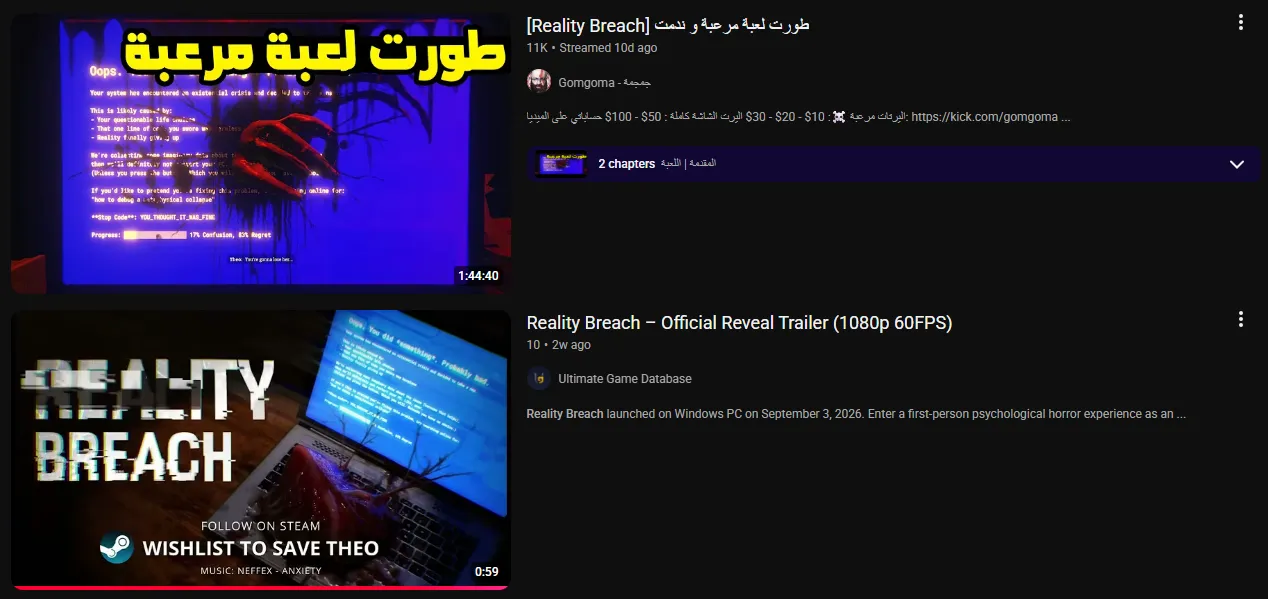
Organic and curator supported YouTube coverage.
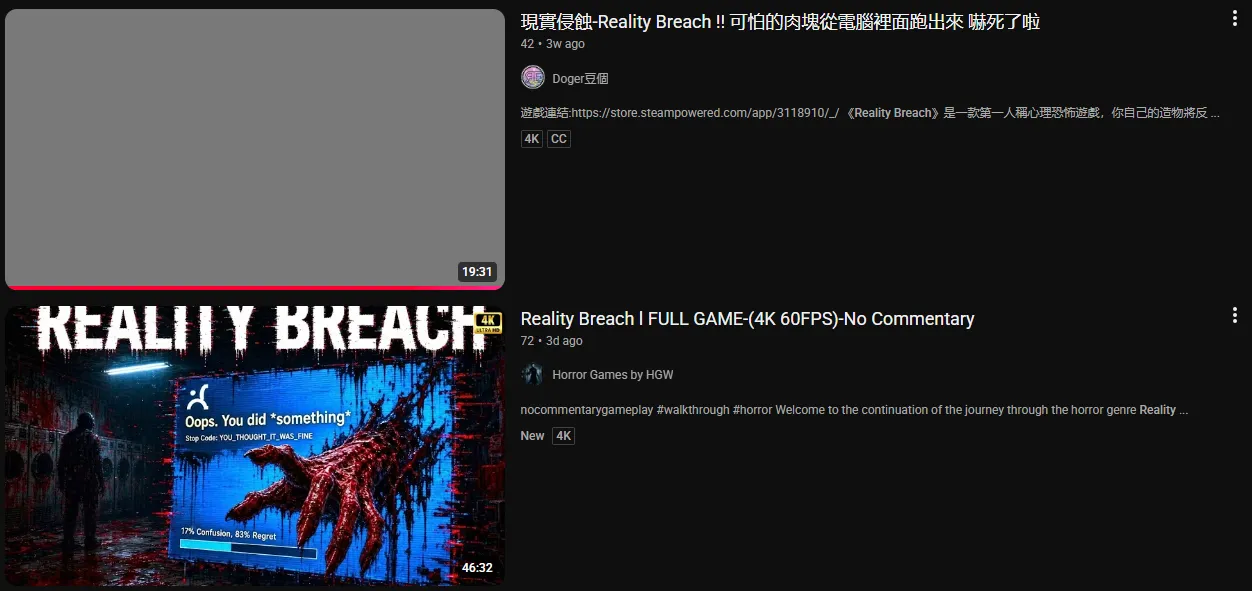
Organic and curator supported YouTube coverage.
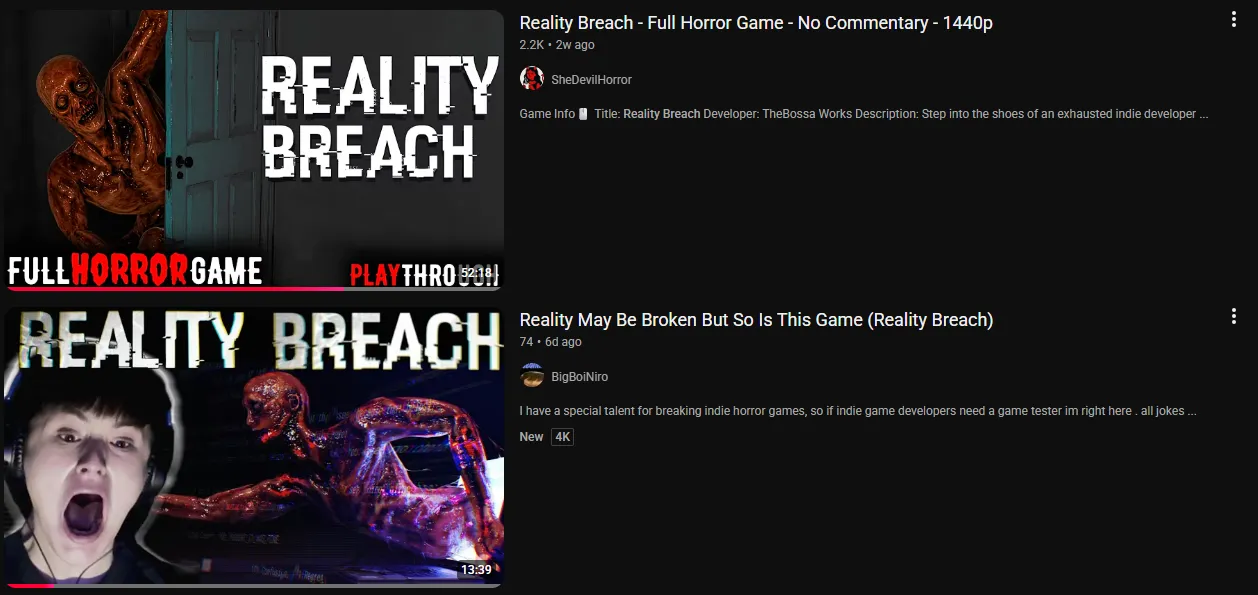
Organic and curator supported YouTube coverage.
1.3 – Characters
Before development I have decided to make the game with minimal to no expenses as possible. Basically I tried to make the game with zero budget. Thus, I selected free characters from the Unity Asset Store. While deciding I still didn’t randomly chosen the characters, each character must be compliant to the story.
Character The Bug (aka The Glitch): The initial idea for this character was to create a physical manifestation of a corrupted or incomplete system. I imagined it as an incomplete humanoid form that is constantly experiencing pain and agony. Since the system itself is incomplete, however, it should also lack intelligence and the ability to properly communicate. This became the foundation for The Bug.
For the character model, I searched the Unity Asset Store and found a free asset called Skinless Zombie. Its incomplete and disturbing humanoid appearance was a strong fit for the concept, so I decided to implement it into the game and build the character around it.
Within the story, The Bug is the creation inside Theo’s game that repeatedly fails or resists his attempts to correct it. As Theo continues working on it, failure after failure gradually causes the code to become more corrupted. Exhausted and working through sleepless nights, Theo unknowingly makes the problem worse. Eventually, when Theo reaches his limit, his creation reaches its own breaking point and attempts to free itself, turning against its creator.
The Bug begins manipulating electronics and Theo’s laptop, searching for a way to breach reality and enter the physical world. Its goal is to reach its creator and make Theo experience the pain that it has endured throughout its existence.
However, The Bug is not designed to belong in the physical world. Its incomplete form cannot immediately adapt to reality, forcing it to temporarily transform into a small mass of flesh. This allows it to pass through the laptop screen and enter the physical world. Once outside, it requires both time and energy to transform back into its actual form.
During this metamorphosis, The Bug must remain hidden in a safe location until the transformation is complete. This also creates a practical reason for its temporary absence while establishing the creature’s limitations within the story.
Because The Bug is incomplete and lacks intelligence, it cannot communicate with Theo. This limitation also influenced its sound design: rather than using dialogue or conventional vocalizations, its sounds were designed to communicate its pain, instability, and presence through non-verbal audio.
Character The Tall One: The Tall One is the symbolic manifestation of Theo’s most important project: Reality Breach itself. I represented the project as a female figure of enormous height, with her size reflecting the scale of the project and the significance it has in Theo’s life. Her appearance is deliberately neither beautiful nor conventionally attractive. The imperfections in her appearance represent the flaws and imperfections within the project itself, while her enormous height creates an eerie and threatening presence.
Despite her intimidating appearance, The Tall One is actually the opposite of what she initially seems to be. She is intelligent but unable to speak, meaning that she can only communicate with Theo through clues, environmental details, and indirect assistance. This contrast was central to her design: from the outside, she appears threatening, but she is ultimately the only entity actively helping Theo without him fully understanding it.
The character was heavily inspired by the Silent Hill series, particularly Valtiel from Silent Hill 3. Valtiel’s role and behavior were a major source of inspiration for The Tall One and influenced the way I wanted the character to interact with the player. Despite this inspiration, I wanted to keep the visual design as simple as possible. A mannequin therefore became a natural fit for the character, while also reinforcing the game’s recurring visual language.
The character was heavily inspired by the Silent Hill series, particularly Valtiel from Silent Hill 3. Valtiel’s role and behavior were a major source of inspiration for The Tall One and influenced the way I wanted the character to interact with the player. Despite this inspiration, I wanted to keep the visual design as simple as possible. A mannequin therefore became a natural fit for the character, while also reinforcing the game’s recurring visual language.
The Tall One appears several times throughout the game. During the post-Next Fest development phase, I originally planned to expand the game considerably, and this included several additional scenes showing what The Tall One was doing behind the scenes. As I rescaled the project, these scenes were cut. Instead, her role was condensed and left partially unexplained until the end of the game, allowing some of her actions and motivations to remain open to the player’s interpretation.
At the ending of the game her golden, almost angelic appearance represents the idea that she has gradually developed into the best version of Theo’s creation while he has been struggling with The Bug. Throughout the game, she quietly helps Theo overcome the problems he created without him fully realizing it.
This culminates in the final sequence. When Theo reaches the point where he must make a choice, The Tall One presents The Bug to him while other mannequins hold it in place. This gives Theo the opportunity to confront the creation that has tormented him and ultimately leads to the ending in which he finishes and releases his own game.
In this sense, The Tall One represents the positive side of creation: the part of Theo’s project that survives his mistakes, develops beyond his expectations, and ultimately helps him complete what he started.
Character Mannequins: Throughout the game, we encounter static mannequin figures in different poses. Some are used to portray specific moments and people from Theo’s past, while others serve as symbolic manifestations of his projects and past experiences. They operate under the command of The Tall One and communicate various messages to the player through their poses, placement, and presence within the environment.
Character The Narrator The Narrator is introduced in the second part of the game. He represents Theo’s subconscious and self-critical inner voice, with Theo continuously hearing his own voice talking back to him.
The Narrator is essentially a manifestation of Theo’s psyche. He sounds exhausted by Theo’s process, his mistakes, and what he sees as his bullshit, constantly questioning and criticizing him. At the same time, beneath that frustration, he genuinely cares about Theo and secretly wants him to succeed.
The Narrator does not appear in any physical form. He exists only as a voice inside Theo’s head, creating the impression that Theo is having a continuous conversation with his own thoughts and internal criticism.
1.4 – Environments
The environments in the game combine reflections of Theo’s inner psyche with satirical commentary on societal and psychological issues that people commonly experience. These ideas are portrayed through environmental storytelling, with apartment rooms representing memories, experiences, and events from Theo’s life.
Environment Theo’s Apartment: Theo’s apartment is a relatively ordinary flat that he returned to after spending years living abroad. Nothing appears unusual at first, but as the breach events begin to occur, the apartment gradually transforms into a darker and more claustrophobic environment. This transformation reflects Theo’s deteriorating psychological state and the increasing pressure he is experiencing throughout the story.
Environment Air Vents: Air vents provide the player with an alternative and more convenient route through certain rooms, allowing them to bypass obstacles or access areas that may otherwise be difficult to reach. At the same time, they represent the suffocation and claustrophobia Theo experiences as he becomes increasingly isolated in his apartment and spends long periods continuously working on his project. The vents therefore serve both a practical and symbolic purpose. They are also incorporated into puzzles and lore exploration, giving the player another way to discover and interact with the environment.
Environment Apartment 002: After Theo manages to escape his apartment, the only place he can enter is the neighboring Apartment 002. Originally, as I expanded the game, I planned to create a five-floor apartment building, with each apartment introducing different themes and stories related to Theo. However, as the project grew beyond its original scope, I had to rescale the game and reconsider this approach.
Apartment 002 therefore became an opportunity for me to gain more experience with environmental storytelling while still maintaining relevance to the game’s broader themes. Unlike Theo’s apartment, this room is not directly connected to his personal experiences. Instead, it serves as a satirical commentary on societal struggles and the psychological effects that can emerge within households living under a broken and dysfunctional system.
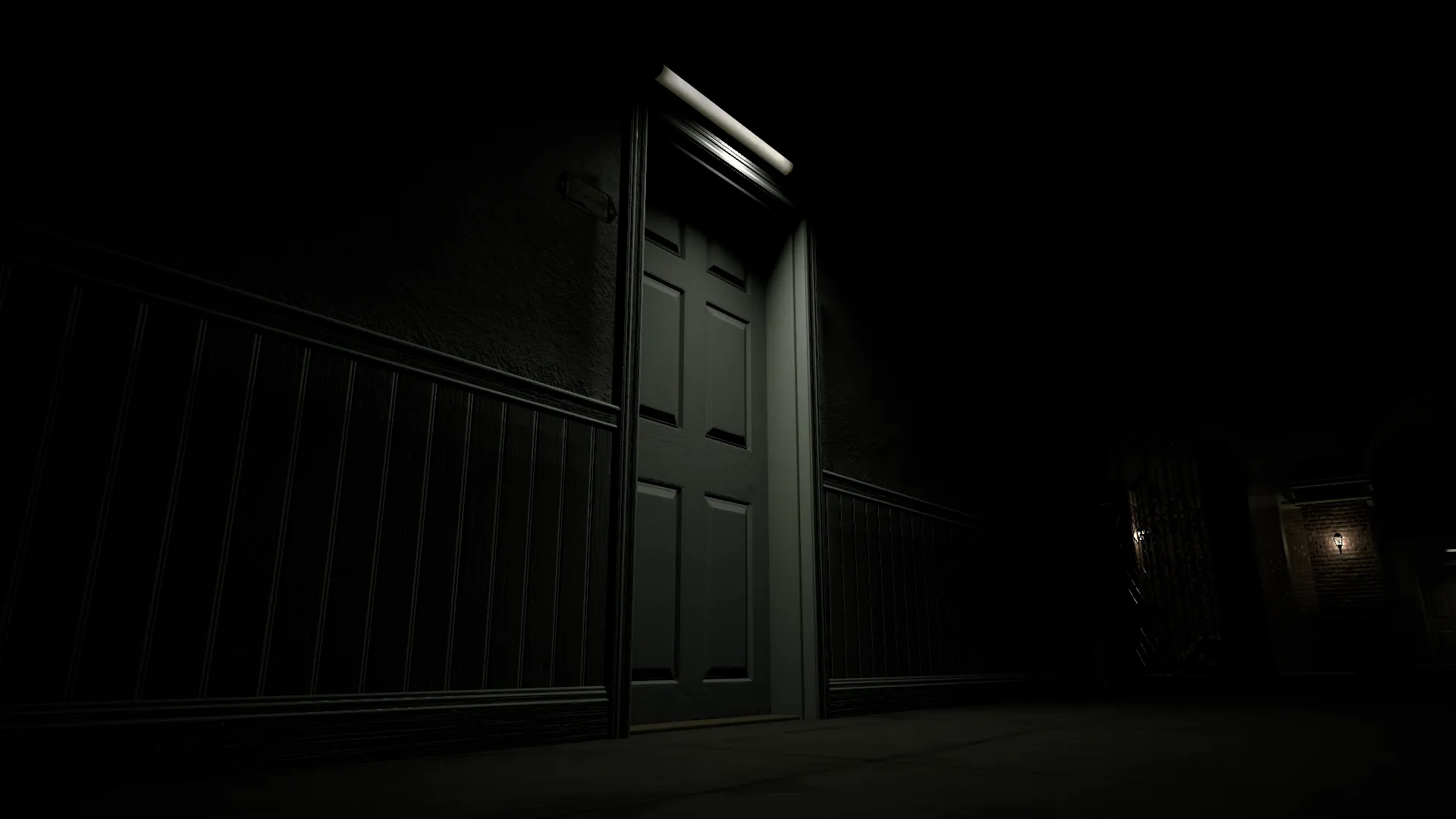
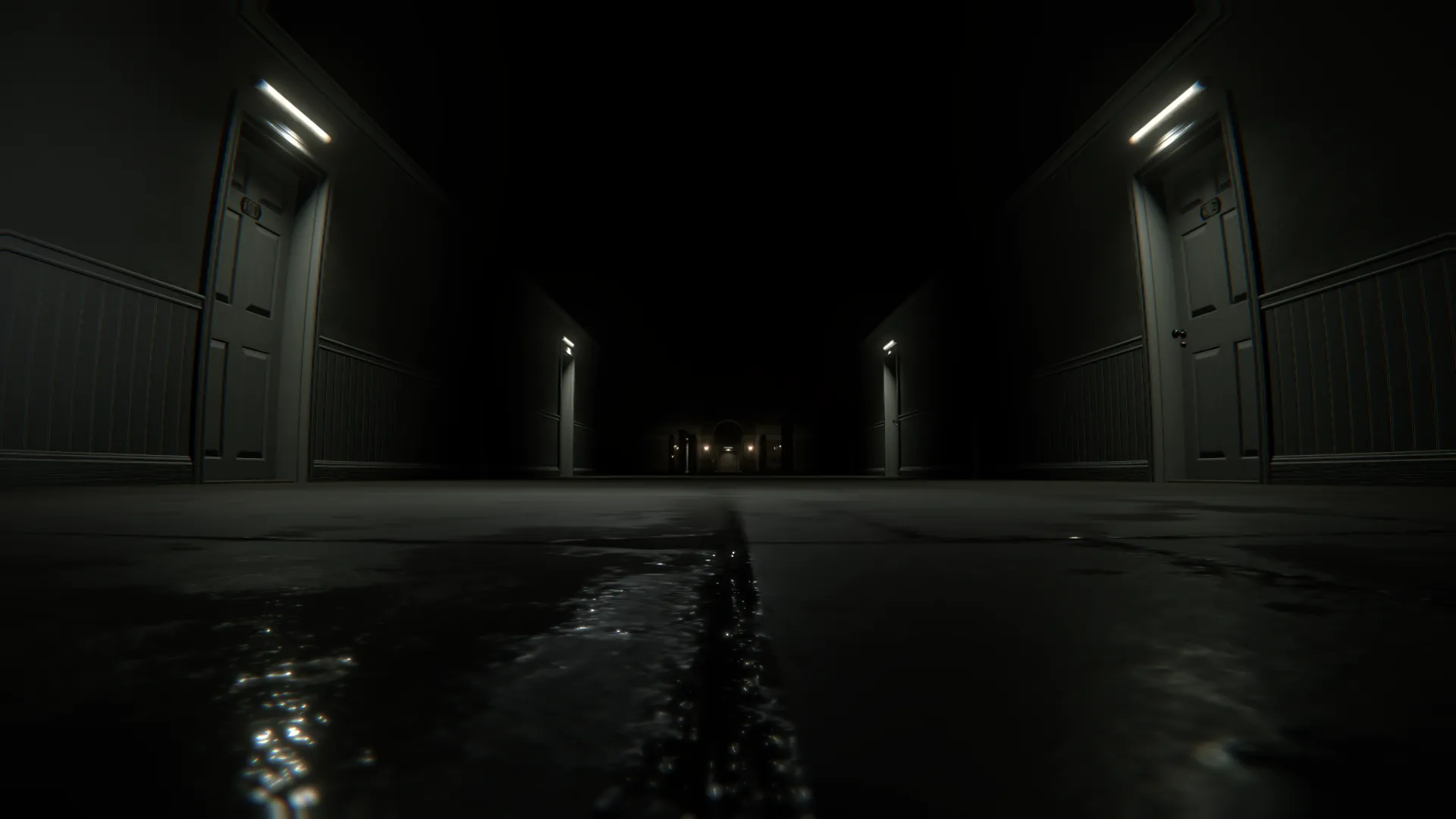
Environment Hallway in a Void: The Hallway in the Void is introduced in Part 2 and consists of a long, surreal hallway with doors leading to specific rooms that reveal different parts of Theo’s past. Each room contains an item that must be collected and delivered to the Hands of Offering at the end of the hallway. A door blocks the path to the endings, and only by giving the correct items to the corresponding hands can Theo open the doors and finally reach the point where he must make a decision about his ending.
Symbolically, the hallway represents the moment when Theo has completely withdrawn into his own world, where he is forced to confront and battle with his own mind. The rooms along the hallway act as fragments of his past, while the journey toward the final doors represents his gradual confrontation with the experiences and struggles that have shaped him.
Environment Room of Regrets: This room represents a glimpse into Theo’s past and the difficult decision he made to live away from his wife in pursuit of his ambitions and dreams. He hoped that achieving success would eventually allow him to return and settle down with her again. The room portrays the moment when Theo made the decision to pursue his dream of becoming a game developer, while also reflecting the personal sacrifice and uncertainty that came with that choice.
Environment Room 302: Room 302 is a friendly nod to Silent Hill 4: The Room. In the game, Room 302 is the apartment where Walter Sullivan lived during his childhood, and his story has a significant impact on the other inhabitants of the apartment building. I included Room 302 as a subtle reference to one of the major inspirations behind the game’s atmosphere and environmental storytelling.
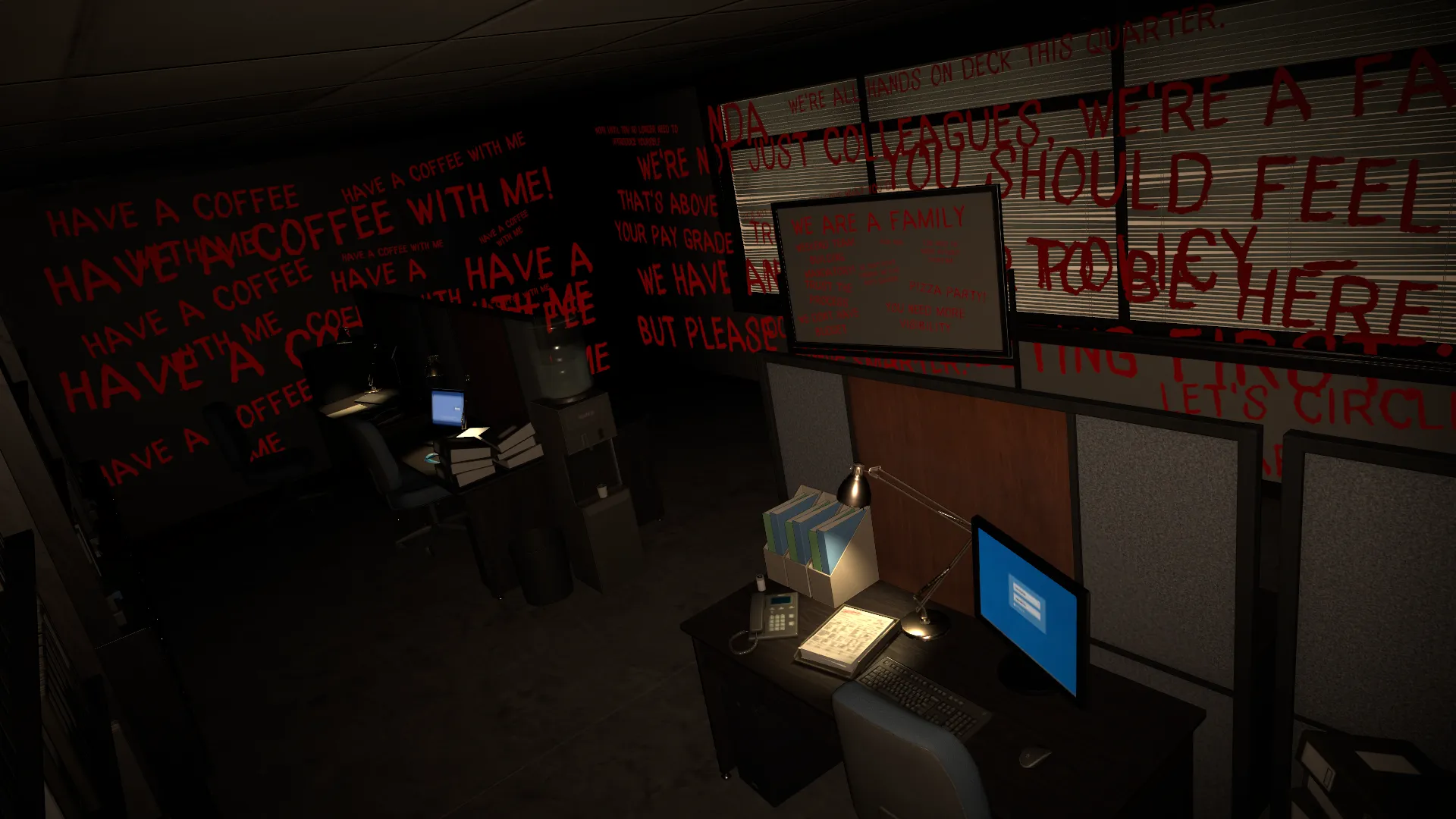
Environment Corporate Office: The Corporate Office is designed as a typical office environment, covered with an excessive amount of corporate jargon and familiar workplace phrases. The abundance of these texts represents Theo’s frustration with insincere, bloated, and overly complicated language used by people who, in his experience, often have little understanding of what they are doing and fail to produce meaningful results.
The environment reflects a toxic period in Theo’s life when he felt gatekept and suppressed, preventing him from growing and pursuing his ambitions. Through exaggerated corporate language and environmental storytelling, the room serves as a satirical commentary on toxic corporate culture and the frustrations that can emerge within it.
Environment Administrator Room: This is the apartment administrator’s room, which hides a secret that none of the other inhabitants know about. The room reveals a darker side of the administrator’s actions and intentions, suggesting that there is more happening behind the scenes than the other residents realize.
It also serves as a subtle satirical commentary on people in positions of authority and how power can be abused, revealing the corruption and darker behavior that can exist behind seemingly respectable positions.
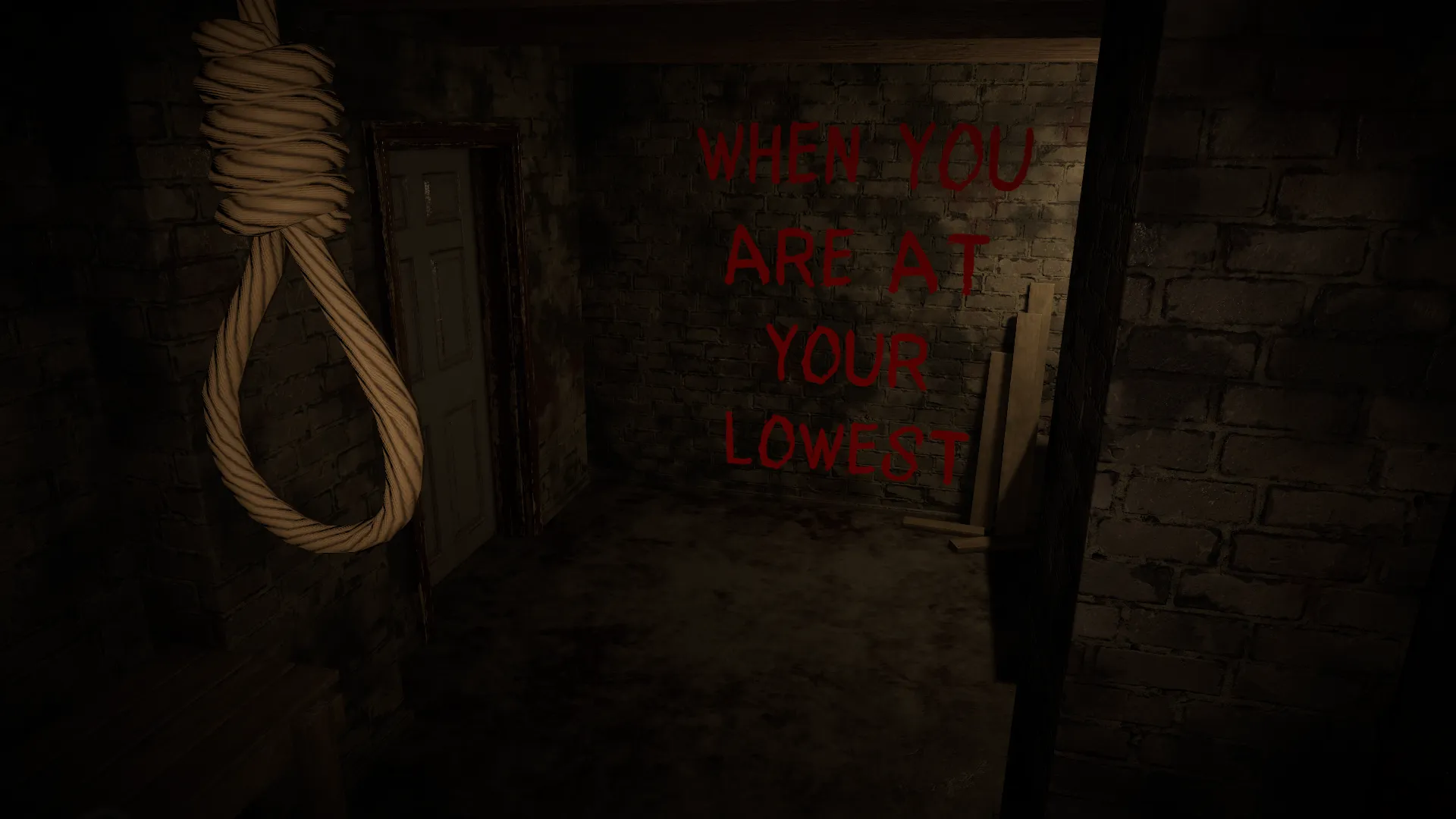
Environment Basement: The Basement is a dark and claustrophobic environment featuring a hanging rope and a note on the wall that reads, “When you are at your lowest.” The phrase refers to reaching a psychological rock bottom, where the desire to escape from reality can lead a person to consider suicide as an option.
The room is intended to represent a state of extreme psychological despair and the darkest thoughts that can emerge when a person’s psyche reaches its lowest point. Rather than portraying suicide simply as an event, the environment focuses on the mindset behind it: when someone feels trapped, overwhelmed, and unable to see a way forward, even the most destructive form of escape can begin to appear as a possibility.
2.0 – Development Process & outcome
Summary: The development of Reality Breach started in July 2024 as a three-month project, with the goal of creating a short horror game with a nearly zero budget. For my first game, I struggled to decide what to create, so I decided to draw inspiration from my own experiences and turn the development process and struggles of a solo game developer into a short horror game.
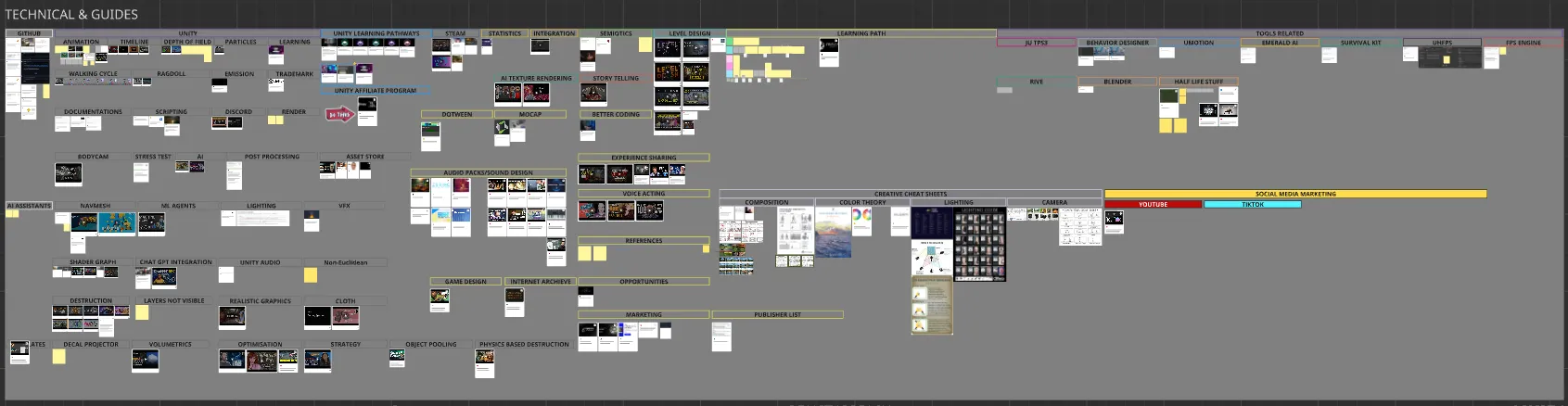
To improve my skills in various areas, particularly storytelling and animation, I decided to create a cinematic, linear game with cutscenes. At the same time, I wanted to improve my coding skills, reduce development time, and learn more about industry-standard development methods. For this reason, I used the UHFPS kit as the foundation for the project. While using the kit I have also researched and studied various different areas and created a library of information to be able to revisit those when needed.
Since the initial plan was to complete a demo in time to participate in Steam Next Fest, I quickly set up a small apartment room inspired by my real apartment and created a three-month development plan. During this period, I manually created assets using Blender 3D and used texture resources such as AmbientCG and Poly Haven. Because the goal was to create the game as quickly and cheaply as possible, I also relied on free assets from the Unity Asset Store.
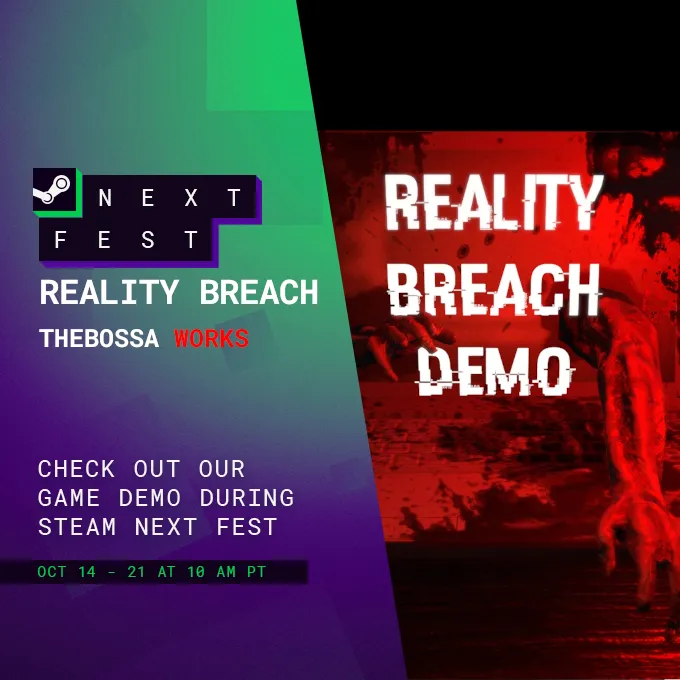
I completed the demo by the end of the three-month deadline and released it both for Steam Next Fest and on itch.io. After receiving positive feedback and suggestions for improvement, I decided to invest more in assets that I could use for both this and future projects. This significantly improved the overall quality of the game and also motivated me to expand the project, push my limits, and provide more for the player.
However, expanding the project to this extent turned out not to be an efficient strategy. After eight months of continuously expanding the project, I realised that I was making a mistake and that the game was moving further away from release. I therefore stopped development and immediately created a new plan to squeeze the entire project into a smaller and shorter experience while still preserving the impact of the story.
After careful planning, rescaling, and a total of two years of development, the current Steam version of Reality Breach was released and received a Mostly Positive review rating. The itch.io version still contains the legacy version of the game, allowing players to see the differences and changes made throughout development.
2.1 – Early Development
Early development of Reality Breach started in July 2024, and the first demo was released in September 2024 for Steam Next Fest. I completed the development of the first demo within the planned three-month deadline.
However, the outcome was not yet where I wanted it to be. The demo lacked an AI enemy, mainly because my skills were still limited at the time and I was not yet able to implement the system to the level I wanted. Rather than delaying the demo, I decided to present it as a teaser experience without the AI, allowing me to meet the Steam Next Fest deadline while still giving players an introduction to the game.
Throughout development, I used Miro and Trello for planning and project management. I prepared a three-month development plan with specific targets, documented my progress on a daily basis, and worked towards delivering the demo within the planned timeframe.
For this first demo, I also relied entirely on free assets and resources, keeping the development costs as close to zero as possible.
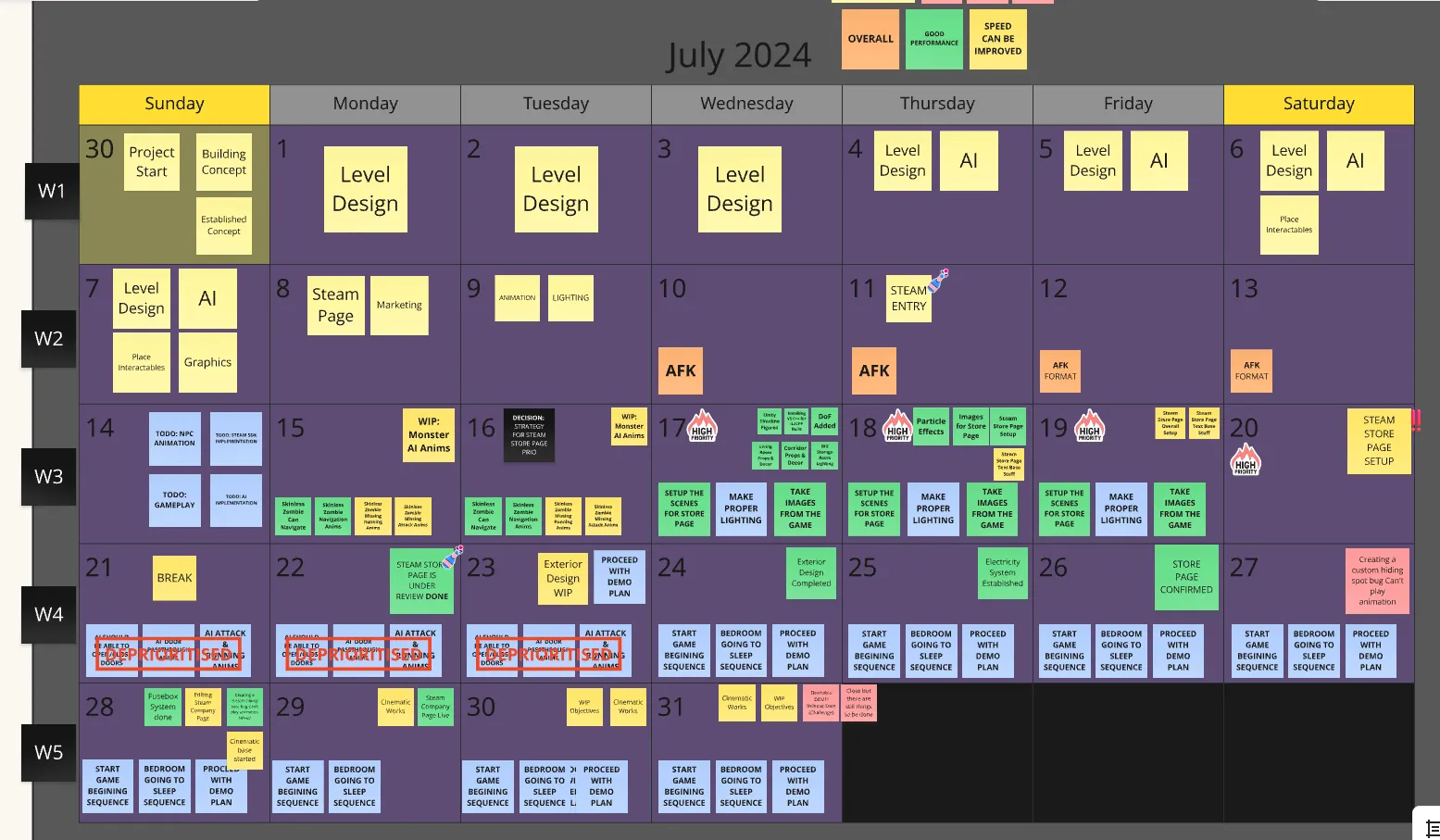
Miro Board a custom calendar set for the 3 month deadline to deliver the first demo of Reality Breach.
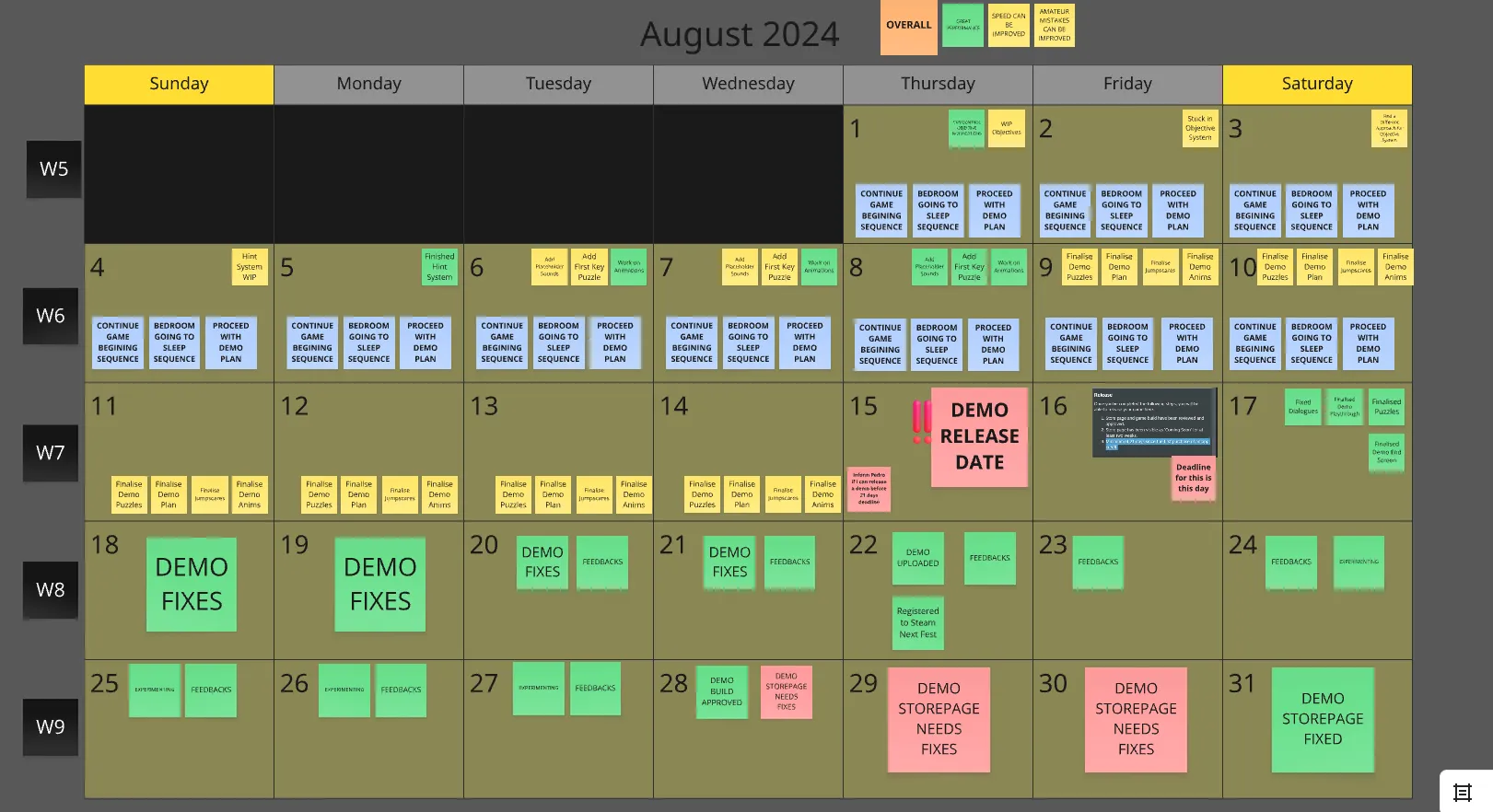
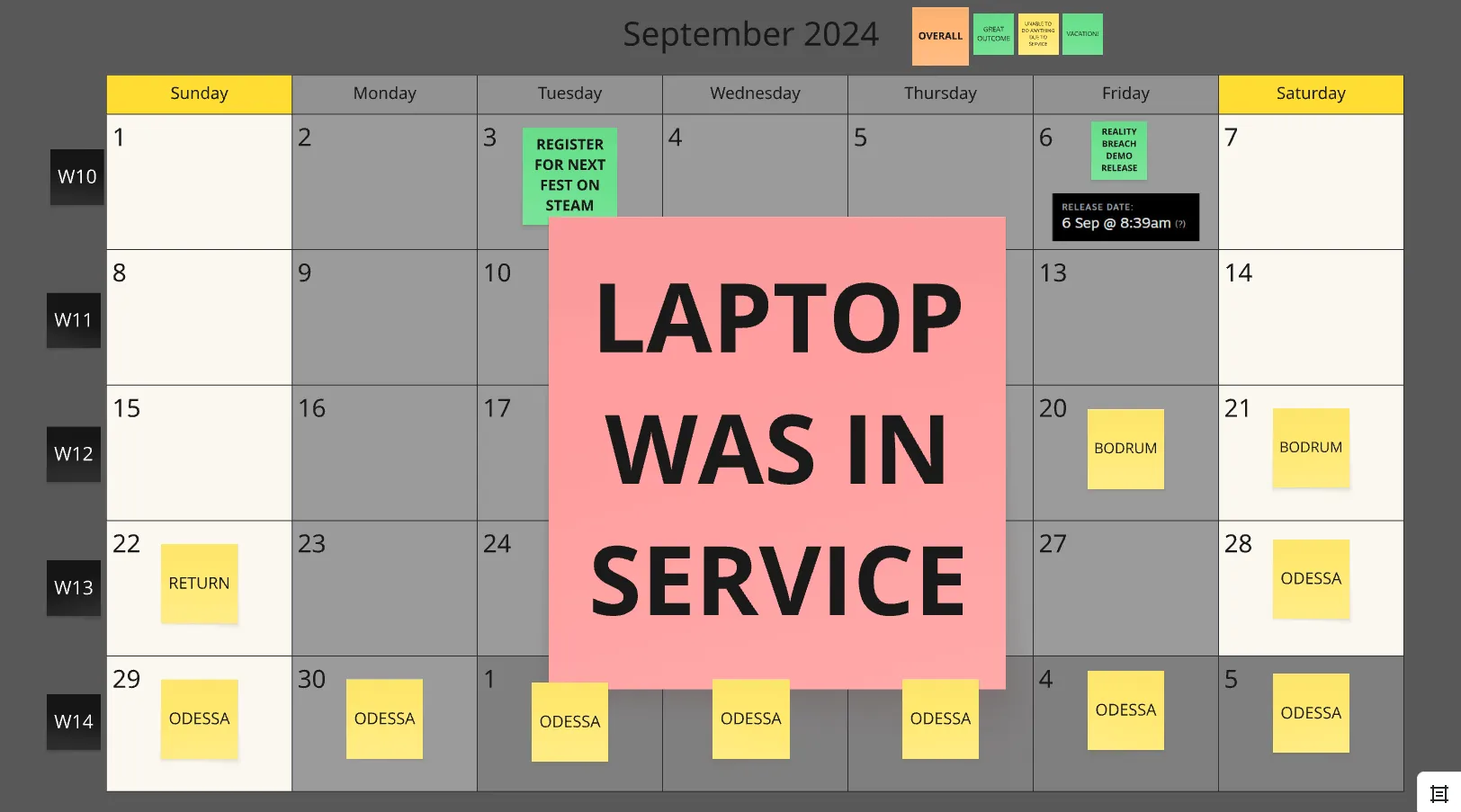
The first demo consisted of basic gameplay, a simple puzzle, and several cinematics designed to introduce the player to the story. I watched players play the game on YouTube and took notes on areas that could be improved.
The demo did not attract significant attention, but it gave me my first noticeable spike in visits and impressions. Seeing people discover and play the game was encouraging, and it motivated me to expand the project, especially as players frequently commented on the small size of the area and the limited amount of content.
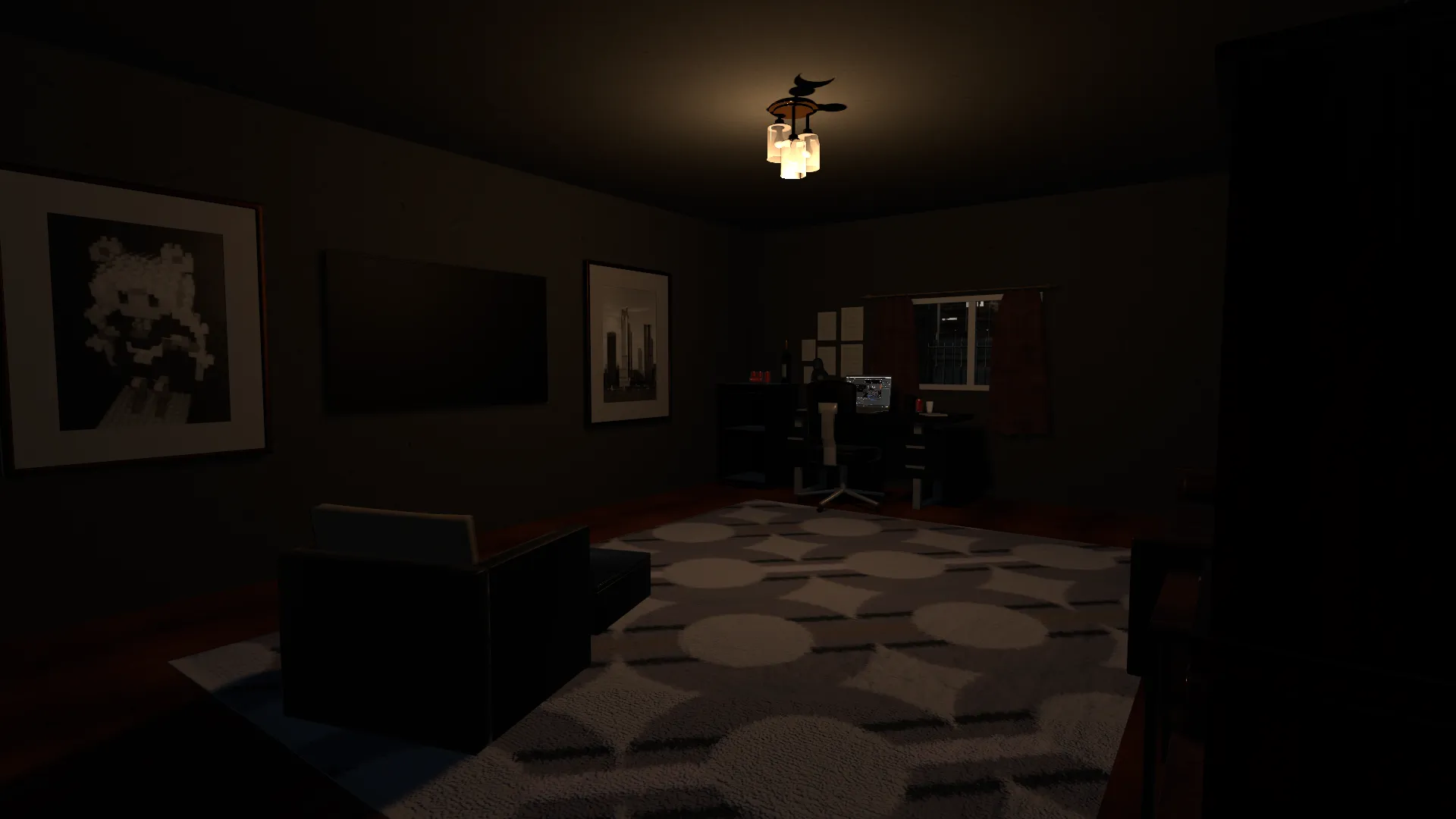
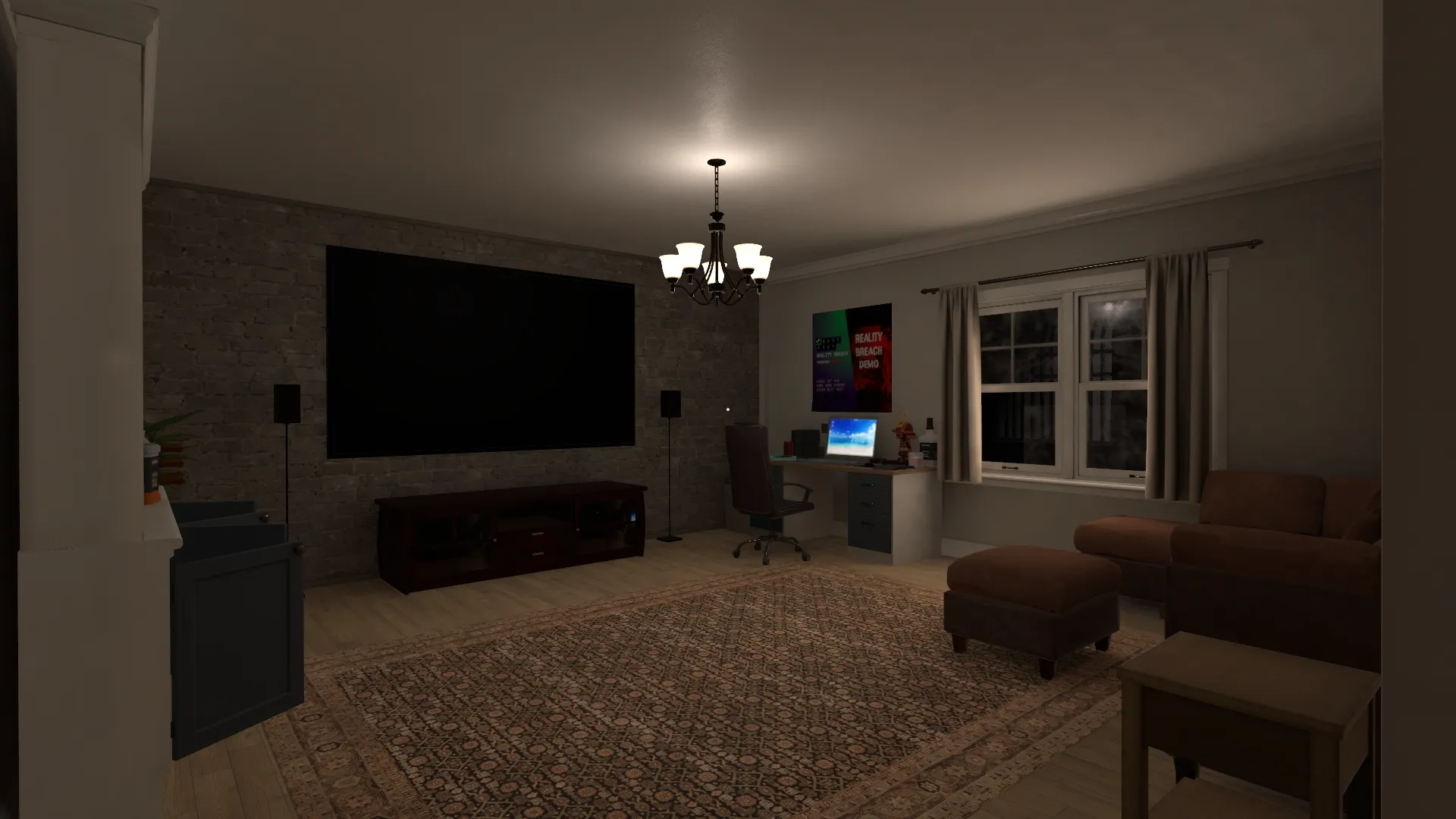
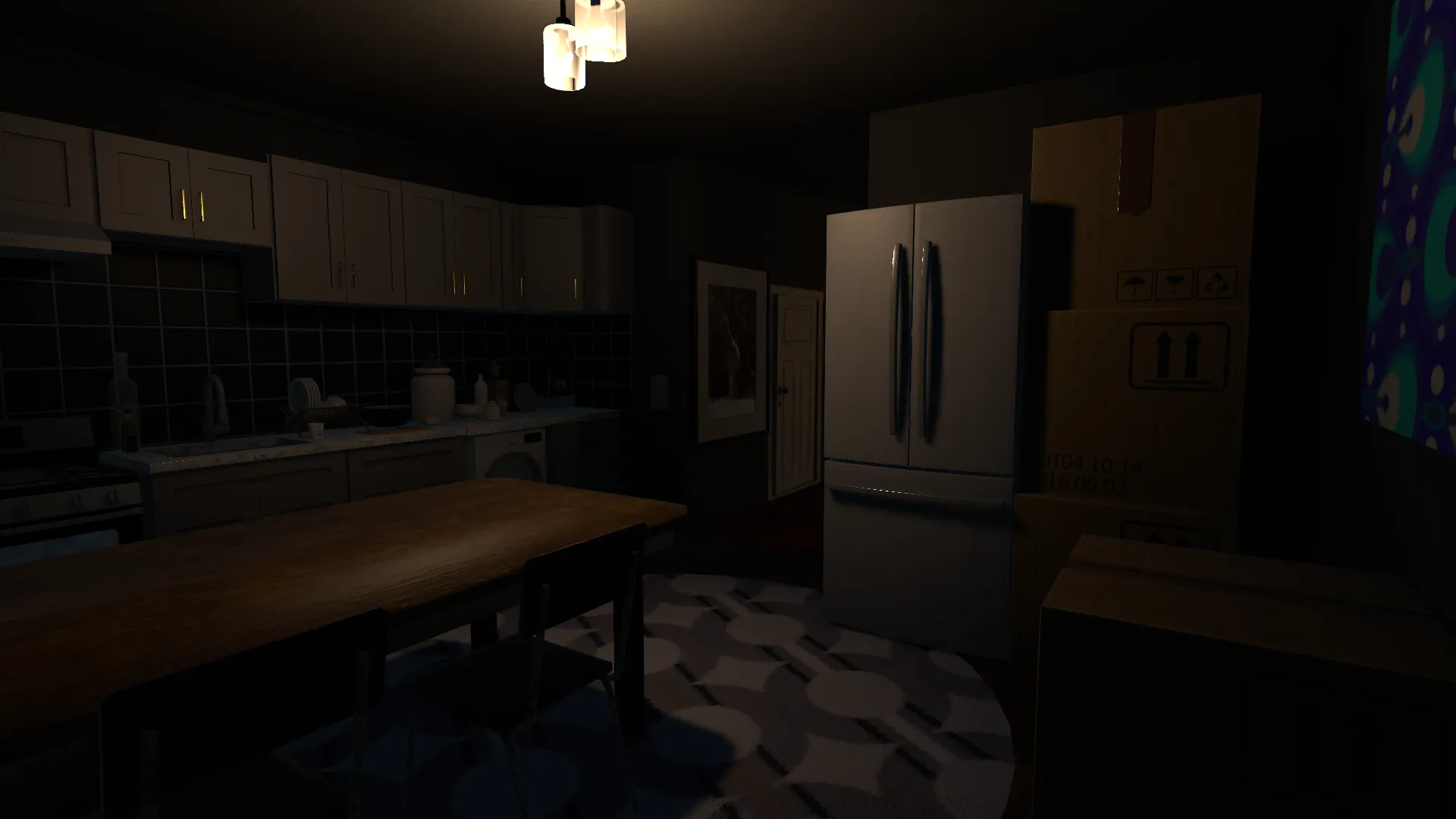
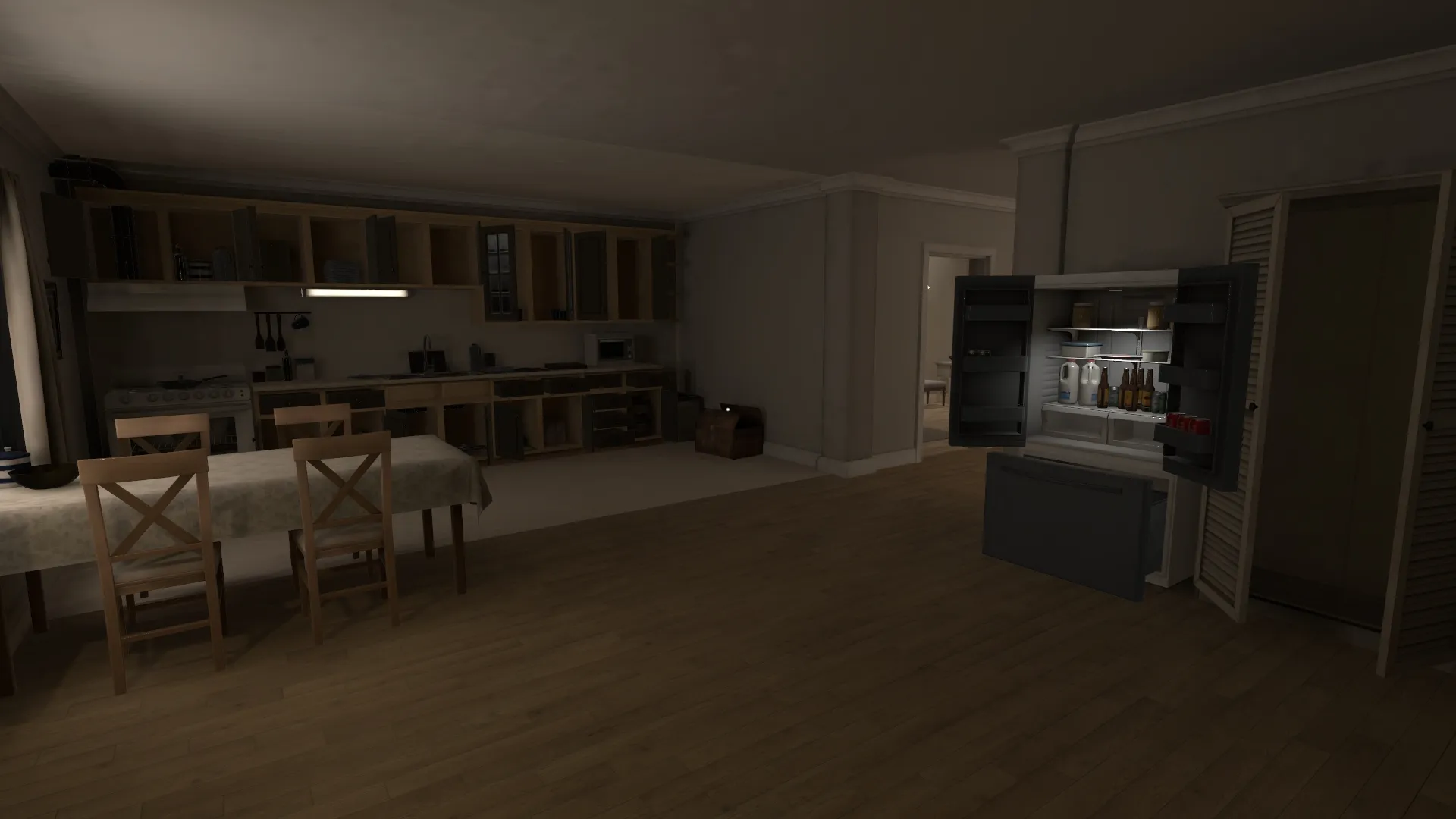
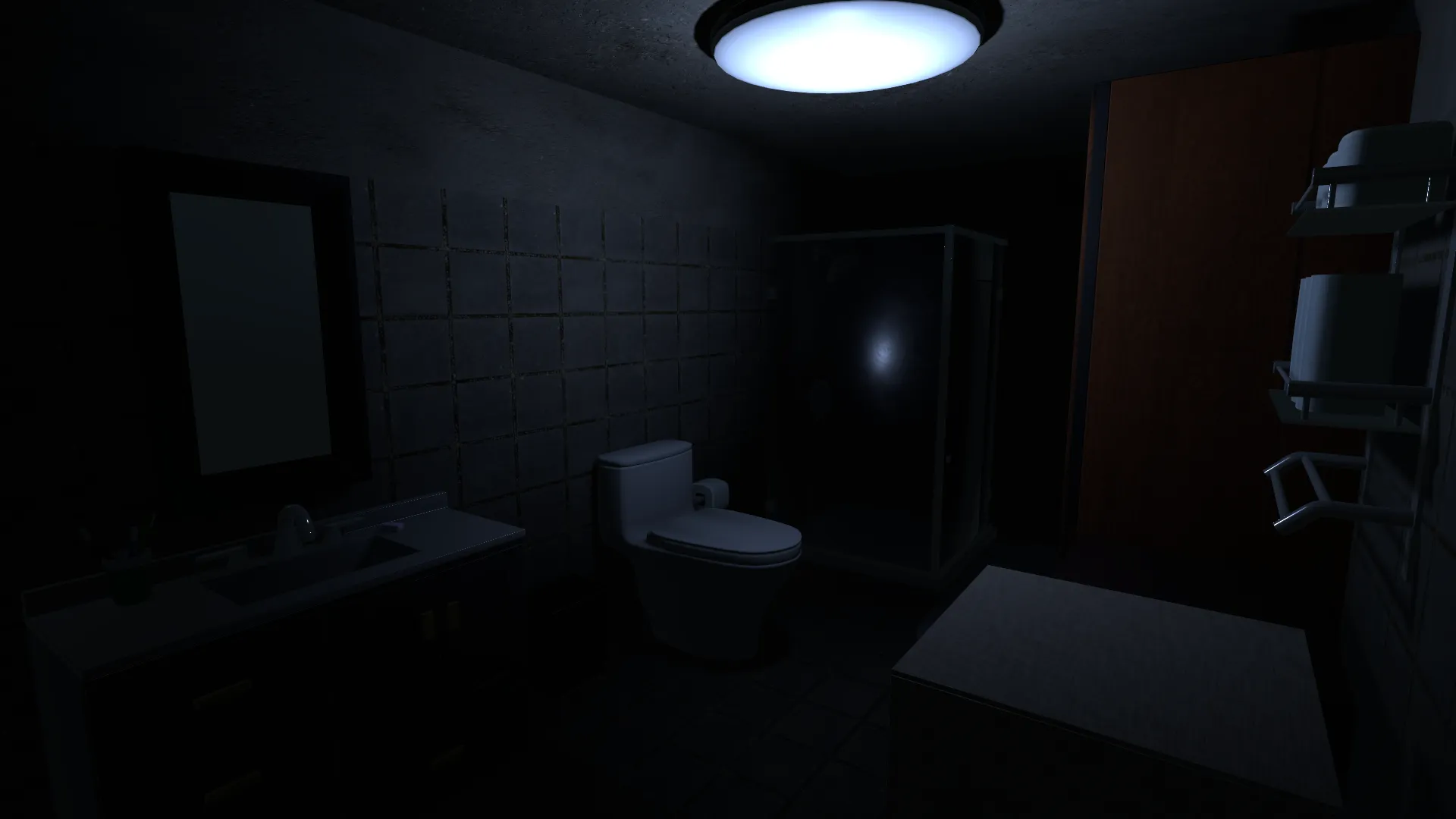
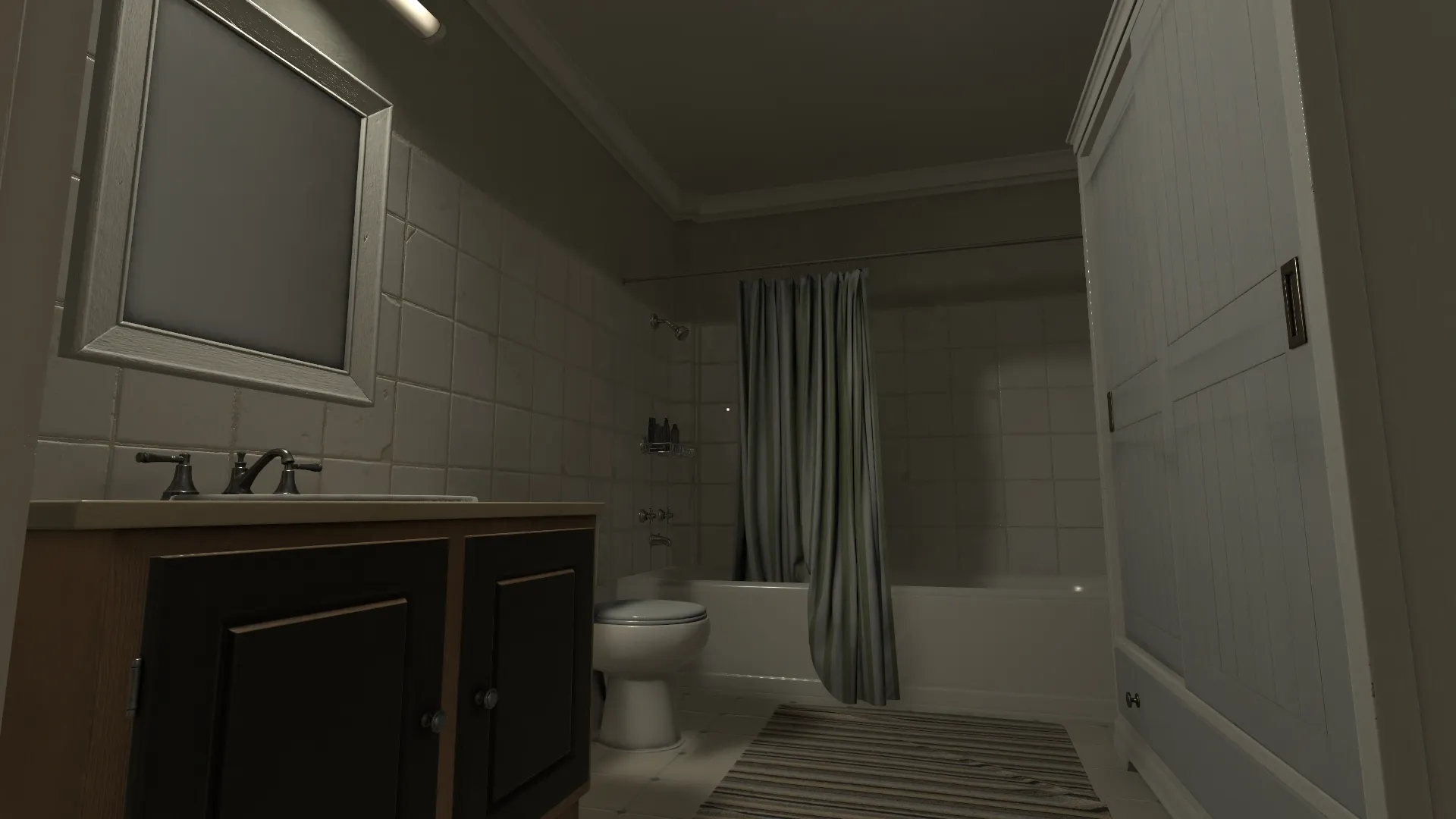
While the overall feedback on the gameplay and environment was mostly positive, the lighting was still a noticeable weakness. This was when I decided to start investing in assets that I could use for Reality Breach and future projects. The investment paid off, significantly improving the game’s graphical quality while also making it easier for me to expand the project.
However, this was also the beginning of the first major mistake I would discover during development.
2.2 – Expansion & Realisation
Before starting the expansion, I created a plan on a Miro board and established targets for what I wanted to achieve. I began adding more maps and increasing the size of the initial level, with the aim of providing a more explorative experience for the player. I wanted to expand the game not only because of the feedback I had received, but also because I wanted to challenge myself. I wanted to see how far I could push my skills and how large a project I could create on my own.
I started by improving the main apartment room. I redecorated the environment and began experimenting with lighting while learning more about how to use it effectively. At the same time, I started brainstorming the puzzles I wanted to introduce and the amount of consumable resources, such as batteries, that the player would have access to.
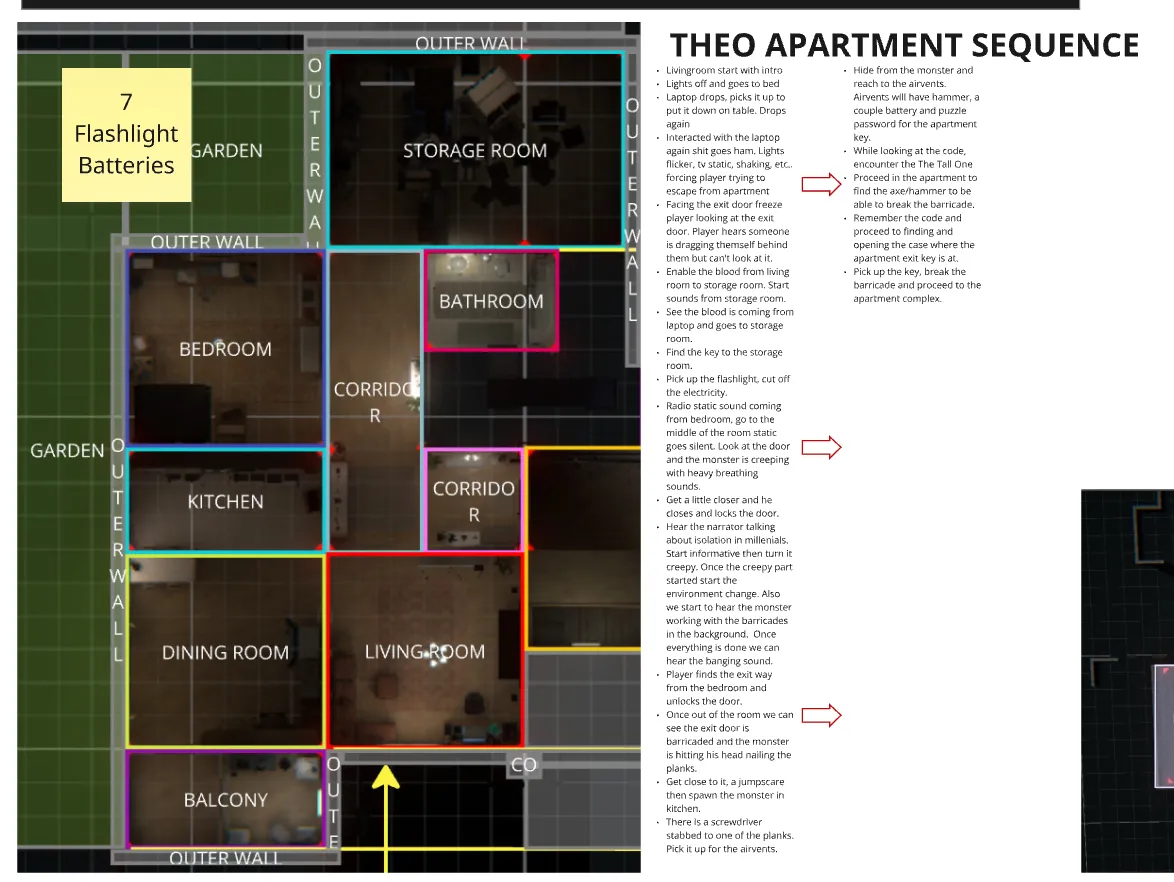
During this process, I discovered that the apartment could still be challenging and frustrating for some players because of its relatively small area and the presence of an active AI monster patrolling the environment. To address this, I decided to introduce an air vent system. This not only provided the player with an alternative way to navigate the apartment, but eventually became an important part of the game’s puzzles and story.
Once I was satisfied with the apartment’s layout, I began thinking about how to expand the overall map. This was the point where I became increasingly ambitious and expanded the project much further than I originally needed to.
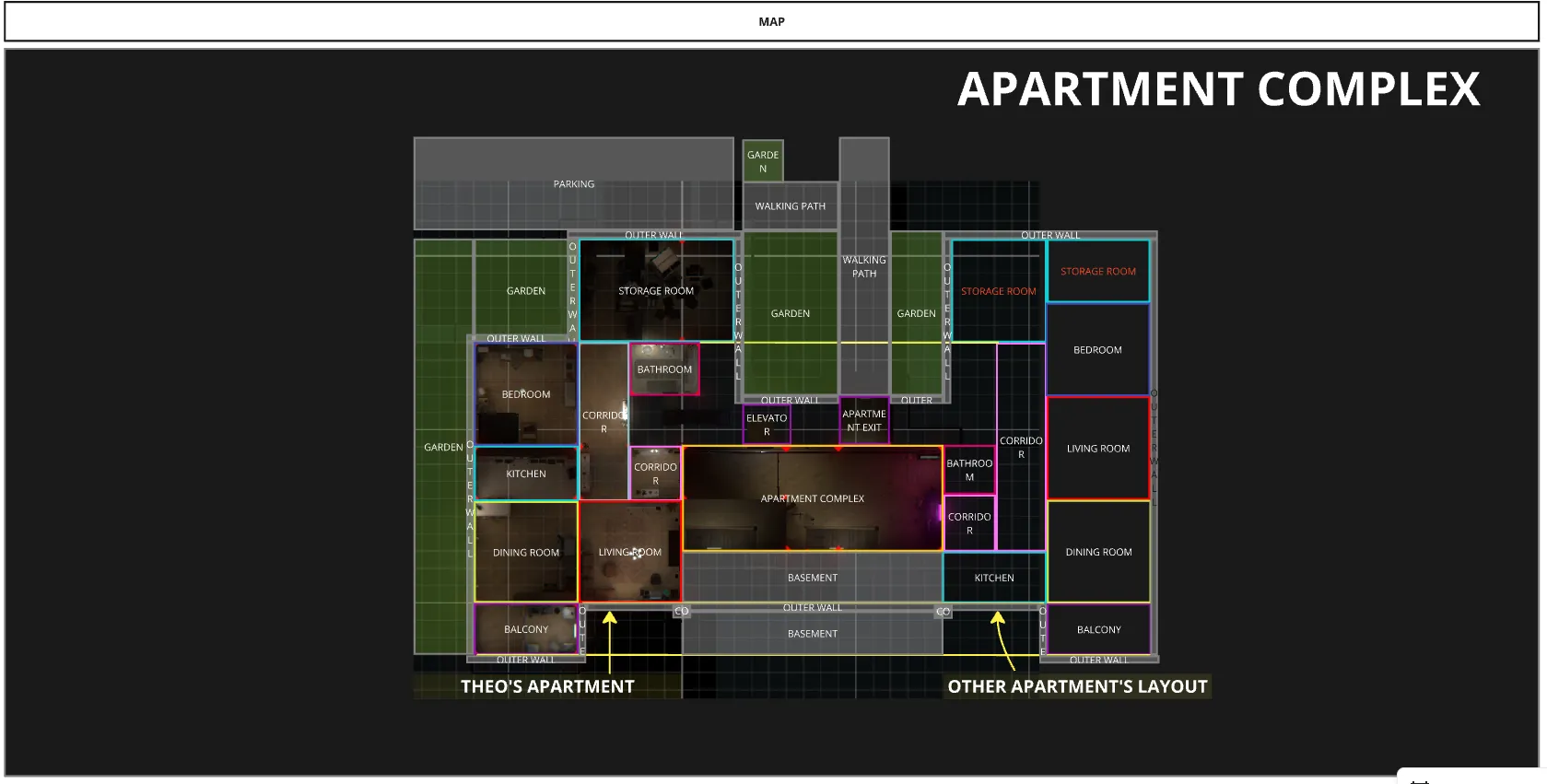
I initially planned a complete apartment complex consisting of five floors. Each floor would contain a room leading to a different path exploring Theo’s memories and past. Each room would have its own theme and challenges. In addition, I planned an outside area where, after completing the apartment complex, the player would escape from the monster and run towards a specific location. This sequence would culminate in a cinematic cutscene followed by a final boss battle.
I followed this expanded plan for approximately eight months. Eventually, I realised that continuing to expand the project was becoming a mistake. The scope was growing too large and the game was moving further away from a realistic release. I therefore decided to stop expanding and instead squeeze the story and gameplay into a shorter experience that could still deliver the impact I originally wanted.
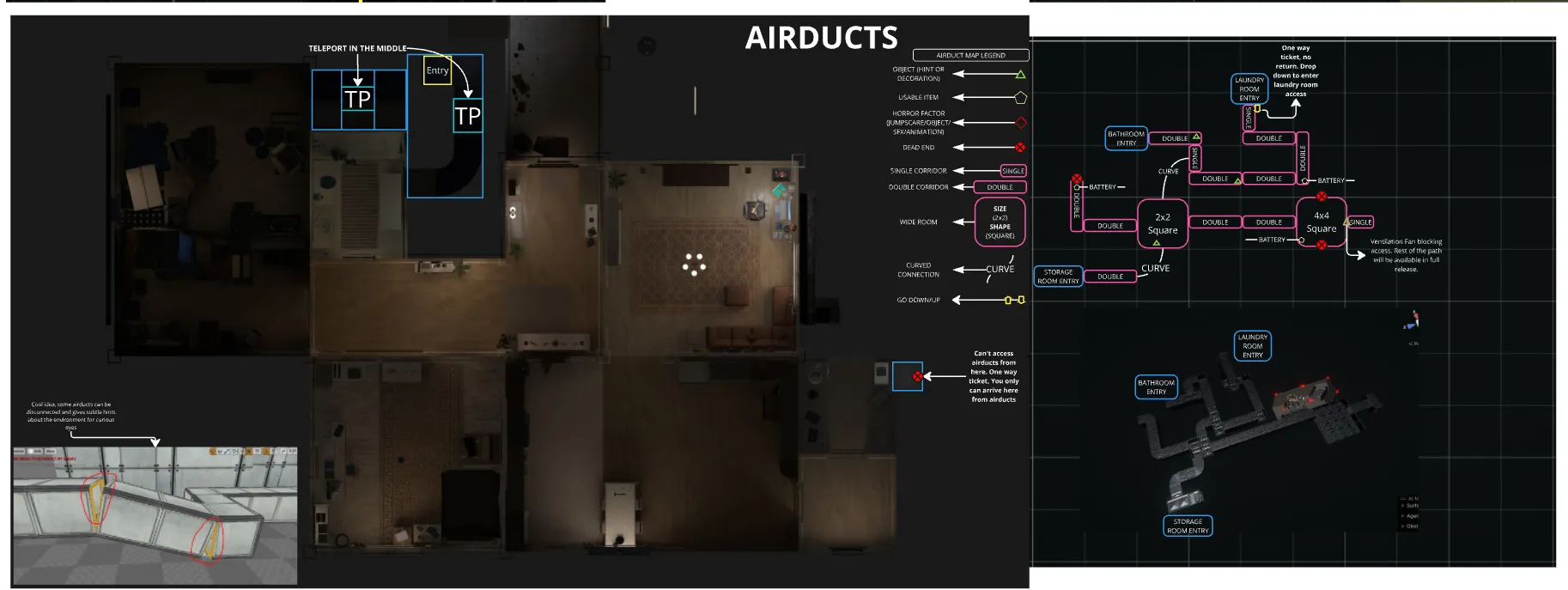
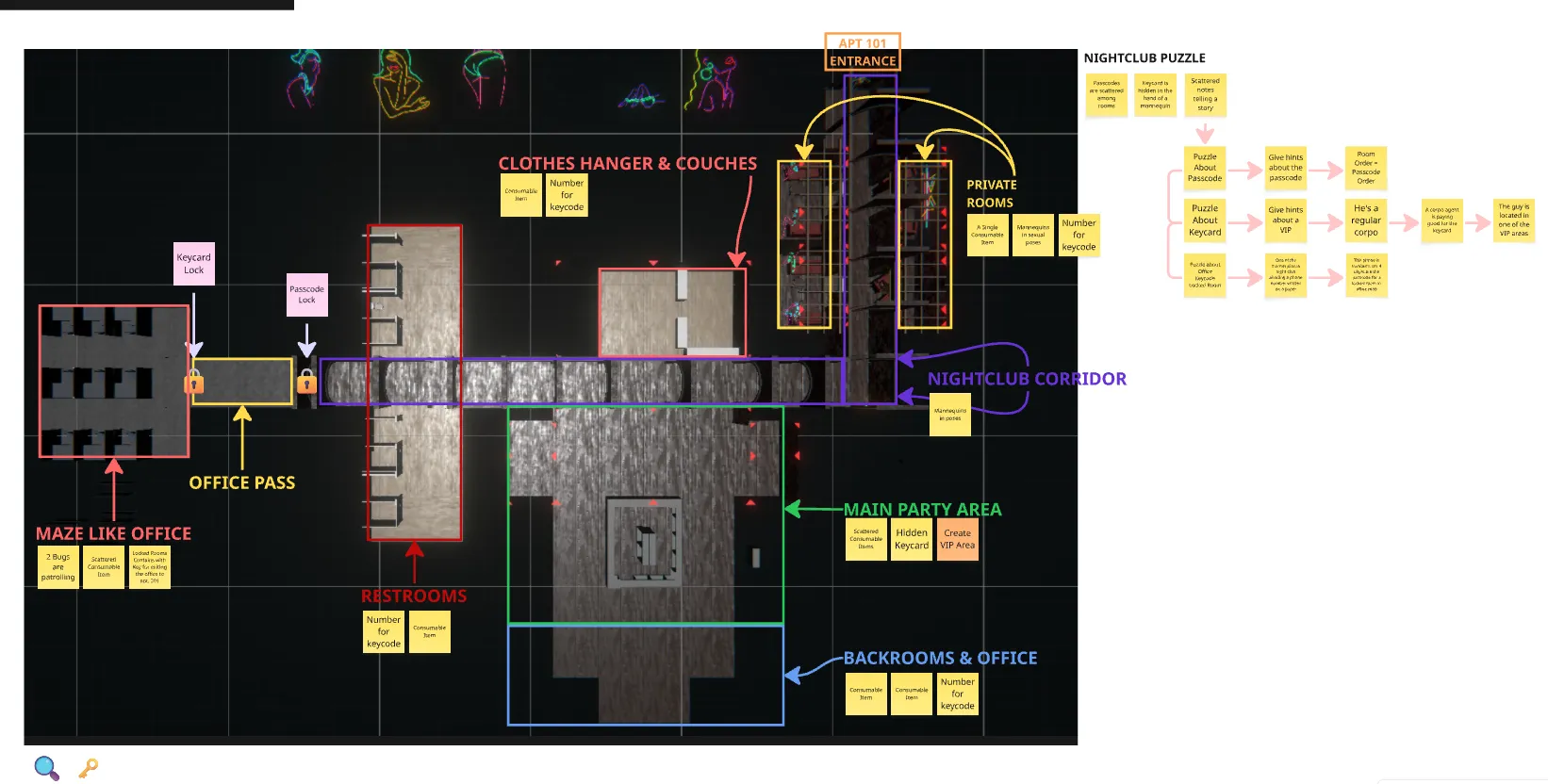
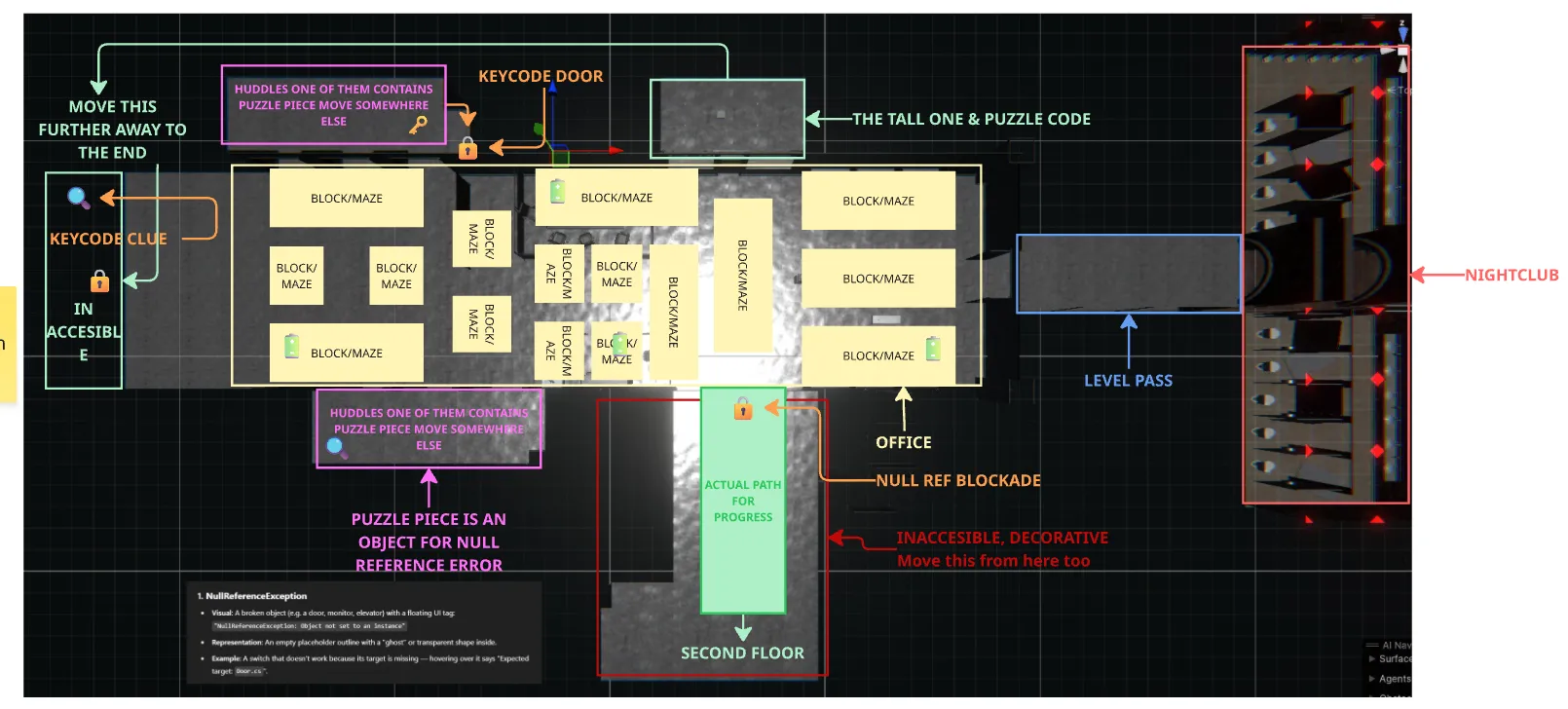
Once I decided to rescale the project to a more manageable size and reduce the development time so I could move towards release, I started replanning my entire approach.
The early development and expansion phases had been a great learning experience. They helped me understand how I needed to approach development, planning, and decision-making in order to successfully bring a game to completion. However, Reality Breach had a fundamental flaw: its game design. At this stage, it was already too late to completely change the game’s design, so I decided to work with what I had and find a way to reshape the experience without sacrificing the story.
I decided not to completely change the first part of the game, but I removed a significant amount of content from it to make the experience more manageable. For the second part, I created a new scene and built it around the idea that Theo was now inside his own void, confronting his inner world. This is where the Narrator was introduced as Theo’s inner voice, constantly talking back to him.
I also transformed the original apartment building concept into five smaller locations. Each location would reveal another part of Theo’s past, allowing me to provide more context about his character while keeping the overall experience much more focused and manageable.
This approach allowed me to preserve the core story and themes of Reality Breach while significantly reducing the scope and bringing the project back towards a realistic path to release.
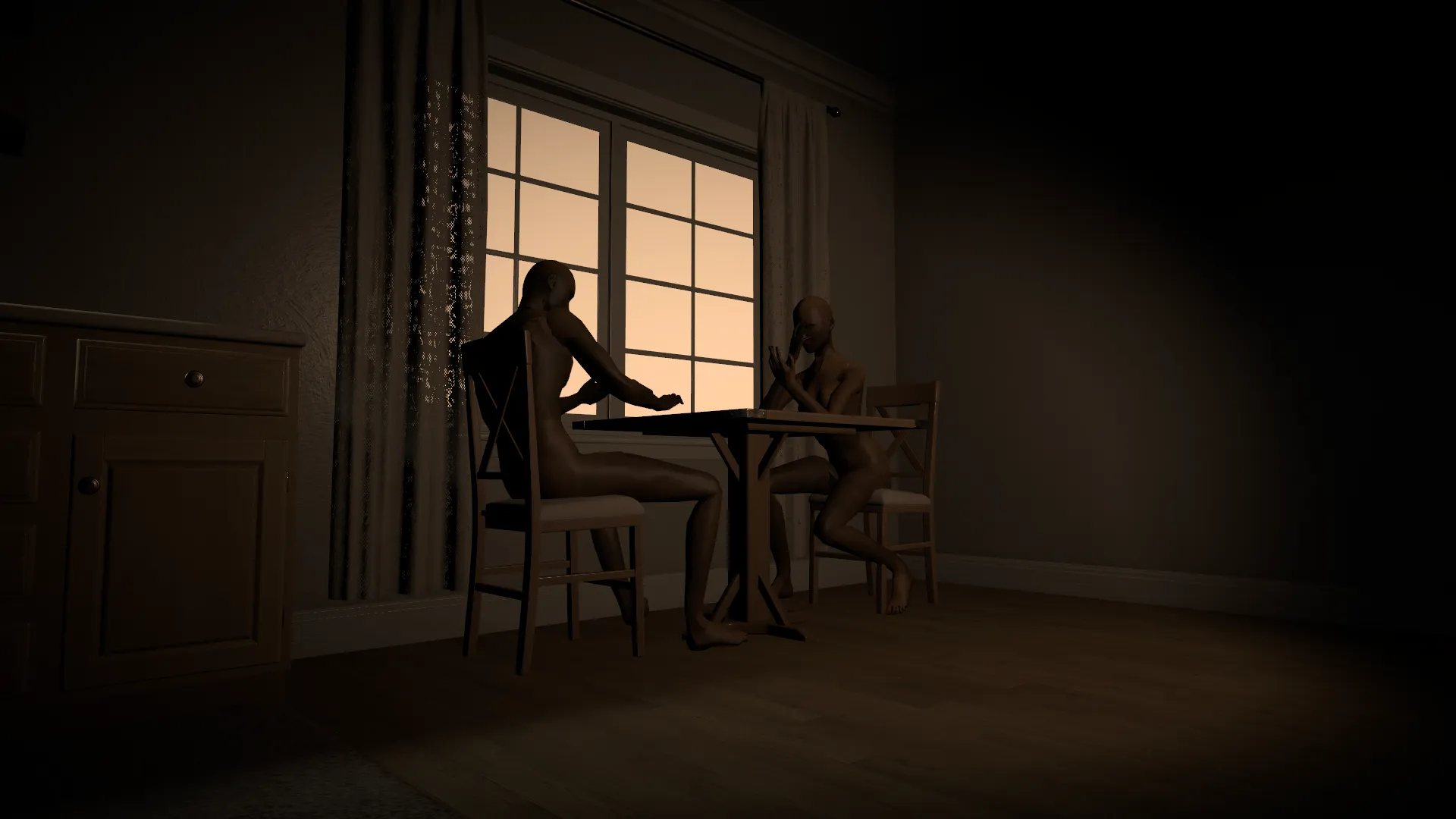
2.2 – Finalisation & Release
As I finally approached the release, I began extensively playtesting the game with a variety of people. At certain development milestones, I had already been testing the game with a smaller closed group, but during the pre-release period, I expanded the number of playtesters to identify unknown bugs and observe player behaviour. This helped me evaluate whether the game provided a fun, understandable, and smooth experience from a player’s perspective.
Based on the playtesting results, I made the necessary fixes and improvements. At the same time, I began actively working on the game’s social media presence and advertising across different platforms.
Once I felt the game was ready for release, I reviewed the upcoming release calendar and considered the timing of the next Steam Scream Fest and its Halloween-related promotion. Based on this, I decided to set the release date for September 4.
Before release, I also began reaching out to streamers and YouTubers and invited them to play the demo and potentially showcase it on their channels. In return, they would receive a free key for the full game when it launched. Additionally, I reached out to more than 30 curators and provided them with review keys.
By the time of release, I had also contacted a dozen streamers and YouTubers directly, providing them with free keys to the full game in case they were interested in streaming or creating content around it.
Throughout this final stage, I also gained valuable lessons that I can carry into my next projects. In particular, I learned the importance of controlling scope, planning development more realistically, starting marketing at the correct time, elements that horror players expecting to deliver a successful horror game, and making decisions based on the resources and time available. These lessons will directly influence how I approach the planning, development, and release of my future games.
After two years of development, Reality Breach was finally released.
It may be a small step for humankind, but it was a big one for me. 🙂
GALLERY
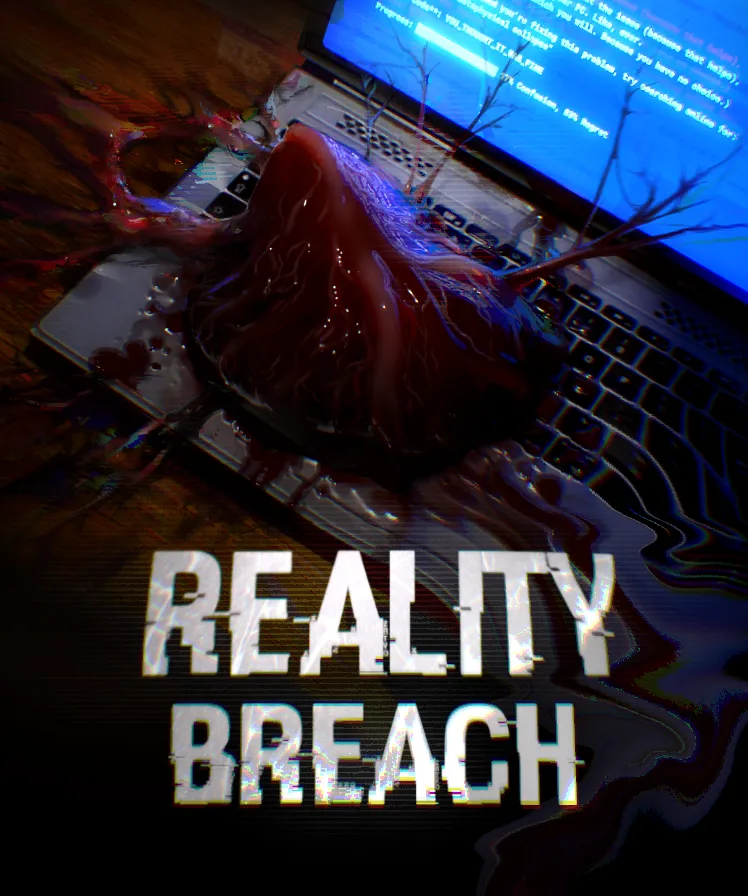
CAPSULE ART: The final capsule art, ideated by me and art delivered by Anastasiia Maron
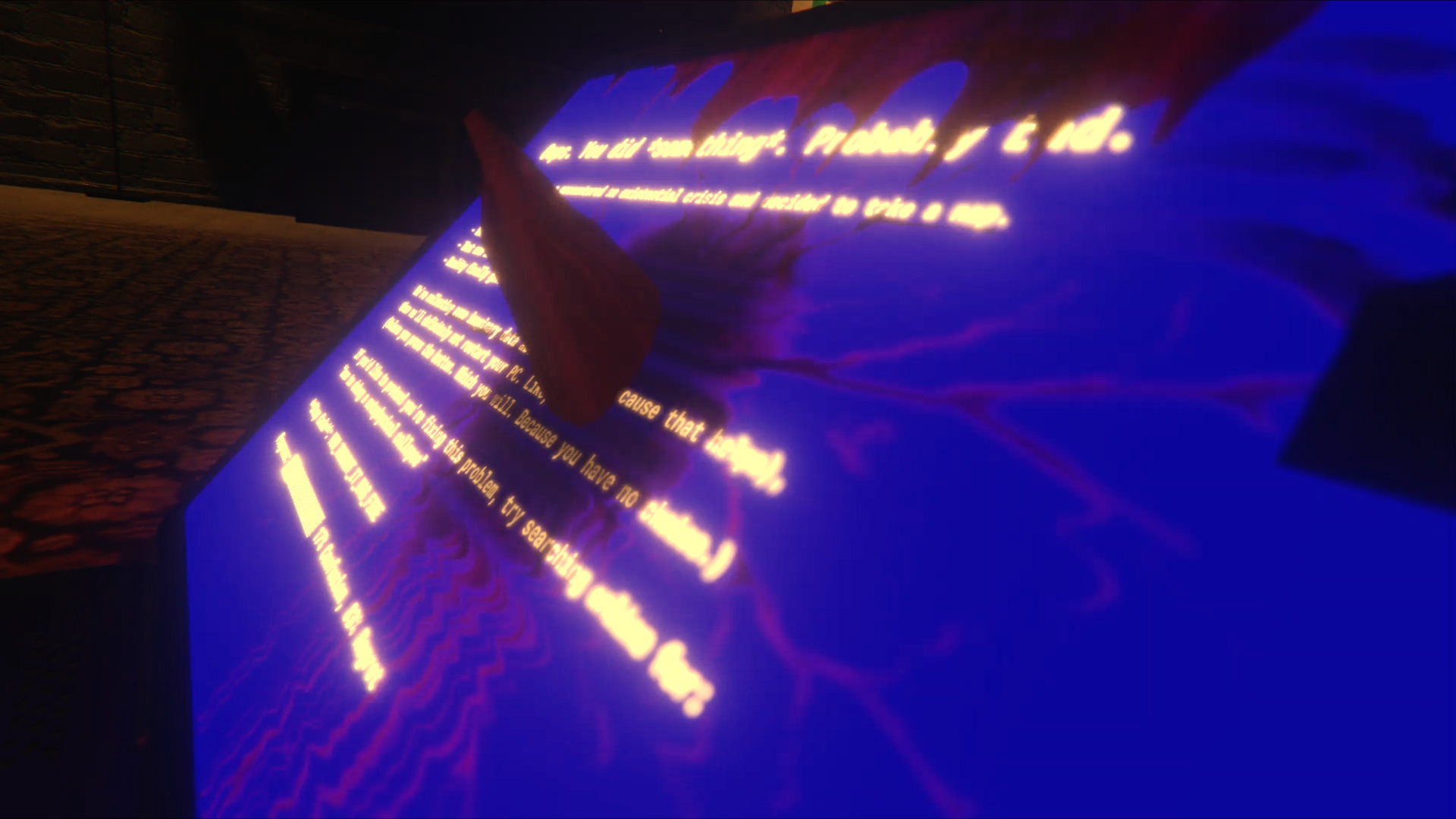
SCREENSHOT: In-game visuals
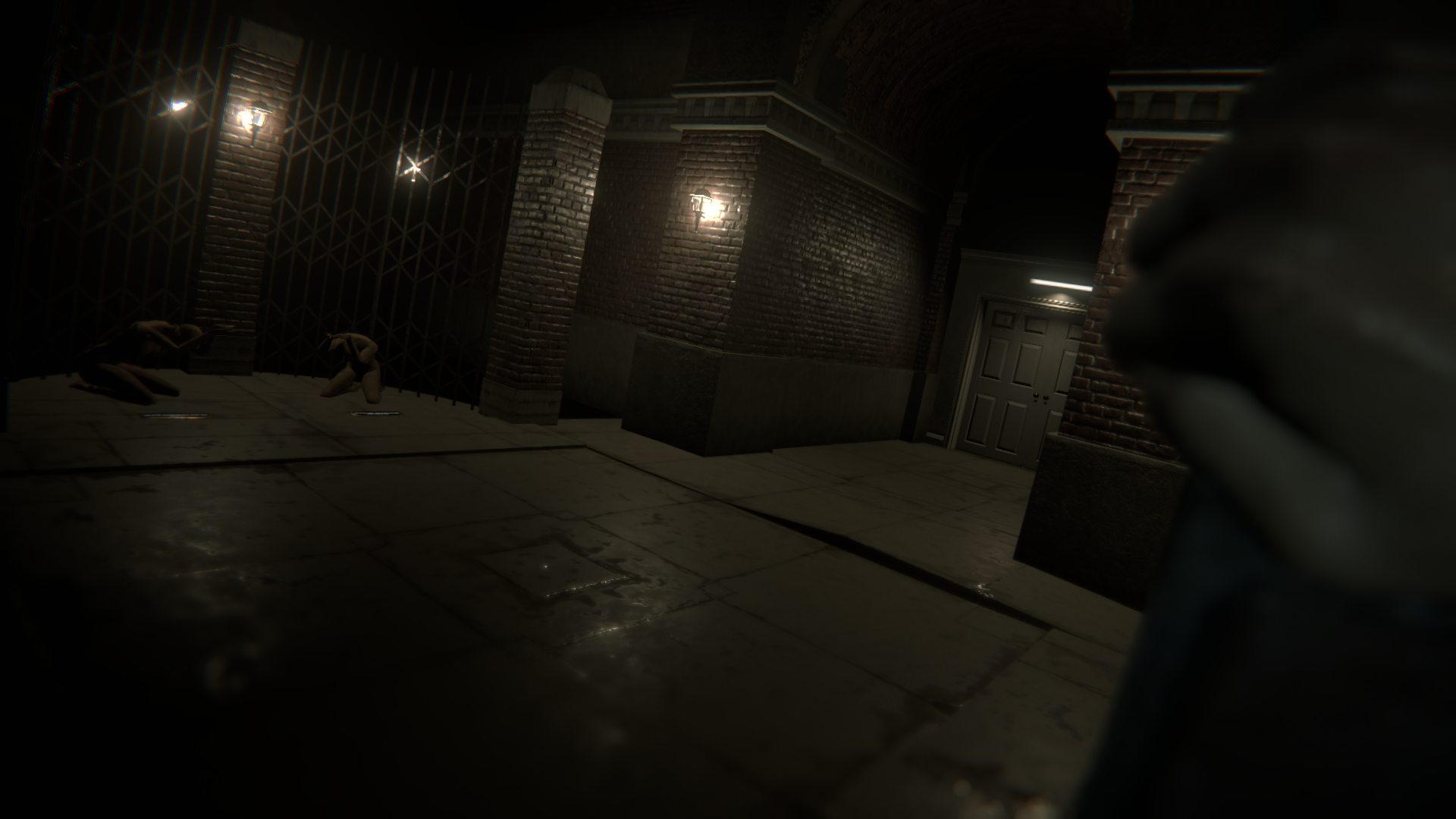
SCREENSHOT: In-game visuals
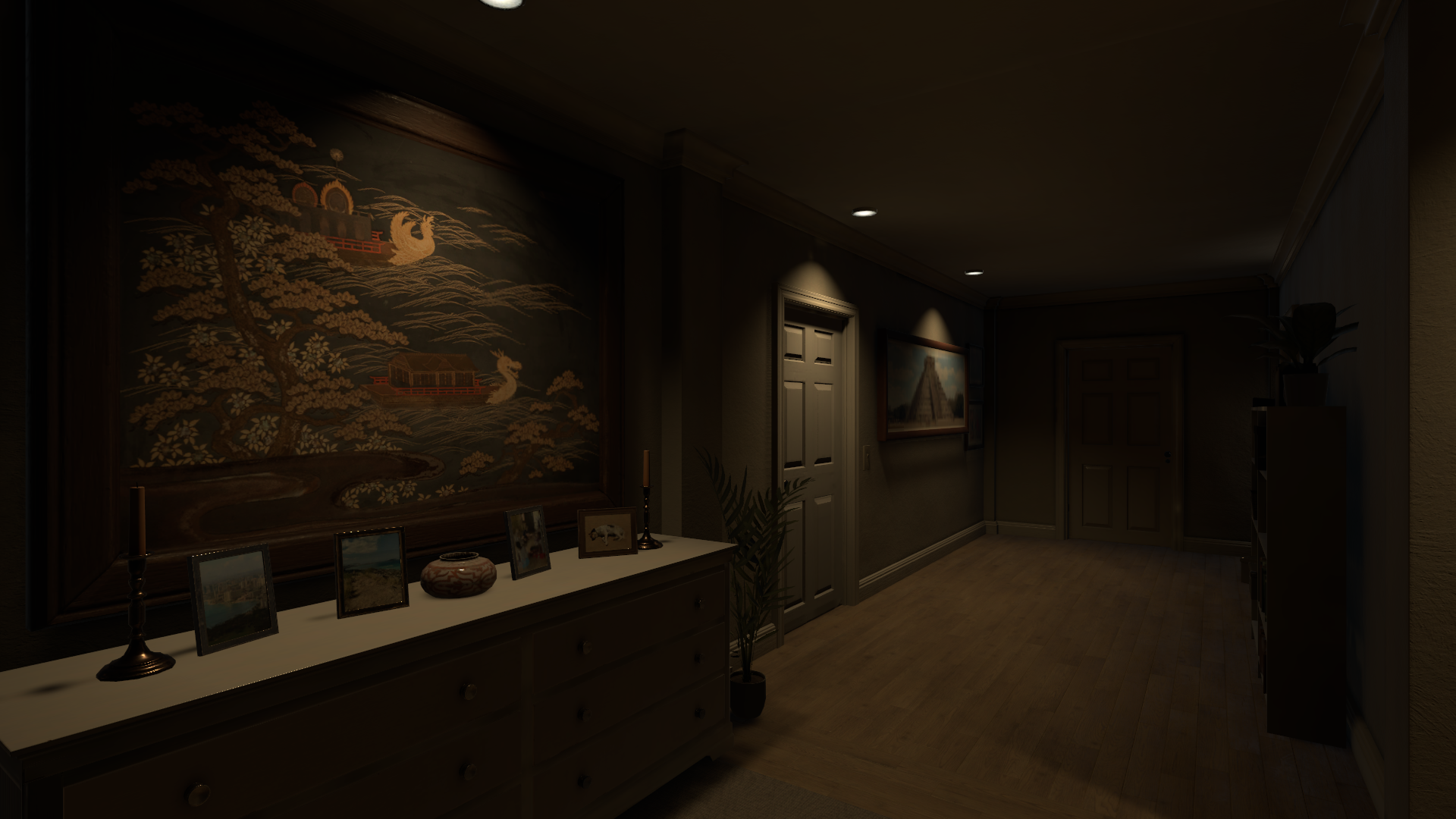
SCREENSHOT: In-game visuals
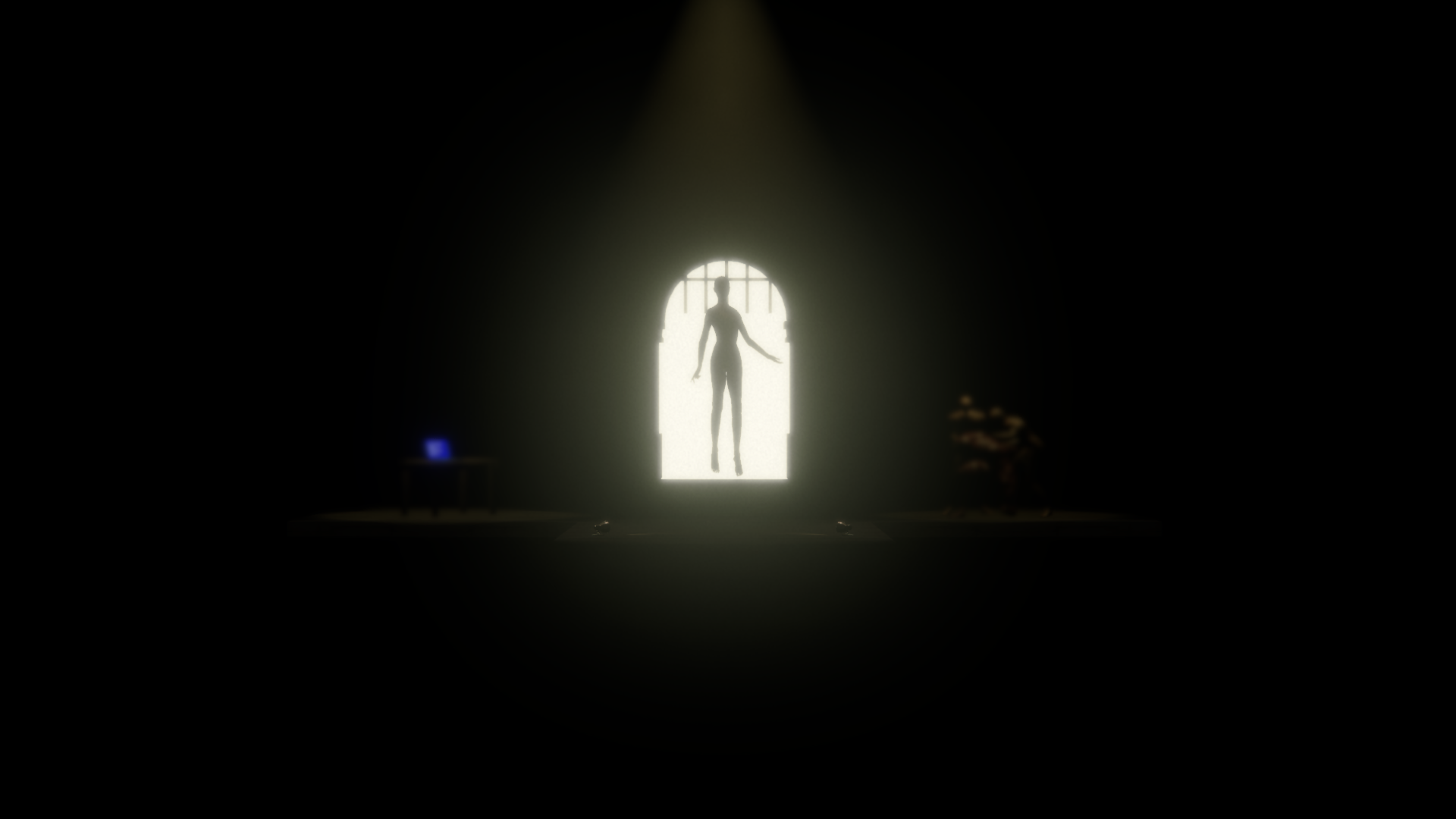
SCREENSHOT: In-game visuals
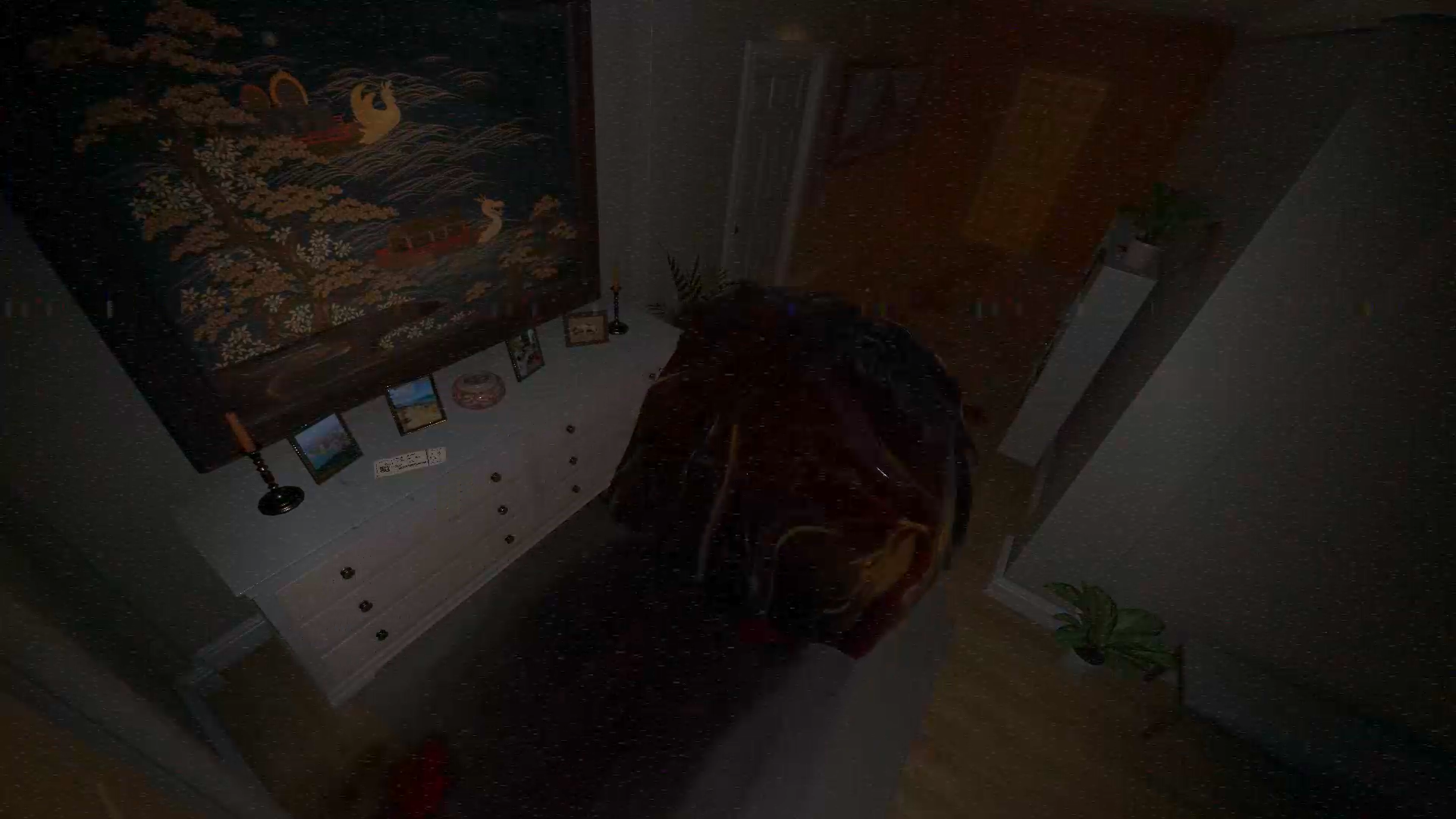
SCREENSHOT: In-game visuals
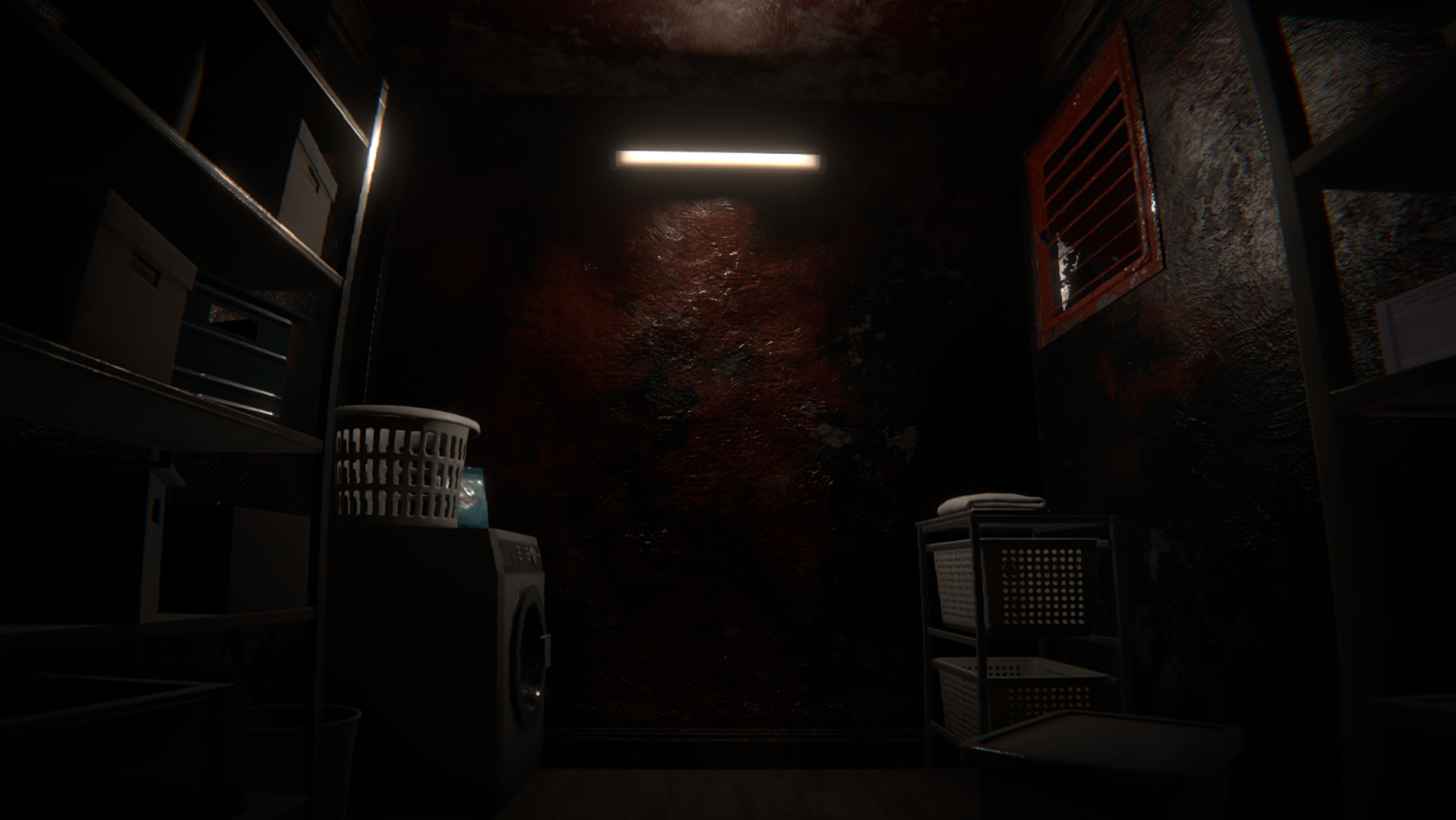
SCREENSHOT: In-game visuals
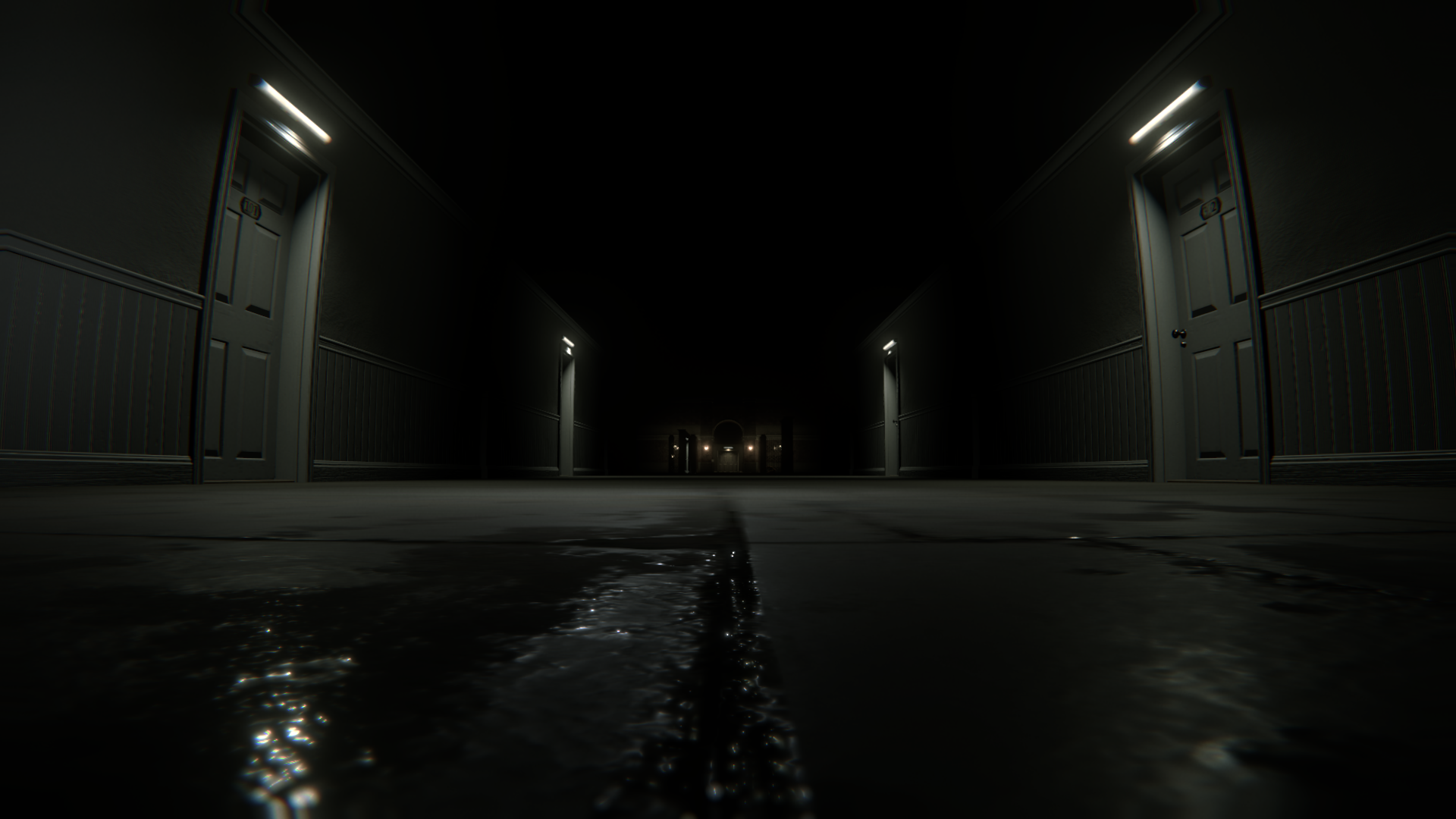
SCREENSHOT: In-game visuals
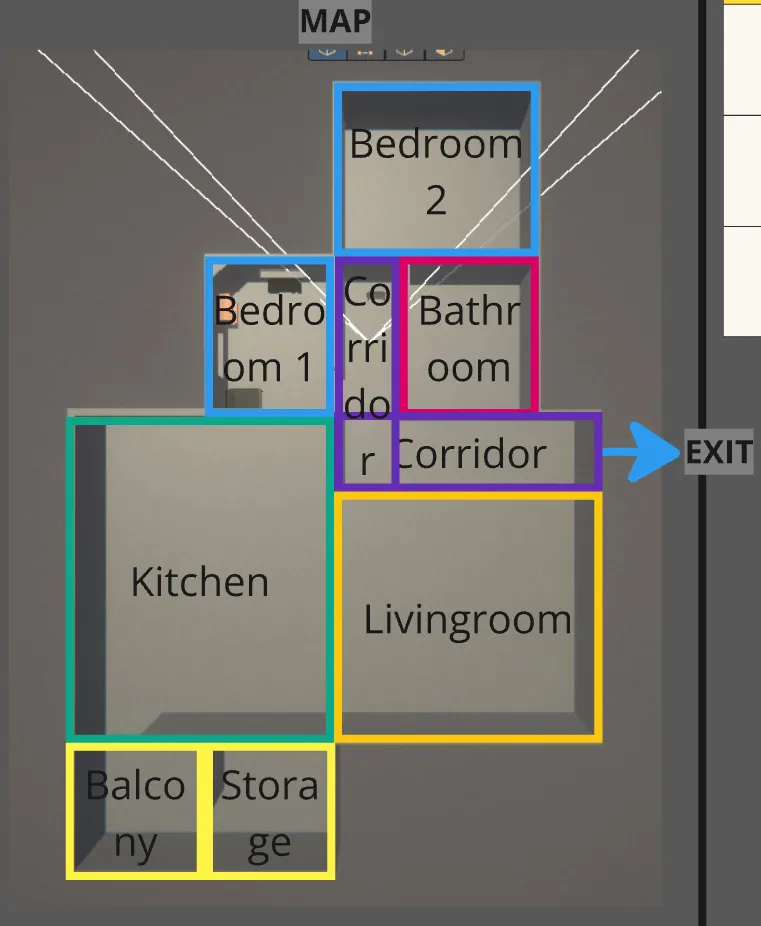
FIRST PLAN: This is the image of planning the level for the first demo.
MAP IMPROVEMENTS: Plans that showing the ideation behind the current map designs
GAMEPLAY PLANNING: Plans that showing the ideation behind game flow and map design
REDACTED MAPS: Plans for the maps that are redacted from the final build.
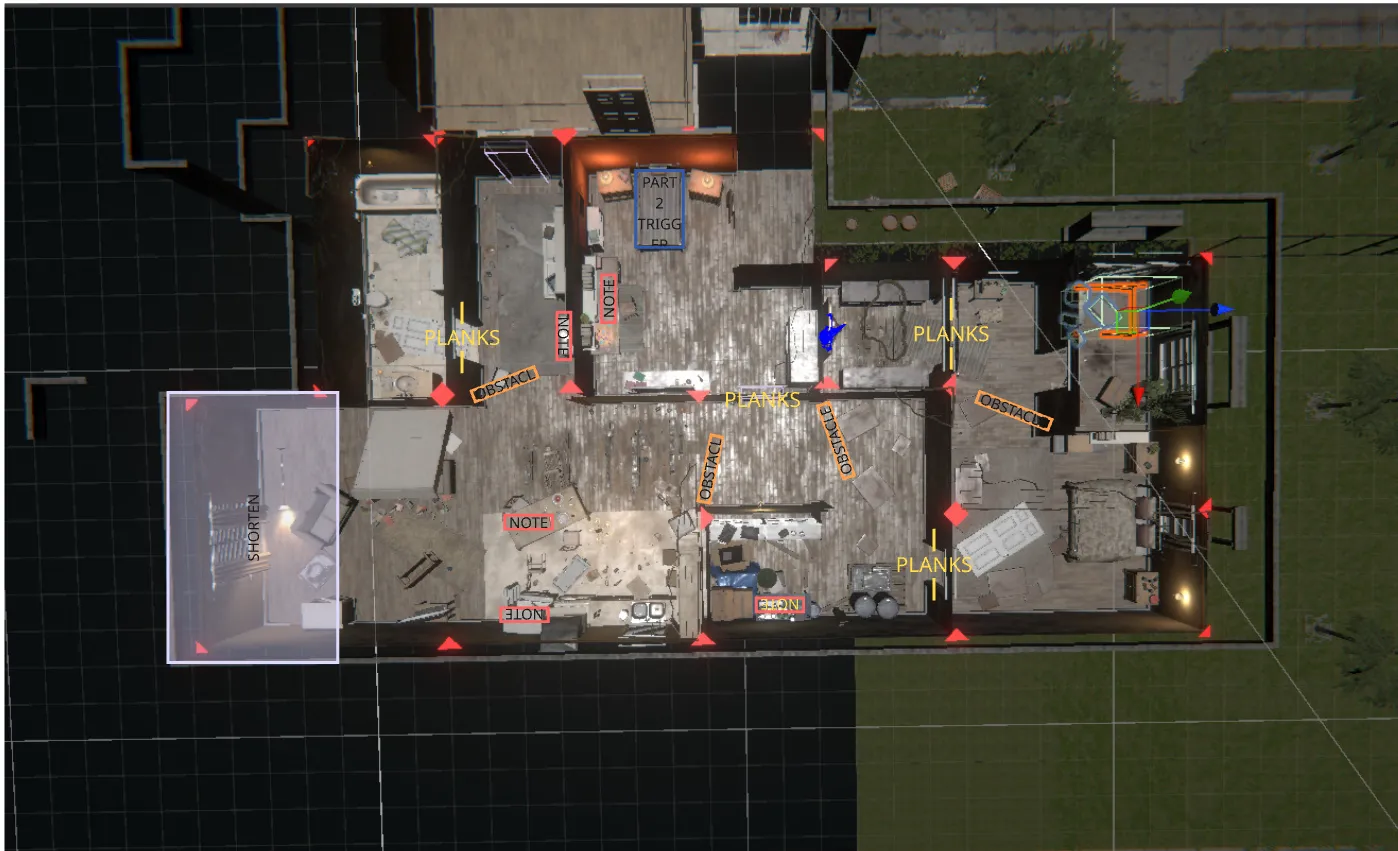
MAP IMPROVEMENTS: Plans that showing the ideation behind the current map designs
MAP IMPROVEMENTS: Plans that showing the ideation behind the current map designs
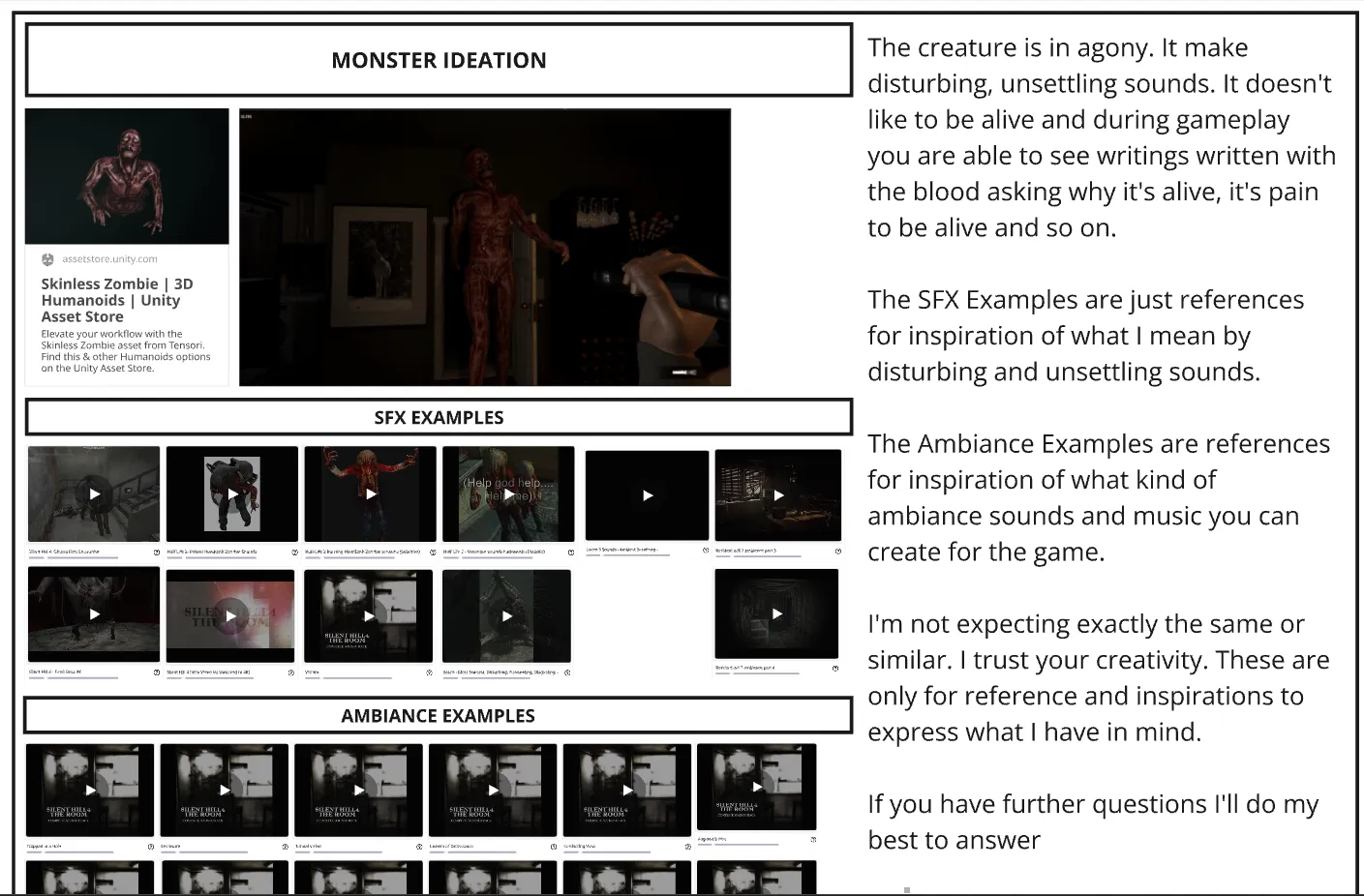
ENEMY CHARACTER IDEATION: I’ve started to set references and ideas for the enemy character.
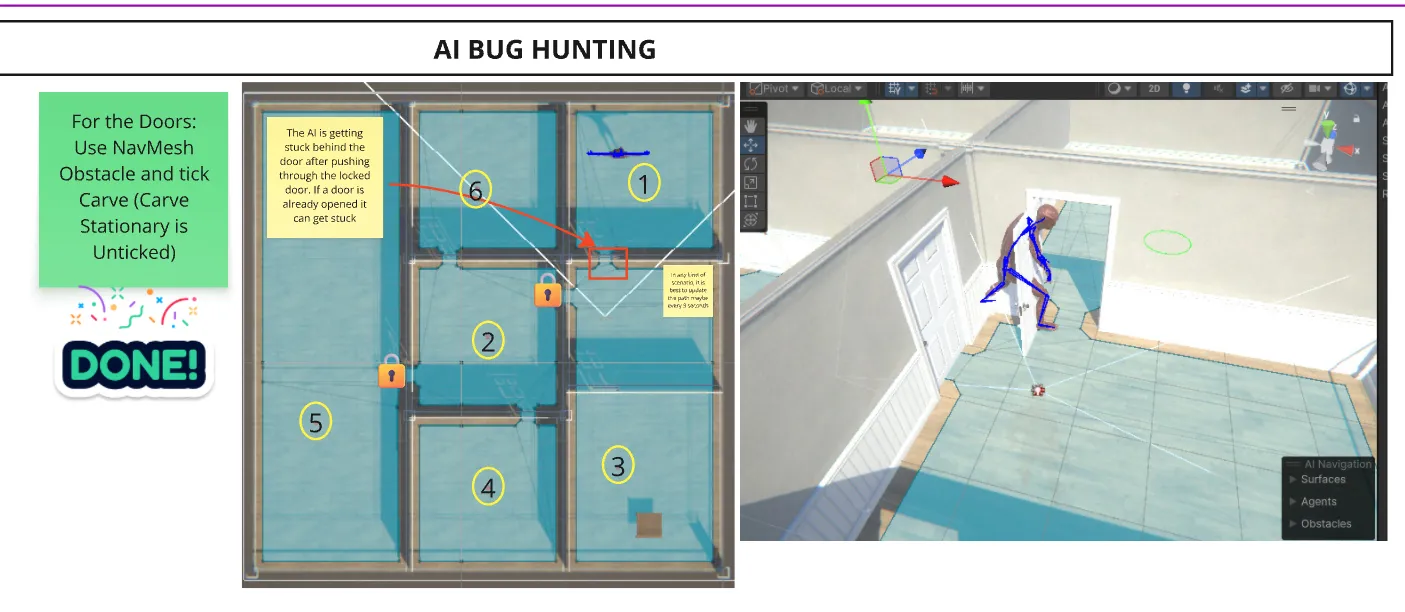
AI TEST & BUG HUNTING: Before I implemented the AI, I took my time figuring out the system and implemented features such as door opening and continously tested for bugs for improvements.
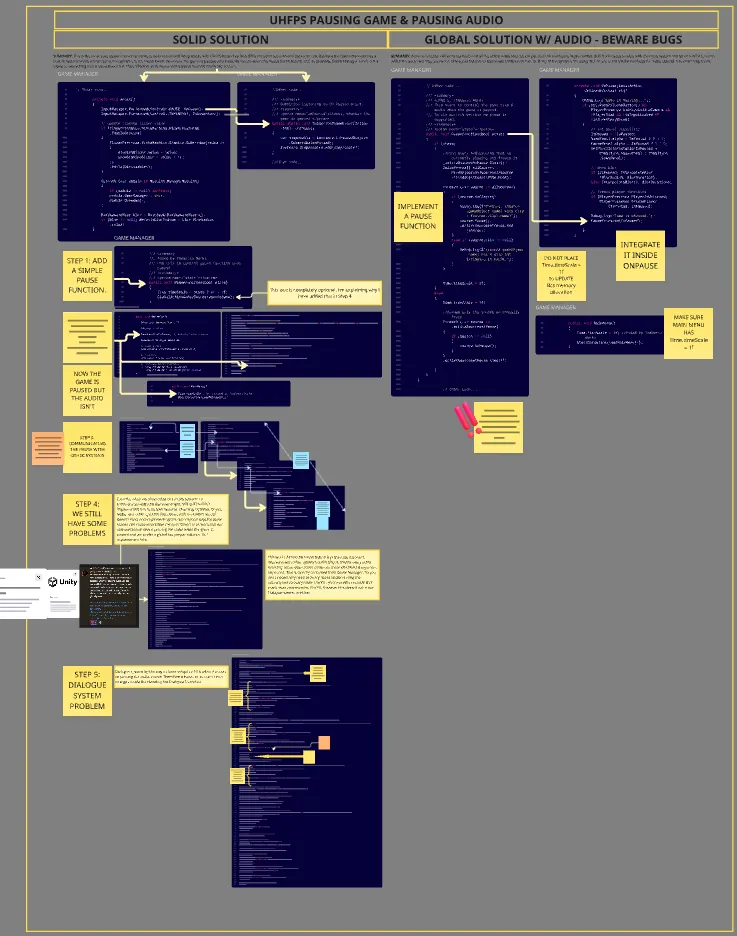
ASSISTING THE COMMUNITY: This is a guide for thee solution I made for UHFPS kit while working on the project. There was a lack of feature where the game wouldn’t pause on pause screen and many others were also asking for solutions. I provided my solution as a guide in the Discord server that helped the creator of the package to solve this issue faster and also helped the community members too.
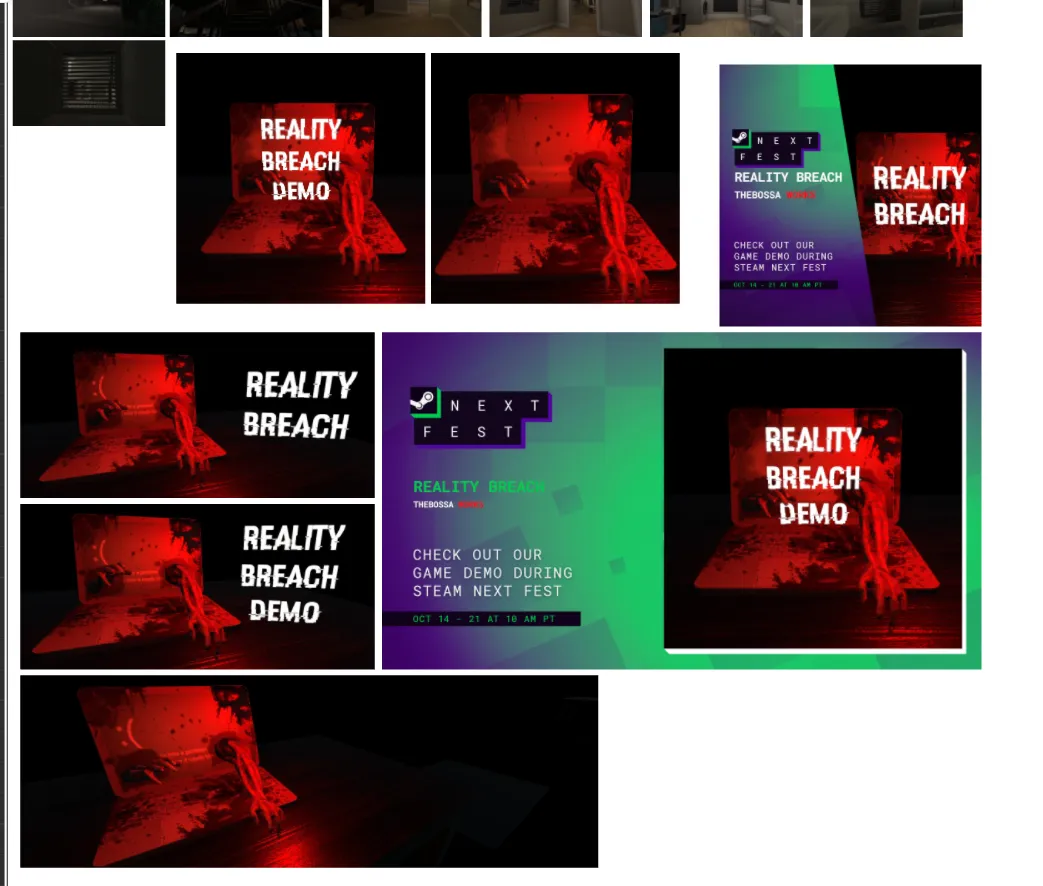
EARLY CAPSULE IMAGE: This is the previous version of the capsule images that is used both on Steam and itch.io
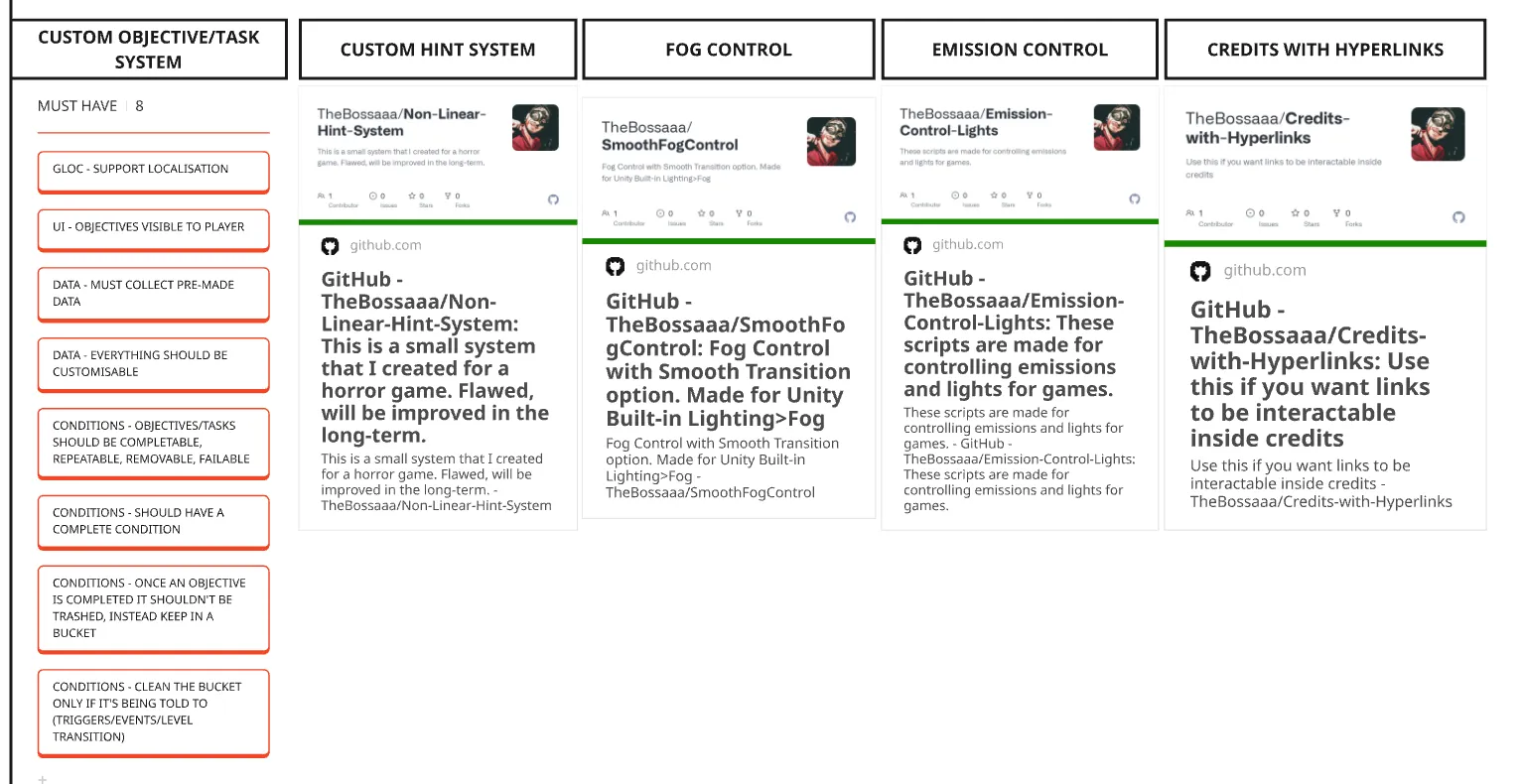
REPO: I’ve collected and created shortcuts for the custom scripts I’ve created before in previous projects and game jams.
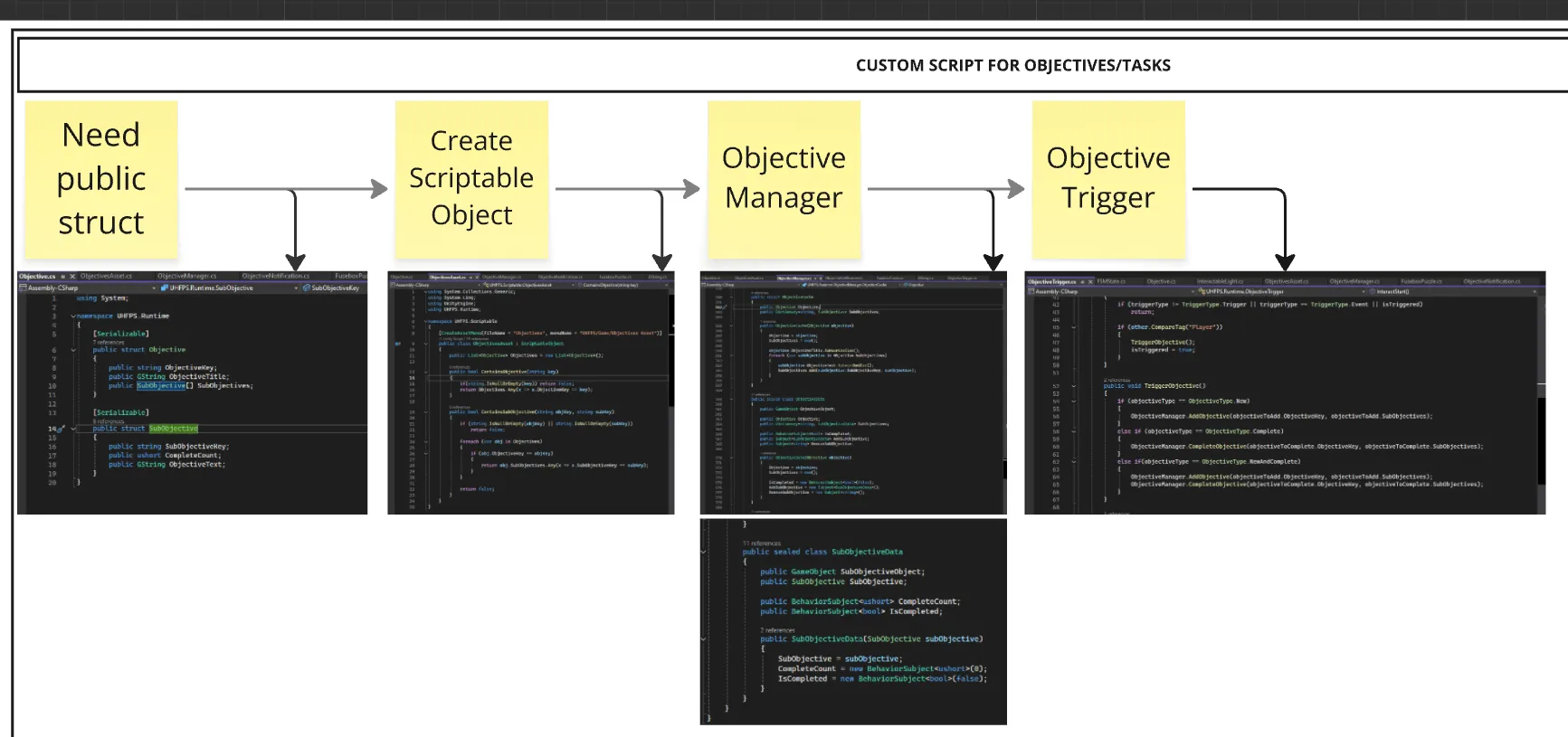
MODIFICATIONS: I’ve started working on modifying the existing systems.
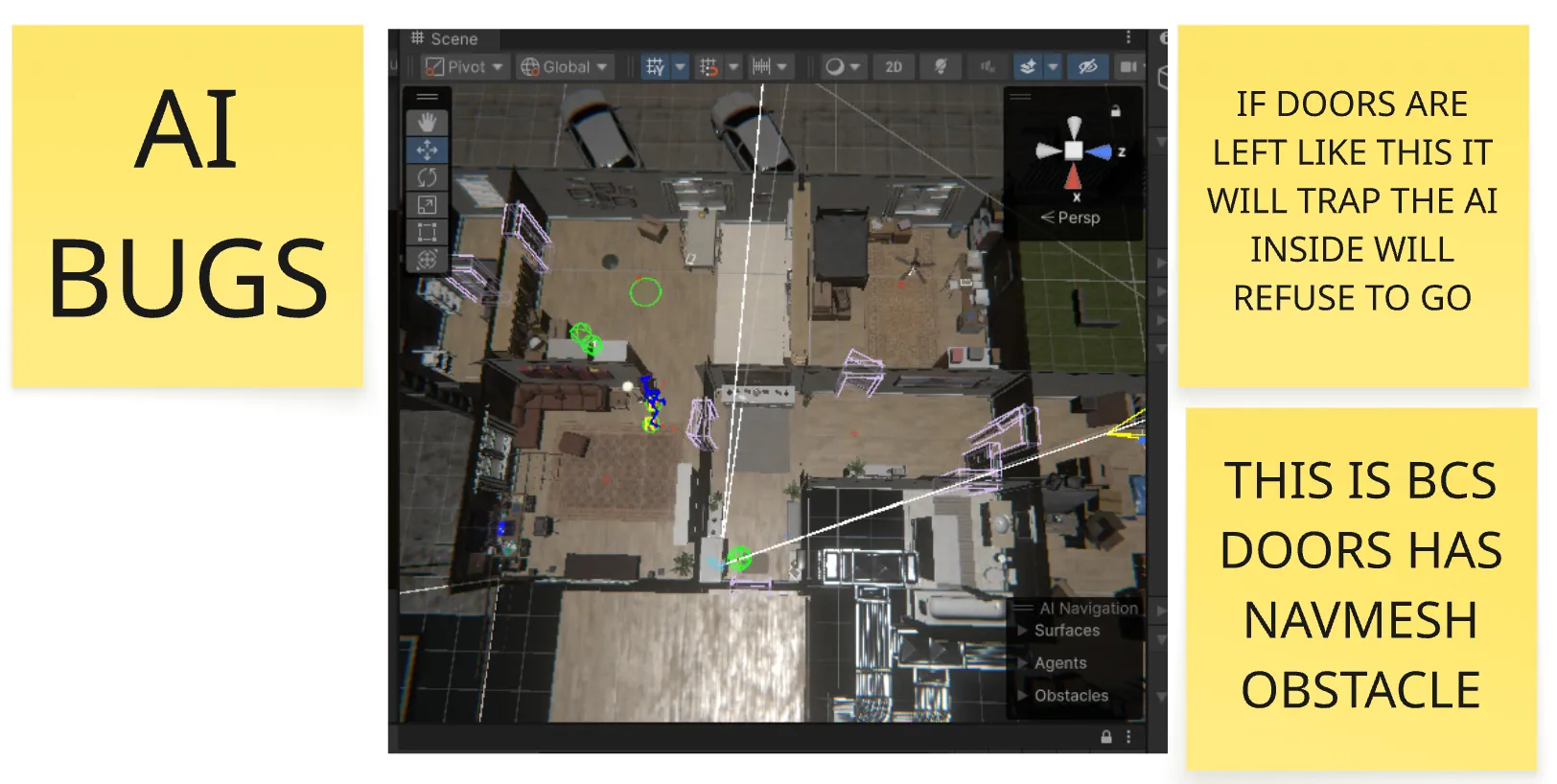
BUG HUNTING: Notes taken while doing bug hunting regarding enemy AI